
The short summary
What is Zephaniah about?
Zephaniah warns Judah, Jerusalem, and surrounding nations about the day of the Lord. It confronts false worship, complacency, pride, and abusive leadership, calling people to seek righteousness and humility. Its final movement promises a humble, truthful remnant, renewed worship among the peoples, and a restored Jerusalem rejoicing in God’s presence.
Zephaniah 1:1–18; Zephaniah 2:1–15; Zephaniah 3:1–5; Zephaniah 3:9–20.01 / Understand the whole
The book in context
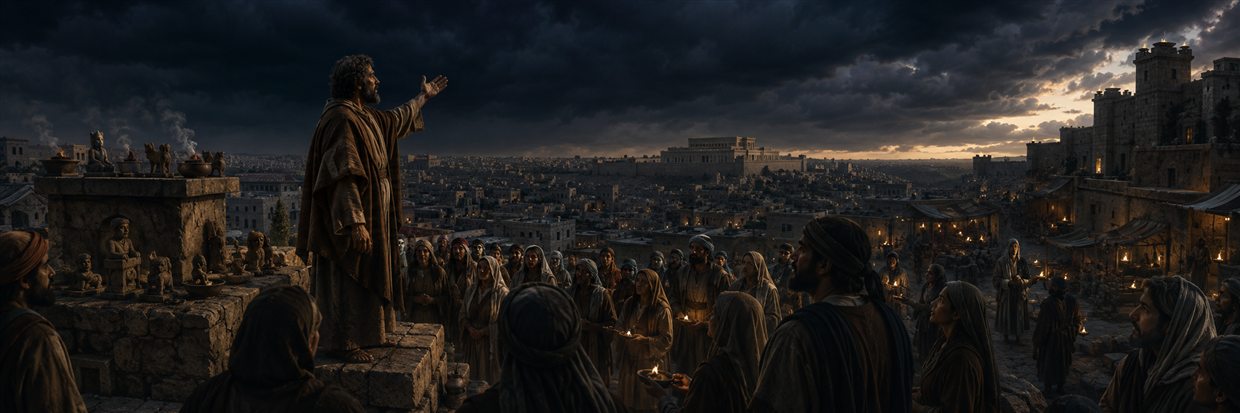
The heading places Zephaniah in the reign of Josiah. The opening warning moves from sweeping judgment upon life on earth to specific accusations against Judah and Jerusalem. Worship of other gods, violence, deception, and complacency come under scrutiny. The approaching day of the Lord is pictured as darkness and distress, when wealth cannot provide rescue. Zephaniah 1:1–18.
An appeal to seek the Lord, righteousness, and humility precedes judgments against surrounding peoples. Philistine cities, Moab, Ammon, Cush, and Assyria are named. Nineveh’s boastful security is pictured giving way to desolation. Jerusalem also faces rebuke: its leaders are predatory, its religious authorities corrupt, and the city refuses correction despite the Lord’s justice. Zephaniah 2:1–15; Zephaniah 3:1–7.
After another announcement of judgment, the closing section describes peoples calling upon the Lord together. Pride is removed, and a humble remnant lives without deceit or fear. Jerusalem is summoned to rejoice because the Lord is present as king and savior. The final promises include gathering the scattered, rescuing the vulnerable, and reversing disgrace. Zephaniah 3:8–20.
02 / Follow the structure
A reading outline
A chapter-level reading guide; some literary movements cross these boundaries. Each link opens the section’s first chapter.
- 1The approaching dayJudah and Jerusalem face judgment for false worship, violence, and complacency.
- 2Humility and the nationsA call to seek the Lord leads into warnings against surrounding peoples.
- 3From rebuke to restorationJerusalem’s failures give way to promises of purified worship and gathered exiles.
03 / Notice the connections
Major themes
Complacency challenged
The warning singles out people who assume the Lord will do nothing. Wealth and familiar defenses cannot insulate them from judgment. Zephaniah 1:12–18.
Humility and truthful living
The call to seek righteousness and humility anticipates the restored remnant, described as humble, truthful, and trusting in the Lord. Zephaniah 2:1–3; Zephaniah 3:11–13.
Restoration and belonging
The ending joins renewed worship among the peoples with God’s presence in Jerusalem and the gathering of those who have been scattered or shamed. Zephaniah 3:9–10; Zephaniah 3:14–20.
04 / Background
Background at a glance
- Literary form
- Prophetic warnings and promises
- Setting in the text
- Judah and Jerusalem in Josiah’s reign
More about the background
The USCCB introduction highlights false worship and abusive leadership as reasons for judgment in Zephaniah. It places the prophet in Josiah’s reign and suggests that the denunciations may reflect the years before Josiah’s religious reforms. That narrower dating is presented as a possibility rather than a certainty. [1]
The heading supplies Zephaniah’s ancestry and names Josiah as king. The book addresses Judah and Jerusalem, then extends its warnings to other peoples. Its final promises concern renewed worship, a transformed remnant, and the gathering of the scattered; these passages should be read alongside the earlier call to humility. Zephaniah 1:1–4; Zephaniah 2:1–3; Zephaniah 2:8–15; Zephaniah 3:9–20.
05 / Return to the text
Passages to explore
Passage links open the Berean Standard Bible. These selections offer starting points for exploring the book.
Complacency and the day of the Lord
Observe the connection between false security, wealth, and the approaching judgment.
Zephaniah 1:12–18 MemorizeSeek righteousness and humility
Read the appeal before the sequence of warnings against the nations.
Zephaniah 2:1–3 MemorizeA people restored
Follow the movement from renewed worship and truthful living to joy and gathering.
Zephaniah 3:9–20 MemorizeIs Zephaniah only about judgment?
No. Its warnings lead into a closing vision of restoration. The peoples call upon the Lord, a humble remnant lives truthfully, and Jerusalem is invited to rejoice in God’s presence. The ending promises to gather the scattered and reverse their disgrace. Zephaniah 3:9–20.
Read Zephaniah
Sources and reading notes
The summaries describe the biblical text; passage references let you check them in context. Historical and authorship notes are attributed separately. The outlines and passage selections are editorial reading aids.
- United States Conference of Catholic Bishops. The Book of Zephaniah. New American Bible introduction; opening four paragraphs before the outline. Catholic reference perspective. Accessed September 11, 2026. ↩
Prepared for BibleVerse · September 11, 2026. An initial editorial edition; independent specialist review is pending. Biblical references use the Berean Standard Bible. The illustration is interpretive artwork.