
The short summary
What is 1 John about?
1 John connects fellowship with God to faith in Jesus Christ, truthful conduct, and love for others. It confronts claims that separate knowing God from obedience or deny Jesus Christ’s coming in the flesh. Repeated appeals to light, love, and life encourage readers to confess sin, care for one another, and find assurance in God’s Son.
1 John 1:1–10; 1 John 3:16–24; 1 John 4:1–21; 1 John 5:11–13.01 / Understand the whole
The book in context
The opening appeals to what has been heard, seen, and touched in announcing the life revealed in Jesus Christ. Fellowship with God is described through the image of walking in light. Readers are called to acknowledge sin and receive forgiveness, while the following chapter presents Jesus as their advocate and connects knowing him with obedience and love. 1 John 1:1–10; 1 John 2:1–11.
Warnings about deception arise alongside the report that some people have left the community. The work urges readers to remain in what they heard from the beginning and to recognize their identity as God’s children. The contrast between hatred and love becomes concrete in the example of someone who has possessions but refuses to help a person in need. 1 John 2:18–29; 1 John 3:1–18.
The later chapters join discernment about Jesus Christ with mutual love. God’s love is expressed in sending the Son, and love for God is tested by love for others. The conclusion emphasizes life in the Son, confidence in prayer according to God’s will, and a final warning against idols. 1 John 4:1–21; 1 John 5:1–21.
02 / Follow the structure
A reading outline
A chapter-level reading guide; some literary movements cross these boundaries. Each link opens the section’s first chapter.
- 1Life revealed and fellowship in the lightThe opening testimony, fellowship, confession, and forgiveness.
- 2Knowing Christ and remaining in the truthAdvocacy, obedience, love, and warnings after a community division.
- 3God’s children and love in actionRighteous conduct, practical care, and confidence before God.
- 4Discernment and the source of loveConfessing Jesus Christ and responding to God’s love by loving one another.
- 5Faith, testimony, and assuranceLife in the Son, prayer, and final encouragements and warnings.
03 / Notice the connections
Major themes
Fellowship and honesty
Walking in the light includes acknowledging sin rather than denying it. The call to righteous conduct is read alongside the promise of forgiveness and Jesus’ advocacy. 1 John 1:5–10; 1 John 2:1–6.
Love that meets a need
Jesus’ self-giving is the model for love. The example of a person withholding material help makes the demand for love in action specific. 1 John 3:16–18.
Belief and assurance
The work connects life with God’s Son and states that it is written so believers may know they have eternal life. This assurance belongs within its wider call to faithfulness and love. 1 John 3:23–24; 1 John 5:11–15.
04 / Background
Background at a glance
- Literary form
- Pastoral teaching and exhortation
- Setting in the text
- A community facing division and conflicting claims about Jesus
More about the background
The USCCB introduction notes traditional attribution to John the apostle and the work’s close relationship with the Gospel of John. It discusses a shared Johannine setting while acknowledging questions about their literary relationship. Its lack of a normal letter opening and ending leads the introduction to compare it with a theological treatise. [1]
The work does not give its writer’s personal name or identify a destination. Its own account refers to people who have left and to efforts to deceive those who remain. These statements establish a setting of dispute, but do not provide a complete history of the opposing group. 1 John 1:1–4; 1 John 2:18–27.
05 / Return to the text
Passages to explore
Passage links open the Berean Standard Bible. These selections offer starting points for exploring the book.
Walking in the light
Notice how fellowship, truthfulness, confession, and forgiveness are connected.
1 John 1:5–10 MemorizeLove made visible
Follow the movement from Jesus’ self-giving to practical help, confidence, and the command to believe and love.
1 John 3:16–24 MemorizeGod’s love and mutual love
Read the statements about love and fear within the discussion of God’s gift of the Son and confidence at judgment.
1 John 4:7–21 MemorizeWhat does “perfect love drives out fear” mean in 1 John?
The surrounding passage concerns confidence on the day of judgment and fear of punishment. It connects growing confidence with God’s love expressed through the Son and with love for one another. It is not a claim that a faithful person will never experience ordinary fear or distress. 1 John 4:9–21.
Read 1 John
Sources and reading notes
The summaries describe the biblical text; passage references let you check them in context. Historical and authorship notes are attributed separately. The outlines and passage selections are editorial reading aids.
- United States Conference of Catholic Bishops. The First Letter of John. New American Bible introduction; opening paragraphs on attribution, relationship to the Gospel, and literary form. Catholic reference perspective. Accessed September 11, 2026. ↩
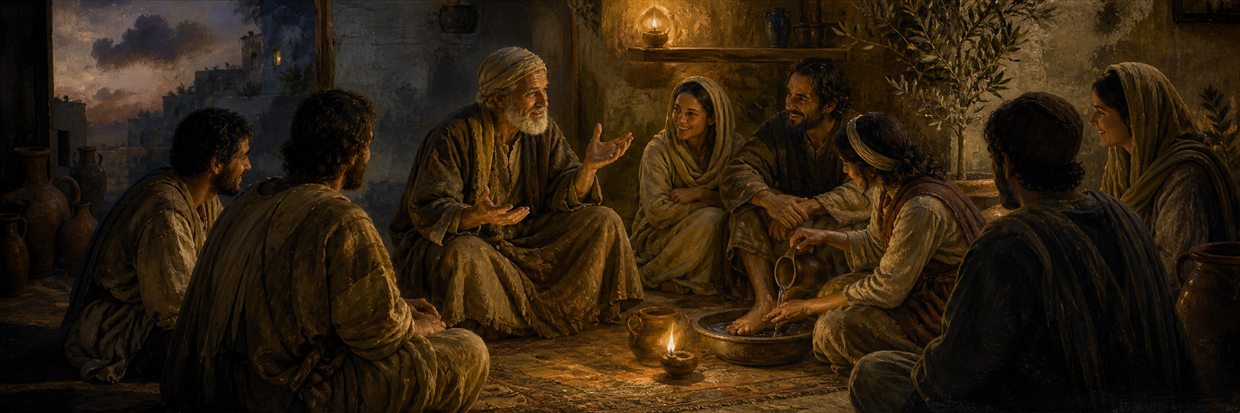
Prepared for BibleVerse · September 11, 2026. An initial editorial edition; independent specialist review is pending. Biblical references use the Berean Standard Bible. The illustration is interpretive artwork.