The short summary
What is Joshua about?
Joshua recounts Israel’s entry into Canaan under Moses’ successor. The people cross the Jordan, fight campaigns, and receive tribal land allotments. The book presents these events as fulfillment of God’s promises while also naming territory still to be possessed. It closes with appeals to covenant faithfulness, an assembly at Shechem, and the deaths of Joshua and Eleazar.
Joshua 1:1–9; Joshua 3:14–17; Joshua 11:16–23; Joshua 13:1–7; Joshua 21:43–45; Joshua 24:1; Joshua 24:25–33.01 / Understand the whole
The book in context
After Moses’ death, Joshua receives a commission to lead the people across the Jordan and to keep the instruction given through Moses. Rahab shelters Israelite spies in Jericho and asks protection for her family. The river crossing and the memorial stones mark entry into the land; at Gilgal the people celebrate Passover and begin eating its produce as the manna ceases. Joshua 1:1–9; Joshua 2:1–14; Joshua 3:14–17; Joshua 4:1–7; Joshua 5:10–12.
The campaign narratives describe Jericho’s destruction and the sparing of Rahab’s household. Defeat at Ai is connected to Achan’s taking prohibited goods; the narrative includes severe punishment before the renewed campaign. The Gibeonites obtain a treaty, and further accounts describe battles in the south and north. These accounts of ancient warfare include the killing of entire populations, alongside the book’s themes of land, covenant, and leadership. Joshua 6:17–25; Joshua 7:1–12; Joshua 7:24–26; Joshua 8:1–2; Joshua 9:3–15; Joshua 10:28–40; Joshua 11:10–15.
The narrative then turns to the distribution of land. Boundaries and town lists record tribal inheritances, while separate provisions concern refuge cities and Levitical towns. The text celebrates the fulfillment of God’s promises but also records land still to be occupied and Canaanite communities remaining among the tribes. The closing chapters address unity across the Jordan and continued loyalty to God. At Shechem, Joshua calls for exclusive service to the LORD and makes a covenant with the people; the final notices record deaths and burials. Joshua 13:1–7; Joshua 15:63; Joshua 17:12–13; Joshua 18:1–10; Joshua 20:1–9; Joshua 21:1–3; Joshua 21:43–45; Joshua 22:24–29; Joshua 23:6–13; Joshua 24:14–33.
02 / Follow the structure
A reading outline
A chapter-level reading guide; some literary movements cross these boundaries. Each link opens the section’s first chapter.
- 1–5Preparing and crossingJoshua is commissioned, spies visit Jericho, and Israel crosses the Jordan.
- 6–8Jericho and AiVictory, covenant violation, judgment, and renewed instruction shape the first campaigns.
- 9–12Treaty and wider campaignsThe Gibeonite treaty and southern and northern battles lead to a list of defeated kings.
- 13–19Tribal inheritancesThe land is apportioned, including territory still to be possessed.
- 20–22Refuge, service, and shared belongingRefuge cities, Levitical towns, and the eastern tribes’ altar concern life together.
- 23–24Farewell and covenantJoshua urges faithfulness, gathers the people at Shechem, and dies.
03 / Notice the connections
Major themes
Promise and continuing responsibility
The book celebrates the gift of land while warning that continued life in it calls for covenant loyalty. Joshua 21:43–45; Joshua 23:6–13.
Memory and instruction
Memorial stones invite children’s questions, and public reading places the law before the whole assembly. Joshua 4:6–7; Joshua 8:30–35.
Belonging across boundaries
Rahab’s household is spared, the Gibeonite oath is honored, and the eastern tribes explain their altar as a witness to shared worship. Joshua 6:22–25; Joshua 9:18–27; Joshua 22:24–29.
04 / Background
Background at a glance
- Literary form
- Narrative, territorial lists, and covenant addresses
- Setting in the text
- The Jordan crossing and the land of Canaan
More about the background
The USCCB introduction reads Joshua as a theological account of the land and covenant, shaped from older settlement traditions. It describes the conquest portrayal as idealized and stresses the book’s warning about losing the land through unfaithfulness. This is an attributed interpretation of the book’s formation and purpose, not independent verification of each reported battle. [1]
Joshua 24 describes Joshua recording the covenant proceedings, then goes on to narrate his death. A statement about this written record does not by itself identify the author or date of the complete book. Joshua 24:25–31.
05 / Return to the text
Passages to explore
Passage links open the Berean Standard Bible. These selections offer starting points for exploring the book.
The charge to Joshua
Read the call to courage alongside the command to follow Moses’ instruction.
Joshua 1:1–9 MemorizeStones that prompt a question
Notice how the crossing is to be remembered and explained to children.
Joshua 4:1–7 MemorizeThe covenant at Shechem
Read the household declaration within the people’s wider commitment and Joshua’s warnings.
Joshua 24:14–28 MemorizeDoes Joshua say every part of Canaan was fully occupied?
No. Alongside broad statements of victory and fulfilled promises, the book identifies land remaining to be possessed and communities that were not driven out. Reading these passages together preserves the distinctions within the text itself. Joshua 11:23; Joshua 13:1–7; Joshua 15:63; Joshua 17:12–13; Joshua 21:43–45.
Read Joshua
Sources and reading notes
The summaries describe the biblical text; passage references let you check them in context. Historical and authorship notes are attributed separately. The outlines and passage selections are editorial reading aids.
- United States Conference of Catholic Bishops. The Book of Joshua. New American Bible introduction; Paragraphs on older settlement traditions, the conquest portrayal, and covenant faithfulness. Catholic reference perspective. Accessed September 11, 2026. ↩
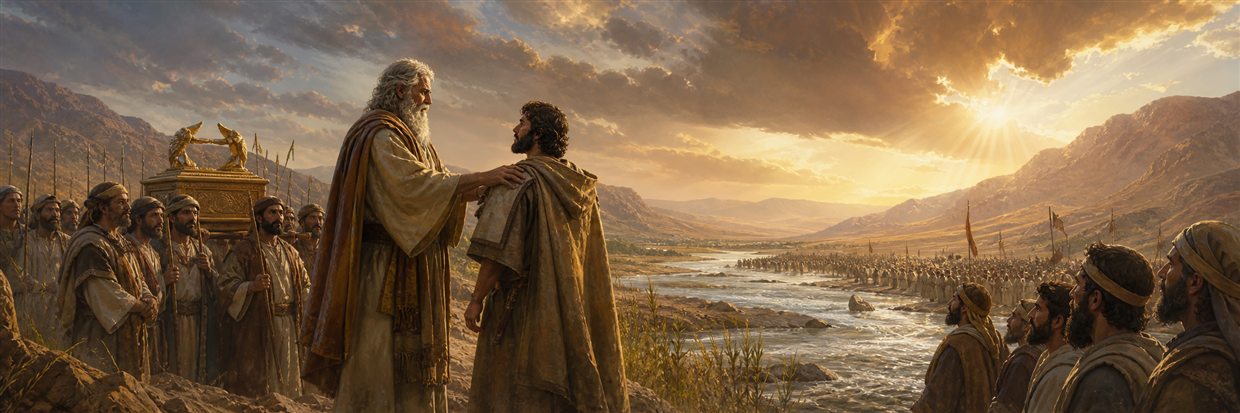
Prepared for BibleVerse · September 11, 2026. An initial editorial edition; independent specialist review is pending. Biblical references use the Berean Standard Bible. The illustration is interpretive artwork.