
The short summary
What is Romans about?
Romans is Paul’s letter to believers in Rome about God’s saving righteousness revealed through Jesus Christ. It addresses sin, justification by faith, life in the Spirit, and the place of Israel and the Gentiles in God’s purposes. Its argument leads into practical teaching about love, humility, mutual welcome, and shared responsibility, followed by travel plans and personal greetings.
Romans 1:1–17; Romans 3:21–31; Romans 8:1–17; Romans 11:17–32; Romans 12:1–21; Romans 14:1–13; Romans 15:22–33; Romans 16:1–16.01 / Understand the whole
The book in context
Paul introduces himself and expresses his desire to visit Rome. He announces the gospel as God’s power for salvation, then argues that both Jews and Gentiles stand under sin. God’s righteousness is revealed through faith in Jesus Christ, and justification is presented as a gift of grace. Abraham becomes a key example in the argument about faith and promise. Romans 1:1–17; Romans 3:9–31; Romans 4:1–25.
The letter develops the consequences of reconciliation, contrasting Adam and Christ and describing baptism in relation to death and new life. Paul discusses sin, law, and the struggle to do what is good before turning to life in the Spirit, adoption, suffering, and hope. Chapters 9–11 address Israel, election, and mercy, warning Gentile believers against boasting over others. Romans 5:1–21; Romans 6:1–23; Romans 7:7–25; Romans 8:1–39; Romans 9:1–5; Romans 11:17–36.
The appeal to offer one’s life to God introduces instruction about gifts, sincere love, peace, and responsibilities toward others. Paul addresses disputes over food and special days, urging believers to avoid contempt and to welcome one another. He then explains his collection for Jerusalem and hoped-for travel through Rome to Spain. Personal commendations and greetings reveal a network of coworkers and communities. Romans 12:1–21; Romans 13:1–14; Romans 14:1–23; Romans 15:1–13; Romans 15:22–33; Romans 16:1–23.
02 / Follow the structure
A reading outline
A chapter-level reading guide; some literary movements cross these boundaries. Each link opens the section’s first chapter.
- 1–3The gospel and humanity’s needPaul introduces the letter and argues from universal sin toward justification by grace.
- 4–5Faith, promise, and reconciliationAbraham, peace with God, and the contrast between Adam and Christ develop the argument.
- 6–8New life and the SpiritBaptism, sin, law, adoption, suffering, and hope shape life in Christ.
- 9–11Israel and the GentilesPaul wrestles with unbelief, election, and the reach of God’s mercy.
- 12–15Mercy expressed in shared lifeEthical instruction and mutual welcome lead into Paul’s ministry and travel plans.
- 16Coworkers and final greetingsCommendations, greetings, a warning, and praise close the letter.
03 / Notice the connections
Major themes
Grace and faith
Paul excludes boasting by presenting justification as a gift, then uses Abraham to explore faith and promise. The argument includes both Jews and Gentiles. Romans 3:21–31; Romans 4:1–17.
The Spirit and hope
Life in the Spirit includes adoption and hope amid suffering. The chapter’s assurance does not erase the groaning of creation or the believers’ need for help. Romans 8:14–39.
Mercy and mutual welcome
The response to mercy involves humble service, sincere love, and refusing contempt over disputed practices. Believers are called to welcome one another as Christ welcomed them. Romans 12:1–21; Romans 14:1–13; Romans 15:1–7.
04 / Background
Background at a glance
- Literary form
- Apostolic letter and sustained argument
- Setting in the text
- Paul’s letter to believers in Rome
More about the background
The USCCB introduction places Romans in a specific missionary situation: Paul planned to bring aid to Jerusalem and seek support in Rome for travel to Spain. It suggests composition in Greece, probably Corinth, in 56–58 CE. It also notes differing scholarly assessments of the Roman communities’ makeup. [1]
Paul identifies himself in the opening; Tertius later identifies himself as the person who wrote the letter down. Paul’s planned visit is still future in the letter. Reading the theological argument alongside these personal details helps preserve its character as communication with an existing community. Romans 1:1–15; Romans 15:22–29; Romans 16:22.
05 / Return to the text
Passages to explore
Passage links open the Berean Standard Bible. These selections offer starting points for exploring the book.
Grace, faith, and boasting
Read Paul’s account of justification together with his questions about Jews, Gentiles, and the law.
Romans 3:21–31 MemorizeHope amid suffering
Follow the movement from creation’s groaning to the Spirit’s help and assurance of God’s love.
Romans 8:18–39 MemorizeLiving with disagreement
Notice the specific disputes about food and days and Paul’s repeated challenge to judgment and contempt.
Romans 14:1–13 MemorizeIs Romans only about individual salvation?
No. Alongside its teaching about sin, faith, and life in Christ, Romans addresses Israel and the Gentiles, the use of gifts within one body, and responsibility toward fellow believers. Its call to mutual welcome makes shared community life an essential part of the letter’s argument. Romans 11:17–32; Romans 12:3–8; Romans 14:1–13; Romans 15:1–7.
Read Romans
Sources and reading notes
The summaries describe the biblical text; passage references let you check them in context. Historical and authorship notes are attributed separately. The outlines and passage selections are editorial reading aids.
- United States Conference of Catholic Bishops. The Letter to the Romans. New American Bible introduction; opening two paragraphs and the paragraph on the makeup of the Roman house churches. Catholic reference perspective. Accessed September 11, 2026. ↩
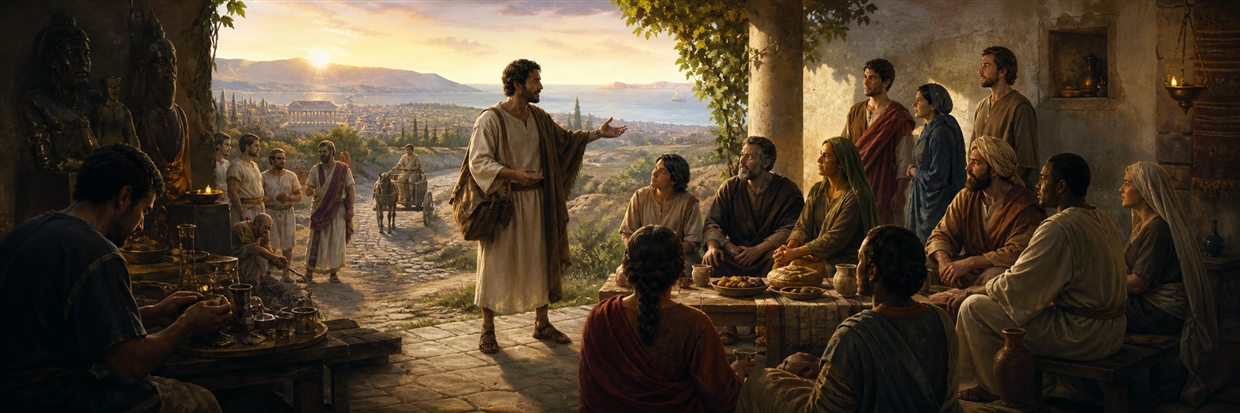
Prepared for BibleVerse · September 11, 2026. An initial editorial edition; independent specialist review is pending. Biblical references use the Berean Standard Bible. The illustration is interpretive artwork.