
The short summary
What is 1 Timothy about?
1 Timothy presents instructions to Timothy about teaching and conduct in God’s household. It confronts speculative and harmful teaching, addresses prayer and leadership, and sets out responsibilities toward different members of the community. Care for widows, fair treatment of elders, personal example, and the dangers of greed connect faithful doctrine with practical life.
1 Timothy 1:1–7; 1 Timothy 2:1–15; 1 Timothy 3:1–16; 1 Timothy 4:12–16; 1 Timothy 5:1–25; 1 Timothy 6:3–19.01 / Understand the whole
The book in context
The letter names Paul as sender and Timothy as recipient, recalling an instruction to remain in Ephesus and oppose certain teaching. The stated goal is love arising from a pure heart, good conscience, and sincere faith. A testimony to mercy and a charge to hold faith lead into instructions about prayer, public conduct, and the roles of men and women. 1 Timothy 1:1–20; 1 Timothy 2:1–15.
Qualifications for overseers and deacons emphasize character, household conduct, reputation, and freedom from greed. A statement about behavior in God’s household explains the purpose of the instructions. Warnings against prohibitions on marriage and food are followed by encouragement for Timothy to cultivate godliness, attend to teaching, and set an example despite his youth. 1 Timothy 3:1–16; 1 Timothy 4:1–16.
Instructions for relationships within the community include respect across generations, support for widows, and responsibilities toward elders. The letter also addresses enslaved believers within their existing social setting. Its final movement warns against using religion for gain, commends contentment, urges the wealthy to share, and charges Timothy to guard what has been entrusted to him. 1 Timothy 5:1–25; 1 Timothy 6:1–21.
02 / Follow the structure
A reading outline
A chapter-level reading guide; some literary movements cross these boundaries. Each link opens the section’s first chapter.
- 1Teaching, mercy, and the chargeTimothy is instructed to confront false teaching and hold to faith.
- 2–3Prayer and community orderPublic conduct, leadership qualifications, and the church as God’s household come into focus.
- 4An example in teaching and lifeWarnings against harmful restrictions accompany practical encouragement for Timothy.
- 5–6Care, accountability, and true wealthResponsibilities toward members lead into counsel about contentment, generosity, and guarding the faith.
03 / Notice the connections
Major themes
Teaching should produce love
The opening contrasts fruitless speculation with love, sincere faith, and a good conscience. Later instructions join attention to doctrine with attention to conduct. 1 Timothy 1:3–7; 1 Timothy 4:12–16.
Leadership involves tested character
The qualifications emphasize restraint, hospitality, faithfulness, and reputation. Caring for the church is connected with responsible conduct in ordinary relationships. 1 Timothy 3:1–13.
Contentment and generosity
The warning targets the desire for riches and the love of money. Wealthy believers are called to hope in God and become generous in good works. 1 Timothy 6:6–10; 1 Timothy 6:17–19.
04 / Background
Background at a glance
- Literary form
- Pastoral letter of instruction
- Setting in the text
- Timothy’s responsibility in Ephesus
More about the background
The USCCB introduction groups 1 Timothy with 2 Timothy and Titus as the Pastoral Epistles. It describes substantial debate over direct Pauline authorship, including proposals involving a secretary, a later writer, or collected Pauline traditions. Dates vary with these judgments, so this overview does not present a precise composition date as settled. [1]
The letter presents Paul addressing Timothy and places Timothy in Ephesus. Its stated concern is conduct in God’s household. This overview describes its instructions about women, leadership, and slavery as part of the text, without assuming that a modern denomination’s application is the only possible reading. 1 Timothy 1:1–3; 1 Timothy 2:8–15; 1 Timothy 3:14–16; 1 Timothy 6:1–2.
05 / Return to the text
Passages to explore
Passage links open the Berean Standard Bible. These selections offer starting points for exploring the book.
The aim of instruction
Compare the goal of love with the description of empty speculation.
1 Timothy 1:3–7 MemorizeTeaching through example
Notice the connection between public teaching, personal conduct, and perseverance.
1 Timothy 4:6–16 MemorizeContentment and the use of wealth
Read the warning about greed alongside the instructions for generous living.
1 Timothy 6:6–19 MemorizeDoes 1 Timothy say money itself is the root of all evil?
The warning concerns the love of money and the many kinds of evil associated with it. The context warns against craving riches and commends contentment. Later in the chapter, people who are wealthy are instructed to be generous and place their hope in God rather than uncertain wealth. 1 Timothy 6:6–10; 1 Timothy 6:17–19.
Read 1 Timothy
Sources and reading notes
The summaries describe the biblical text; passage references let you check them in context. Historical and authorship notes are attributed separately. The outlines and passage selections are editorial reading aids.
- United States Conference of Catholic Bishops. The First Letter to Timothy. New American Bible introduction; opening discussion of the Pastoral Epistles and the closing authorship and dating discussion. Catholic reference perspective. Accessed September 11, 2026. ↩
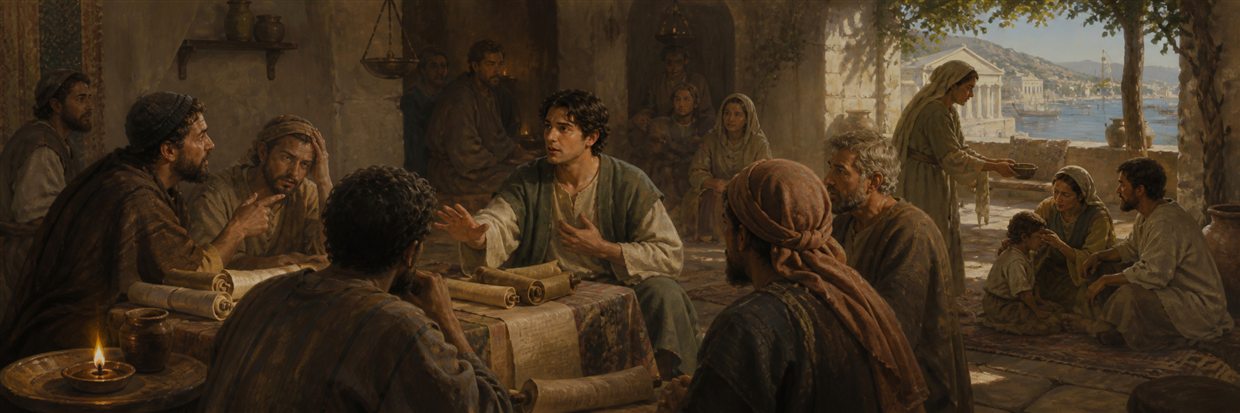
Prepared for BibleVerse · September 11, 2026. An initial editorial edition; independent specialist review is pending. Biblical references use the Berean Standard Bible. The illustration is interpretive artwork.