
The short summary
What is Jeremiah about?
Jeremiah follows a prophet called to confront Judah’s unfaithfulness during the kingdom’s final years. Warnings of judgment, conflict with rulers and rival prophets, and personal laments accompany the approach of Babylonian conquest. Letters and promises address life in exile and future restoration, including a new covenant. The book also recounts Jerusalem’s fall and the remnant’s flight to Egypt.
Jeremiah 1:1–10; Jeremiah 7:1–15; Jeremiah 20:7–18; Jeremiah 29:1–14; Jeremiah 31:31–34; Jeremiah 39:1–10; Jeremiah 43:4–7.01 / Understand the whole
The book in context
The opening identifies Jeremiah as a priest from Anathoth and dates his calling to Josiah’s reign. His commission includes both uprooting and building. Early oracles accuse the people of abandoning God and practicing injustice. The temple sermon challenges confidence in sacred buildings without changed conduct, while personal laments reveal the isolation and distress involved in the prophet’s work. Jeremiah 1:1–10; Jeremiah 2:1–13; Jeremiah 7:1–15; Jeremiah 11:18–23; Jeremiah 20:7–18.
Jeremiah’s message brings him into conflict with officials and prophets promising security or a swift end to Babylonian rule. His letter tells exiles to settle, raise families, and seek the welfare of their place of exile while awaiting restoration. Promises in chapters 30–33 include a new covenant with Israel and Judah and Jeremiah’s purchase of a field during the siege, a sign that life in the land will continue beyond catastrophe. Jeremiah 26:1–16; Jeremiah 28:1–17; Jeremiah 29:1–14; Jeremiah 31:31–34; Jeremiah 32:6–15.
Narratives describe the burning and rewriting of Jeremiah’s scroll, his imprisonment, and his rescue from a cistern. Jerusalem falls, and survivors later go to Egypt against his warning, taking Jeremiah and Baruch with them. Oracles against nations include a lengthy judgment on Babylon. The final chapter returns to Jerusalem’s destruction and deportations, ending with improved treatment for the exiled king Jehoiachin. Jeremiah 36:20–32; Jeremiah 37:11–21; Jeremiah 38:1–13; Jeremiah 39:1–10; Jeremiah 42:13–22; Jeremiah 43:4–7; Jeremiah 50:1–3; Jeremiah 52:12–16; Jeremiah 52:31–34.
02 / Follow the structure
A reading outline
A chapter-level reading guide; some literary movements cross these boundaries. Each link opens the section’s first chapter.
- 1–6Calling and early warningsJeremiah’s commission introduces accusations of unfaithfulness and approaching judgment.
- 7–20Worship, conflict, and lamentThe temple sermon, symbolic actions, and personal prayers expose the cost of the calling.
- 21–29Kings, rival prophets, and exilesWarnings to leaders and disputes over Babylon lead into a letter to the exiles.
- 30–33Restoration and covenantPromises of return and a new covenant accompany a field purchase during siege.
- 34–45The prophet amid Jerusalem’s fallBroken commitments, the scroll, imprisonment, and flight to Egypt frame the crisis.
- 46–51Oracles against nationsMessages concerning foreign powers culminate in judgment on Babylon.
- 52The historical conclusionDestruction and deportations are followed by Jehoiachin’s release from prison.
03 / Notice the connections
Major themes
Faithfulness beyond religious appearances
The temple sermon joins true worship with justice toward foreigners, orphans, and widows. Jeremiah 7:3–11.
The cost of speaking
Jeremiah’s lament and his imprisonment show prophetic work bringing distress rather than social security. Jeremiah 20:7–18; Jeremiah 38:1–13.
Hope through exile
The letter to Babylon encourages sustained communal life, while the new covenant passage joins restoration with forgiveness and inward instruction. Jeremiah 29:4–14; Jeremiah 31:31–34.
04 / Background
Background at a glance
- Literary form
- Prophetic oracles, laments, letters, and narrative
- Setting in the text
- Judah’s final kings, Babylonian exile, and a remnant in Egypt
More about the background
The USCCB introduction describes Jeremiah as a combination of history, biography, and prophecy and notes that the book circulated in different editions. It places the prophet’s ministry within Judah’s final crisis and its aftermath. This overview follows the order and chapter numbering of the BSB rather than reconstructing a single continuous timeline. [1]
Chapter 36 names Baruch as the scribe who writes Jeremiah’s dictated words and describes the replacement of a burned scroll with additional material. This is evidence within the narrative of recording and expansion, not proof that one person composed every part of the finished book. Jeremiah 36:1–4; Jeremiah 36:27–32.
05 / Return to the text
Passages to explore
Passage links open the Berean Standard Bible. These selections offer starting points for exploring the book.
The temple sermon
Read the demand for changed conduct together with the warning against false security.
Jeremiah 7:1–15 MemorizeHope addressed to exiles
Keep the familiar promise within the letter’s instructions for a prolonged stay in Babylon.
Jeremiah 29:4–14 MemorizeThe new covenant
Notice the named communities, the contrast with the broken covenant, and the promise of forgiveness.
Jeremiah 31:31–34 MemorizeWho is addressed by the promise in Jeremiah 29:11?
It appears in a letter to the exiles taken from Jerusalem to Babylon. The surrounding verses tell them to establish households, seek the city’s welfare, and await restoration after Babylon’s seventy years. It is a communal promise in a setting of prolonged exile, not a promise of immediate success for every individual plan. Jeremiah 29:1; Jeremiah 29:4–14.
Read Jeremiah
Sources and reading notes
The summaries describe the biblical text; passage references let you check them in context. Historical and authorship notes are attributed separately. The outlines and passage selections are editorial reading aids.
- United States Conference of Catholic Bishops. The Book of Jeremiah. New American Bible introduction; Opening description of literary forms; discussion of the prophet’s aftermath and circulation in different editions. Catholic reference perspective. Accessed September 11, 2026. ↩
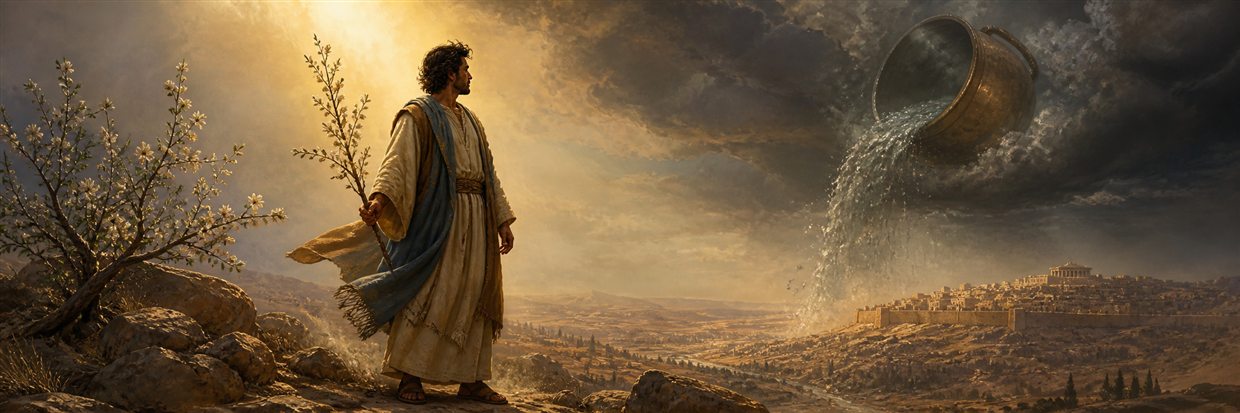
Prepared for BibleVerse · September 11, 2026. An initial editorial edition; independent specialist review is pending. Biblical references use the Berean Standard Bible. The illustration is interpretive artwork.