The short summary
What is Proverbs about?
Proverbs gathers instructions and sayings about wise living, grounding knowledge in reverence for God. It addresses speech, work, money, justice, friendship, and family life. Longer opening appeals invite readers to choose wisdom over folly, while later collections offer compact observations and counsel. The book includes material associated with Solomon, the wise, Agur, and King Lemuel, and ends with a poem about a capable woman.
Proverbs 1:1–7; Proverbs 9:1–18; Proverbs 10:1–5; Proverbs 22:17–21; Proverbs 25:1; Proverbs 30:1; Proverbs 31:1; Proverbs 31:10–31.01 / Understand the whole
The book in context
The opening explains the book’s purpose: developing discernment, receiving instruction, and learning righteousness and justice. Parents warn against destructive company and sexual unfaithfulness, while Wisdom is portrayed as a woman calling publicly for attention. The invitations of Wisdom and Folly in chapter 9 bring this opening movement to a pointed choice between ways of life. Proverbs 1:1–19; Proverbs 1:20–33; Proverbs 5:1–23; Proverbs 8:1–11; Proverbs 9:1–18.
From chapter 10, short sayings cover everyday conduct: honest dealing, diligent work, restraint in speech, generosity, and the handling of anger. Collections introduced as words of the wise follow, and chapter 25 identifies further Solomonic proverbs copied by Hezekiah’s men. Many sayings compare outcomes or contrast character types. Their compressed form calls for attention to the situation; the adjacent counsel about answering a fool makes the need for discernment especially clear. Proverbs 10:1–5; Proverbs 11:1; Proverbs 12:18; Proverbs 15:1; Proverbs 19:17; Proverbs 22:17–21; Proverbs 24:23; Proverbs 25:1; Proverbs 26:4–5.
The closing chapters introduce Agur and instruction taught to King Lemuel by his mother. Agur’s prayer asks for neither poverty nor riches, while Lemuel’s instruction stresses a ruler’s responsibility to protect the vulnerable. The final poem portrays a woman whose wisdom is expressed in household management, trade, generosity, and teaching. Its conclusion values reverence for God above beauty and calls for her work to receive recognition. Proverbs 30:1–9; Proverbs 31:1–9; Proverbs 31:10–31.
02 / Follow the structure
A reading outline
A chapter-level reading guide; some literary movements cross these boundaries. Each link opens the section’s first chapter.
- 1–9Learning to choose wisdomParental instruction and Wisdom’s invitations introduce the purpose of the book.
- 10–22:16The first Solomonic collectionShort sayings contrast wise and foolish conduct across daily life.
- 22:17–24Sayings of the wiseTwo collections offer instruction on conduct, justice, and disciplined living; the link opens chapter 22.
- 25–29Further proverbs of SolomonA heading credits Hezekiah’s men with copying this collection.
- 30Agur and further sayingsQuestions, prayer, and numbered observations explore knowledge and conduct.
- 31Lemuel’s instruction and the capable womanMaternal counsel about kingship is followed by a concluding portrait of wisdom in action.
03 / Notice the connections
Major themes
Reverence and teachability
The opening connects knowledge with reverence for God and invites even the wise to keep learning. Proverbs 1:5–7; Proverbs 9:9–10.
Words shape relationships
Gentle answers and thoughtful speech are contrasted with words that inflame anger or cause harm. Proverbs 12:18; Proverbs 15:1–4.
Justice and generosity
Honest measures, care for the poor, and advocacy for those without a voice recur as practical expressions of wisdom. Proverbs 11:1; Proverbs 19:17; Proverbs 31:8–9.
04 / Background
Background at a glance
- Literary form
- Wisdom instructions, short sayings, and poetry
- Setting in the text
- Household, community, and royal life
More about the background
The USCCB introduction describes Proverbs as an anthology of sayings and instructions rather than a single continuous composition. Its outline distinguishes Solomonic collections, sayings of the wise, Agur, Lemuel, and the final poem. This overview follows those internal distinctions without assigning all the material to one writer. [1]
The headings themselves name different sources and a collecting activity under Hezekiah. Attribution of a collection to Solomon should therefore be distinguished from authorship and editing of the whole book. No precise final composition date is assigned here. Proverbs 1:1; Proverbs 22:17; Proverbs 24:23; Proverbs 25:1; Proverbs 30:1; Proverbs 31:1.
05 / Return to the text
Passages to explore
Passage links open the Berean Standard Bible. These selections offer starting points for exploring the book.
The book’s stated purpose
Notice the intended learners and the connection between discernment and just conduct.
Proverbs 1:1–7 MemorizeTwo sayings to read together
Consider the different dangers named in these adjacent instructions.
Proverbs 26:4–5 MemorizeWisdom in action
Read the whole portrait, including economic activity, generosity, teaching, and the closing praise.
Proverbs 31:10–31 MemorizeShould every proverb be read as an unconditional guarantee?
The sayings require discernment rather than mechanical application. Proverbs 26 places counsel against answering a fool beside counsel to answer, naming a different danger in each case. Reading a saying with its wording, purpose, and situation helps preserve that practical character. Proverbs 1:5–6; Proverbs 26:4–5.
Read Proverbs
Sources and reading notes
The summaries describe the biblical text; passage references let you check them in context. Historical and authorship notes are attributed separately. The outlines and passage selections are editorial reading aids.
- United States Conference of Catholic Bishops. The Book of Proverbs. New American Bible introduction; Opening description as an anthology and concluding list of the book’s sections. Catholic reference perspective. Accessed September 11, 2026. ↩
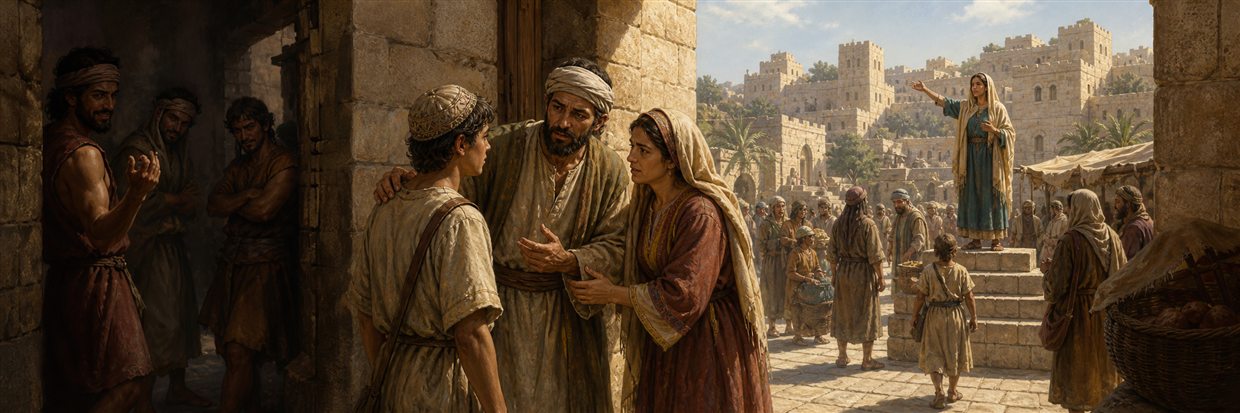
Prepared for BibleVerse · September 11, 2026. An initial editorial edition; independent specialist review is pending. Biblical references use the Berean Standard Bible. The illustration is interpretive artwork.