The short summary
What is Psalms about?
Psalms is a collection of prayers and songs that gives voice to praise, grief, confession, trust, and thanksgiving. Its 150 psalms in the BSB include reflections on God’s instruction, creation, kingship, and Israel’s history. Organized into five books, the collection allows both individuals and communities to speak from distress and celebration, closing with repeated calls to praise.
Psalms 1:1–6; Psalms 13:1–6; Psalms 51:1–12; Psalms 78:1–8; Psalms 150:1–6.01 / Understand the whole
The book in context
Psalms does not tell one continuous story. Its opening contrasts the ways of the righteous and wicked, then turns to kingship and the nations. Across the collection, individual and communal voices address God in different circumstances. Laments ask for help, songs of trust express reliance on God, and thanksgiving recalls deliverance. Some prayers move from anguish toward confidence, while Psalm 88 ends without a comparable resolution. Psalms 1:1–6; Psalms 2:1–12; Psalms 13:1–6; Psalms 23:1–6; Psalms 30:1–12; Psalms 44:1–8; Psalms 88:13–18.
Other psalms celebrate creation, recount Israel’s past, ask for just rule, or meditate on God’s instruction. The collection also preserves disturbing appeals against enemies, including the closing lines of Psalm 137. The poems include praise, accusation, petition, and remembered experience. Reading each as a whole helps make its purpose clearer. Psalms 19:1–14; Psalms 72:1–14; Psalms 78:1–8; Psalms 104:1–9; Psalms 119:1–16; Psalms 137:1–9.
The five-book arrangement is marked by praise at the ends of Psalms 41, 72, 89, and 106. The final book includes the Songs of Ascents and the extended meditation of Psalm 119. The closing psalms repeatedly summon worship, culminating in Psalm 150’s invitation to every breathing creature. This arrangement gathers many voices without erasing the grief and questions found within them. Psalms 41:13; Psalms 72:18–20; Psalms 89:52; Psalms 106:48; Psalms 119:1–8; Psalms 120:1–7; Psalms 134:1–3; Psalms 146:1–10; Psalms 150:1–6.
02 / Follow the structure
A reading outline
A chapter-level reading guide; some literary movements cross these boundaries. Each link opens the section’s first chapter.
- 1–41Book IThe opening introduces instruction and kingship; many prayers voice distress and trust.
- 42–72Book IILonging, communal prayer, thanksgiving, and royal petitions appear in this collection.
- 73–89Book IIIQuestions about justice and communal disaster stand alongside worship and covenant remembrance.
- 90–106Book IVHuman mortality, God’s reign, creation, and Israel’s history shape many of these poems.
- 107–150Book VThanksgiving, instruction, pilgrimage songs, and lament lead to the closing calls to praise.
03 / Notice the connections
Major themes
Honest prayer
The collection gives language to grief and questions as well as confidence. Psalm 13 and Psalm 88 show that laments do not all end in the same way. Psalms 13:1–6; Psalms 88:13–18.
Instruction and a way of life
The opening psalm and Psalm 119 connect meditation on God’s instruction with the direction of daily life. Psalms 1:1–6; Psalms 119:9–16.
Praise and justice
Praise includes attention to the vulnerable and criticism of misplaced trust in human power. Psalms 146:1–10.
04 / Background
Background at a glance
- Literary form
- Poetry, prayers, and songs
- Setting in the text
- Varied personal and communal settings in Israel’s worship
More about the background
The USCCB introduction describes Psalms as a compilation of earlier collections arranged into five books. It distinguishes Hebrew and Greek numbering and notes the variety of names and terms in superscriptions. This overview follows the 150-psalm sequence and verse numbering of the BSB; another edition may number a corresponding psalm differently. [1]
Psalms should not be presented as a work written entirely by David at one time. The collection’s internal notices and variety of settings point readers toward its character as an anthology. The conclusion to the prayers of David in Psalm 72, for example, occurs well before the end of the present collection. Psalms 72:20; Psalms 137:1–4.
05 / Return to the text
Passages to explore
Passage links open the Berean Standard Bible. These selections offer starting points for exploring the book.
From complaint to trust
Follow the movement of the entire prayer rather than isolating its final lines.
Psalms 13:1–6 MemorizeThe shepherd and the host
Notice how the images of guidance, danger, and hospitality develop.
Psalms 23:1–6 MemorizeThe collection’s closing praise
Observe who is invited to praise and the range of instruments named.
Psalms 150:1–6 MemorizeAre the five books of Psalms five separate biblical books?
They are internal divisions within the Book of Psalms. The divisions run from Psalms 1–41, 42–72, 73–89, 90–106, and 107–150 in the numbering used here. Praise formulas at the first four boundaries help mark the structure. Psalms 41:13; Psalms 72:18–19; Psalms 89:52; Psalms 106:48.
Read Psalms
Sources and reading notes
The summaries describe the biblical text; passage references let you check them in context. Historical and authorship notes are attributed separately. The outlines and passage selections are editorial reading aids.
- United States Conference of Catholic Bishops. The Book of Psalms. New American Bible introduction; Opening paragraphs on numbering, superscriptions, and the five-book arrangement. Catholic reference perspective. Accessed September 11, 2026. ↩
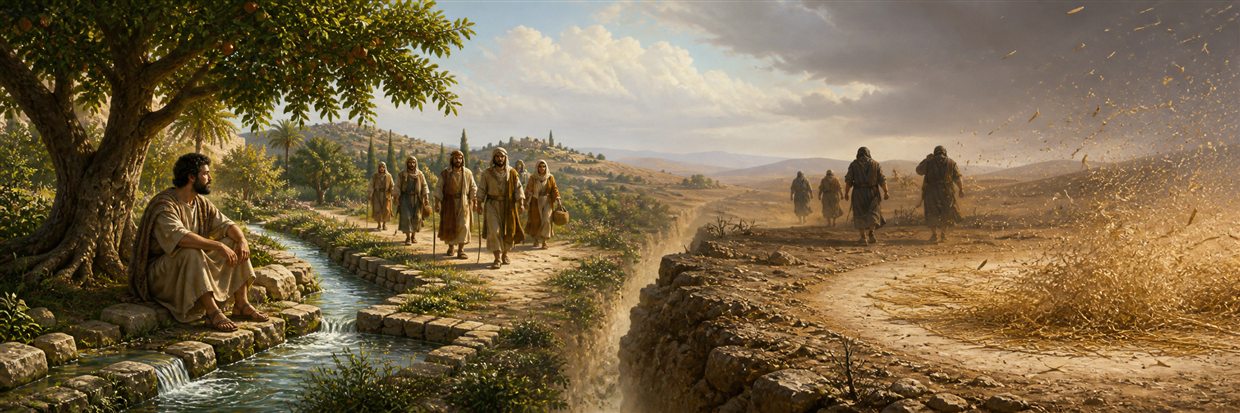
Prepared for BibleVerse · September 11, 2026. An initial editorial edition; independent specialist review is pending. Biblical references use the Berean Standard Bible. The illustration is interpretive artwork.