The short summary
What is Wisdom of Solomon about?
Wisdom of Solomon urges its readers to seek righteousness and divine wisdom. It contrasts the apparent success of the wicked with the lasting hope of the righteous, praises wisdom as God’s gift, and offers a prayer for wise rule. Its later chapters reflect on Israel’s deliverance from Egypt, God’s mercy, and the folly of idolatry.
Wisdom of Solomon 1; Wisdom of Solomon 3; Wisdom of Solomon 7; Wisdom of Solomon 9; Wisdom of Solomon 11; Wisdom of Solomon 13; Wisdom of Solomon 19.01 / Understand the whole
The book in context
The opening addresses rulers and calls for righteousness. Speeches attributed to the ungodly expose a way of life built on pleasure, force, and oppression of the righteous. The response insists that the righteous remain in God’s care even when their death seems disastrous. Judgment reveals the limits of outward success and challenges the powerful to seek wisdom. Wisdom of Solomon 1; Wisdom of Solomon 2; Wisdom of Solomon 3; Wisdom of Solomon 4; Wisdom of Solomon 5; Wisdom of Solomon 6.
A royal speaker describes sharing the ordinary human condition and receiving wisdom through prayer. Wisdom is valued above wealth, authority, beauty, and health, and is praised through a series of images of purity, light, and divine activity. The prayer in chapter 9 acknowledges human limitations and asks for the wisdom needed to govern justly. Wisdom of Solomon 7; Wisdom of Solomon 8; Wisdom of Solomon 9.
The final movement traces wisdom’s saving activity through Israel’s remembered past and develops an extended comparison between Israel and its enemies during the exodus. Reflections on divine restraint and mercy interrupt the sequence, as does a critique of worshiping created things and handmade images. The conclusion praises God’s care for the people through changing circumstances. Wisdom of Solomon 10; Wisdom of Solomon 11; Wisdom of Solomon 12; Wisdom of Solomon 13; Wisdom of Solomon 14; Wisdom of Solomon 15; Wisdom of Solomon 16; Wisdom of Solomon 17; Wisdom of Solomon 18; Wisdom of Solomon 19.
02 / Follow the structure
A reading outline
A chapter-level reading guide; some literary movements cross these boundaries. Each link opens the section’s first chapter.
- 1–5Righteousness beyond appearancesThe claims of the ungodly and the hope of the righteous.
- 6–9Rulers and the gift of wisdomThe summons to wisdom, its praise, and the royal prayer.
- 10–12Wisdom in history and divine mercyRemembered deliverance and reflection on God’s restraint.
- 13–15The critique of idolatryCreated beauty and human craftsmanship are distinguished from their Maker.
- 16–19The exodus reconsideredContrasting experiences of judgment and preservation lead to closing praise.
03 / Notice the connections
Major themes
Righteousness and lasting hope
The book challenges the assumption that suffering or death proves the righteous have failed. Their hope is set within God’s care and judgment. Wisdom of Solomon 3:1–9; Wisdom of Solomon 5.
Wisdom as a gift
The royal speaker begins with human vulnerability and asks for understanding. Wisdom is received through prayer and valued above the privileges of rule. Wisdom of Solomon 7:1–14; Wisdom of Solomon 9:1–18.
Power expressed through mercy
God’s ability to act is joined to restraint, love for created life, and the possibility of repentance. These reflections qualify a simple opposition between power and compassion. Wisdom of Solomon 11:20–26; Wisdom of Solomon 12:1–2.
04 / Background
Background at a glance
- Literary form
- Wisdom teaching, prayer, and reflection on Israel’s past
- Setting in the text
- An appeal to rulers and a reflection on righteousness and the exodus
More about the background
The USCCB introduction identifies an unknown Greek-writing Jewish author, probably associated with Alexandria. It explains the voice of Solomon as a literary way of presenting wisdom rather than proof that the historical king wrote the work. Its discussion places the book within Jewish reflection on suffering, wisdom, and the exodus. [1]
The title is also shortened to Wisdom. The royal speaker recalls being chosen as king and commissioned to build a sanctuary, while stressing a shared human beginning and dependence on God. The later account interprets the exodus theologically rather than simply repeating its narrative in chronological detail. Wisdom of Solomon 7:1–7; Wisdom of Solomon 9:7–12; Wisdom of Solomon 11:1–10; Wisdom of Solomon 19:1–9.
05 / Return to the text
Passages to explore
Passage links open the World English Bible, Catholic Edition. These selections offer starting points for exploring the book.
The hope of the righteous
Read the contrast between how death appears and the care attributed to God.
Wisdom of Solomon 3:1–9 MemorizeWisdom above riches
Notice what the speaker values and how wisdom is received.
Wisdom of Solomon 7:7–14 MemorizePower, mercy, and created life
Trace the connection between God’s power and the decision to spare and sustain.
Wisdom of Solomon 11:20–26 MemorizeDid Solomon write Wisdom of Solomon?
The work speaks in the voice of a king associated with Solomon, including a commission to build the sanctuary. That literary voice is distinct from historical authorship. The cited introduction attributes the work to an unknown Jewish author writing in Greek, not to the historical Solomon. Wisdom of Solomon 7:1–7; Wisdom of Solomon 9:7–12.
Read Wisdom of Solomon
Sources and reading notes
The summaries describe the biblical text; passage references let you check them in context. Historical and authorship notes are attributed separately. The outlines and passage selections are editorial reading aids.
- United States Conference of Catholic Bishops. The Book of Wisdom. New American Bible introduction; opening paragraph on language, authorship, and the Solomonic voice, followed by the thematic description. Catholic reference perspective. Accessed September 11, 2026. ↩
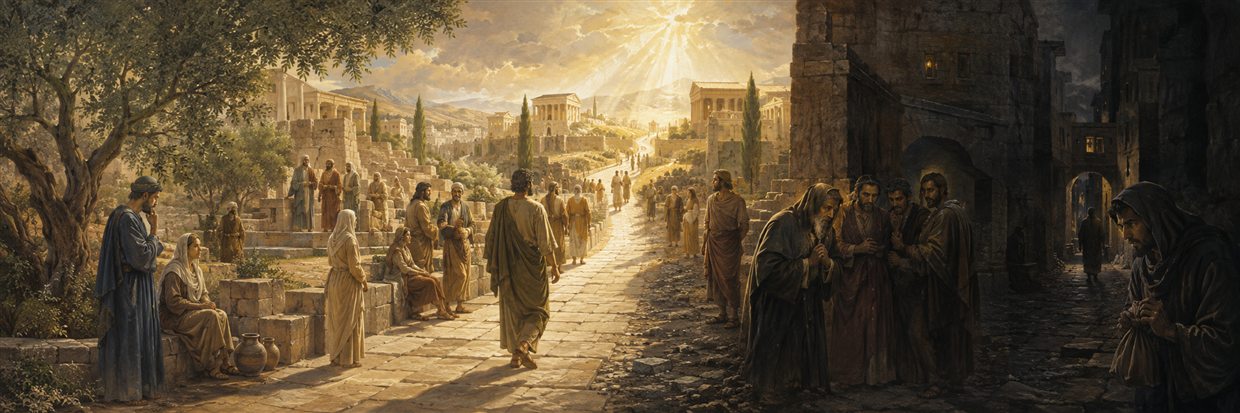
Prepared for BibleVerse · September 11, 2026. An initial editorial edition; independent specialist review is pending. Biblical references use the World English Bible, Catholic Edition. The illustration is interpretive artwork.