The short summary
What is 2 Chronicles about?
2 Chronicles begins with Solomon’s reign and the building and dedication of the Jerusalem temple. After the kingdom divides, it follows Judah’s rulers, highlighting worship, prophetic warnings, and reforms. Episodes of humility and renewal alternate with unfaithfulness. Jerusalem’s destruction and the Babylonian exile are followed by Cyrus’s proclamation permitting a return to rebuild the house of God.
2 Chronicles 1:1; 2 Chronicles 3:1–2; 2 Chronicles 7:1–10; 2 Chronicles 10:16–19; 2 Chronicles 34:29–33; 2 Chronicles 36:15–23.01 / Understand the whole
The book in context
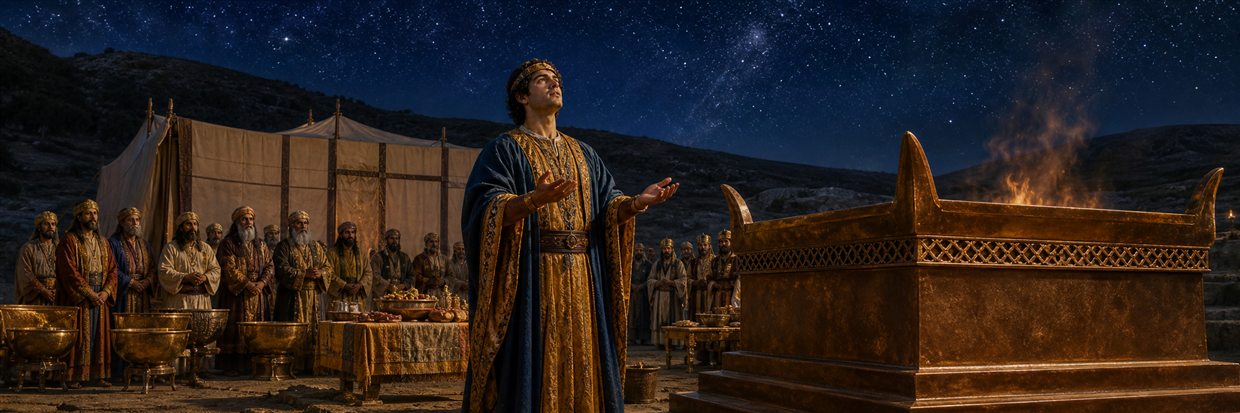
Solomon asks for wisdom, builds the temple in Jerusalem, and leads its dedication. His prayer anticipates sin, distress, exile, and the possibility of returning to God. The divine response includes promises concerning prayer and forgiveness together with warnings about abandoning God. Solomon’s wealth and reputation receive attention before the account turns to his death and Rehoboam’s accession. 2 Chronicles 1:7–12; 2 Chronicles 3:1–2; 2 Chronicles 6:12–42; 2 Chronicles 7:11–22; 2 Chronicles 9:13–31.
Rehoboam’s refusal to ease the people’s burdens leads to division. The narrative then concentrates on Judah, including rulers such as Asa, Jehoshaphat, Joash, and Uzziah. Prophets challenge kings, while accounts of prayer, temple repair, and military crises explore the consequences of seeking or forsaking God. Individual reigns are not uniformly positive or negative: Joash’s early temple repair, for example, is followed by his rejection of prophetic rebuke. 2 Chronicles 10:1–19; 2 Chronicles 15:1–15; 2 Chronicles 20:1–30; 2 Chronicles 24:4–22; 2 Chronicles 26:16–21.
Hezekiah restores temple worship and invites people from Israel and Judah to celebrate Passover. Manasseh’s wrongdoing is followed here by an account of captivity, humility, and reform. Under Josiah, discovery of the Law leads to consultation with Huldah, covenant renewal, and another Passover. Later rulers and the people reject repeated warnings, and Babylon destroys Jerusalem and its temple. The final verses move beyond destruction to Cyrus’s call to rebuild. 2 Chronicles 29:3–11; 2 Chronicles 30:1–9; 2 Chronicles 33:1–17; 2 Chronicles 34:14–33; 2 Chronicles 35:1–19; 2 Chronicles 36:11–23.
02 / Follow the structure
A reading outline
A chapter-level reading guide; some literary movements cross these boundaries. Each link opens the section’s first chapter.
- 1–9Solomon and the templeWisdom, construction, dedication, and royal splendor shape Solomon’s reign.
- 10–12Division under RehoboamThe kingdom divides and Judah faces invasion and a call to humility.
- 13–20Abijah, Asa, and JehoshaphatWars, reforms, and prophetic messages explore reliance on God.
- 21–28Faithfulness and failure among Judah’s rulersSuccessive reigns include temple repair, rejected warnings, pride, and idolatry.
- 29–32Hezekiah’s reforms and trialsRestored worship and Passover precede the Assyrian threat and further tests.
- 33–35Manasseh, Amon, and JosiahRepentance and reform accompany renewed attention to the Law and Passover.
- 36Exile and a proclamation of returnJudah’s final kings give way to destruction, exile, and Cyrus’s decree.
03 / Notice the connections
Major themes
Seeking God and turning back
The response to Solomon’s prayer links humility, prayer, and changed conduct. Manasseh’s later story gives a narrative example of humility after wrongdoing. 2 Chronicles 7:12–22; 2 Chronicles 33:10–17.
Renewal through worship and instruction
Hezekiah restores temple service, while Josiah reads the recovered covenant book to the people and renews their commitment. 2 Chronicles 29:3–11; 2 Chronicles 34:29–33.
Listening to prophetic warnings
Warnings can bring a response, as with Asa, or be rejected. The closing account explicitly connects persistent rejection with catastrophe. 2 Chronicles 15:1–15; 2 Chronicles 36:15–20.
04 / Background
Background at a glance
- Literary form
- Royal narrative, prayers, and prophetic speeches
- Setting in the text
- Solomon and Judah’s kings through exile and Cyrus’s proclamation
More about the background
The USCCB introduction to Chronicles describes the work as an interpretation of Israel’s past centered on David’s line and Jerusalem’s temple. Its discussion applies to both books. That perspective helps explain the sustained attention to Judah’s kings, worship, and reform in 2 Chronicles. [1]
The closing chapter explicitly carries the account from Babylonian destruction to Persian rule. Elsewhere, the narrator refers to records of kings and prophets. This overview treats those as features of the text’s presentation, without naming a final author or fixing a precise writing date. 2 Chronicles 9:29; 2 Chronicles 32:32; 2 Chronicles 36:20–23.
05 / Return to the text
Passages to explore
Passage links open the Berean Standard Bible. These selections offer starting points for exploring the book.
The response to Solomon’s prayer
Read the well-known promise with its temple setting and the warnings that follow it.
2 Chronicles 7:12–22 MemorizeAn invitation to Passover
Notice who is invited and how the appeal connects worship with returning to God.
2 Chronicles 30:1–9 MemorizeDestruction and a new opening
Read the account of rejected warnings, exile, and Cyrus’s proclamation as the book’s conclusion.
2 Chronicles 36:15–23 MemorizeWhat is the original setting of 2 Chronicles 7:14?
It is part of God’s response to Solomon after the temple’s dedication. The surrounding verses discuss drought, locusts, plague, prayer toward this place, and consequences for turning to other gods. Reading the whole response keeps the promise connected to Israel, its land, and the temple. 2 Chronicles 7:11–22.
Read 2 Chronicles
Sources and reading notes
The summaries describe the biblical text; passage references let you check them in context. Historical and authorship notes are attributed separately. The outlines and passage selections are editorial reading aids.
- United States Conference of Catholic Bishops. The First Book of Chronicles. New American Bible introduction; Discussion of the two books’ scope and the Chronicler’s objectives concerning the Davidic monarchy and temple worship. Catholic reference perspective. Accessed September 11, 2026. ↩
Prepared for BibleVerse · September 11, 2026. An initial editorial edition; independent specialist review is pending. Biblical references use the Berean Standard Bible. The illustration is interpretive artwork.