The short summary
What is John about?
John presents Jesus as the Word made flesh who reveals the Father. Signs and extended conversations explore his identity and the life he offers. As conflict grows, Jesus prepares his disciples with teaching about love, the Spirit, and abiding in him. His death and resurrection lead to renewed witness and the stated invitation to believe and have life in his name.
John 1:1–18; John 2:1–11; John 13:34–35; John 14:15–26; John 15:1–17; John 20:19–31.01 / Understand the whole
The book in context
The prologue introduces the Word, life, light, and the revelation of God through Jesus. John the Baptist bears witness, and disciples begin to follow. The sign at Cana, conversations with Nicodemus and a Samaritan woman, and further works of healing develop questions about new birth, living water, and belief. These encounters invite readers to consider who Jesus is. John 1:1–51; John 2:1–11; John 3:1–21; John 4:1–42; John 4:46–54.
Signs and teaching continue through the feeding of the crowd, the healing of a man born blind, and the raising of Lazarus. Jesus speaks of bread, light, and shepherding as conflict intensifies. Before his arrest, he washes the disciples’ feet and teaches them to love one another. Promises of the Spirit and the image of the vine prepare them for his departure. John 6:1–35; John 9:1–41; John 10:1–18; John 11:1–57; John 13:1–17; John 13:34–35; John 14:15–26; John 15:1–17.
After praying for his followers, Jesus is arrested and brought before the authorities. Pilate hands him over for crucifixion, and his body is buried. The risen Jesus appears to Mary Magdalene and the disciples, including Thomas. The book states its purpose of fostering belief and life, then closes with a lakeside appearance, Peter’s commission to care for Jesus’ sheep, and testimony about the beloved disciple. John 17:1–26; John 18:1–40; John 19:1–42; John 20:1–31; John 21:1–25.
02 / Follow the structure
A reading outline
A chapter-level reading guide; some literary movements cross these boundaries. Each link opens the section’s first chapter.
- 1The Word and the first witnessesThe prologue and opening encounters introduce Jesus and his followers.
- 2–12Signs and encountersSigns, conversations, and disputes develop questions about Jesus’ identity and mission.
- 13–17Love and preparation for departureFoot washing, farewell teaching, and prayer address the disciples’ future.
- 18–20Death, resurrection, and beliefArrest and crucifixion lead to resurrection appearances and the statement of purpose.
- 21A lakeside epilogueJesus commissions Peter, and the narrative closes with testimony.
03 / Notice the connections
Major themes
Signs that invite belief
The deeds called signs point beyond the event itself toward Jesus’ identity. The stated purpose connects their written account with belief and life. John 2:1–11; John 20:30–31.
Love expressed in service
Foot washing supplies a concrete example for the disciples. The command to love one another identifies love as a public mark of their relationship to Jesus. John 13:1–17; John 13:34–35.
Life in relationship
Images of shepherding and a vine portray care, dependence, and fruitful living. The promised Spirit belongs to Jesus’ preparation of the disciples for his departure. John 10:1–18; John 14:15–26; John 15:1–17.
04 / Background
Background at a glance
- Literary form
- Gospel narrative and discourses
- Setting in the text
- Galilee, Samaria, and Jerusalem
More about the background
The USCCB introduction describes John as a Gospel with a distinctive literary and symbolic character. It discusses traditional association with John son of Zebedee alongside scholarly questions about eyewitness testimony and later editing. It treats the present form as the result of a process rather than securely attributing every part to one writer. [1]
The ending associates testimony with the disciple Jesus loved without naming him in that passage. John’s scenes of conflict should be read with their particular speakers and settings in view: Jesus, his disciples, and many who believe in him are themselves Jewish. The summary follows John’s own sequence of events. John 4:9; John 4:22; John 11:45; John 21:20–24.
05 / Return to the text
Passages to explore
Passage links open the Berean Standard Bible. These selections offer starting points for exploring the book.
The opening portrait
Follow the connections among Word, life, light, and the revelation of the Father.
John 1:1–18 MemorizeThe teacher who serves
Read Peter’s response alongside Jesus’ explanation of his example.
John 13:1–17 MemorizeThomas and the reader
Notice how the encounter leads into a statement about why the signs were written.
John 20:24–31 MemorizeWhy does John call Jesus’ deeds signs?
The signs disclose something about Jesus and invite a response. At Cana, the sign reveals his glory and the disciples believe. Near the end, the Gospel explains that its written signs are intended to lead readers to believe that Jesus is the Christ, the Son of God, and to have life in his name. John 2:11; John 20:30–31.
Read John
Sources and reading notes
The summaries describe the biblical text; passage references let you check them in context. Historical and authorship notes are attributed separately. The outlines and passage selections are editorial reading aids.
- United States Conference of Catholic Bishops. The Gospel According to John. New American Bible introduction; opening paragraph and the discussion of composition, editing, and eyewitness testimony. Catholic reference perspective. Accessed September 11, 2026. ↩
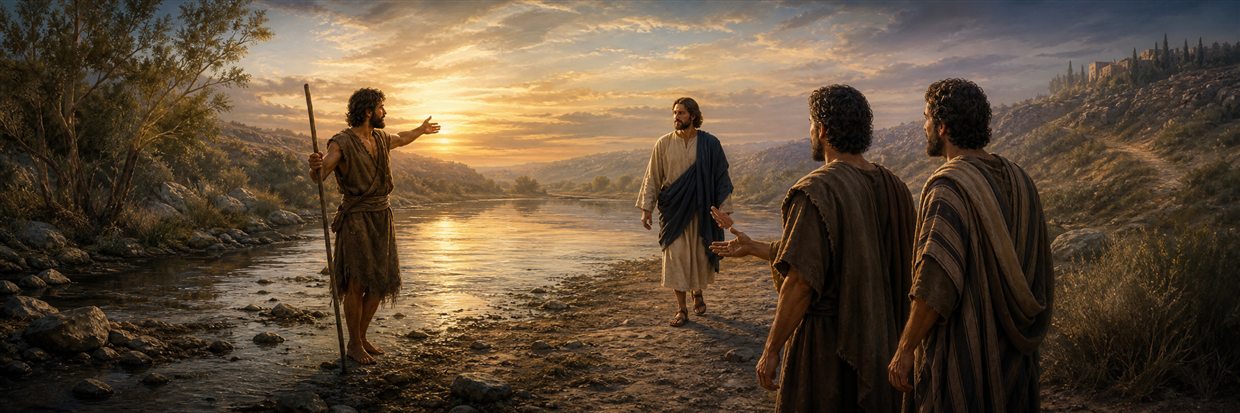
Prepared for BibleVerse · September 11, 2026. An initial editorial edition; independent specialist review is pending. Biblical references use the Berean Standard Bible. The illustration is interpretive artwork.