The short summary
What is 1 Corinthians about?
In 1 Corinthians, Paul addresses divisions and practical questions in the Corinthian church. He brings the cross of Christ to bear on status, conduct, marriage, food offered to idols, and worship. Spiritual gifts must serve the whole community and be governed by love. The letter also defends the resurrection of the dead and closes with plans for a collection and future visits.
1 Corinthians 1:10–31; 1 Corinthians 7:1–7; 1 Corinthians 8:1–13; 1 Corinthians 11:17–34; 1 Corinthians 12:4–27; 1 Corinthians 13:1–13; 1 Corinthians 15:12–22; 1 Corinthians 16:1–9.01 / Understand the whole
The book in context
Paul and Sosthenes greet the church before Paul appeals against factions organized around different leaders. The message of the cross challenges boasting and conventional estimates of wisdom and power. Paul describes himself and Apollos as servants whose work belongs to God. He then confronts sexual misconduct, lawsuits between believers, and assumptions about the use of the body. 1 Corinthians 1:1–31; 1 Corinthians 3:1–23; 1 Corinthians 5:1–13; 1 Corinthians 6:1–20.
Responding to matters raised by the Corinthians, Paul discusses marriage and singleness, then food associated with idols and the limits of personal freedom. Concern for another person’s conscience shapes his counsel. He rebukes divisions at the Lord’s Supper and turns to spiritual gifts: different members belong to one body, love is indispensable, and gathered worship should build up the church. 1 Corinthians 7:1–40; 1 Corinthians 8:1–13; 1 Corinthians 10:23–33; 1 Corinthians 11:17–34; 1 Corinthians 12:4–31; 1 Corinthians 13:1–13; 1 Corinthians 14:26–40.
The argument about resurrection begins with the message Paul received and passed on concerning Christ’s death, burial, resurrection, and appearances. He challenges those who deny the resurrection of the dead and explains the hope of transformation and victory over death. The final chapter gives collection instructions, travel plans, and greetings, ending with an appeal that everything be done in love. 1 Corinthians 15:1–58; 1 Corinthians 16:1–24.
02 / Follow the structure
A reading outline
A chapter-level reading guide; some literary movements cross these boundaries. Each link opens the section’s first chapter.
- 1–4Divisions and the crossPaul challenges factions, boasting, and misunderstandings of Christian leadership.
- 5–6Conduct and accountabilitySexual misconduct, lawsuits, and bodily responsibility require correction.
- 7–10Questions about daily lifeMarriage, singleness, food, conscience, and freedom receive sustained attention.
- 11–14Gathering as one bodyWorship, the Lord’s Supper, spiritual gifts, and love belong together.
- 15Resurrection and hopePaul connects Christ’s resurrection with the future resurrection of believers.
- 16Collection, plans, and greetingsPractical arrangements conclude with encouragement to act in love.
03 / Notice the connections
Major themes
The cross confronts boasting
Paul places the crucified Christ at the center of his response to rivalry. Leaders serve God’s work rather than becoming grounds for competing loyalties. 1 Corinthians 1:10–31; 1 Corinthians 3:5–9.
Love builds the community
Gifts and knowledge are not measures of worth apart from love. The body image calls members to mutual concern, especially for those treated as less important. 1 Corinthians 8:1–3; 1 Corinthians 12:12–27; 1 Corinthians 13:1–13.
Resurrection gives labor meaning
Paul links the resurrection of believers to Christ’s resurrection. His conclusion calls for steadfast work because labor in the Lord is not empty. 1 Corinthians 15:12–22; 1 Corinthians 15:50–58.
04 / Background
Background at a glance
- Literary form
- Apostolic letter addressing community questions
- Setting in the text
- Paul’s correspondence with the church in Corinth
More about the background
The USCCB introduction describes the letter as Paul’s response to reports and questions from Corinth, written while he was in Ephesus. It notes the limits of reconstructing a conversation preserved from only one side. Although some scholars propose multiple components, it reports that most regard the letter as a coherent work. [1]
The opening names Paul and Sosthenes. Paul refers both to reports from Chloe’s household and to matters the Corinthians had written about. He also mentions an earlier letter, so “1 Corinthians” identifies the first canonical letter to Corinth, not the first letter Paul ever sent there. 1 Corinthians 1:1; 1 Corinthians 1:11; 1 Corinthians 5:9; 1 Corinthians 7:1; 1 Corinthians 16:8.
05 / Return to the text
Passages to explore
Passage links open the Berean Standard Bible. These selections offer starting points for exploring the book.
The cross and human status
Read the contrast between God’s action and human boasting against the earlier divisions.
1 Corinthians 1:18–31 MemorizeMany members, one body
Notice the attention given to members considered weaker or less honorable.
1 Corinthians 12:12–27 MemorizeWhy resurrection matters
Follow the received proclamation into Paul’s argument about the resurrection of the dead.
1 Corinthians 15:1–22 MemorizeWhat is the context of 1 Corinthians 13?
The chapter stands within Paul’s discussion of spiritual gifts and gathered worship in chapters 12–14. Its account of love challenges rivalry and self-importance: impressive speech, knowledge, faith, and sacrifice do not benefit a person without love. It guides the community’s use of gifts for one another. 1 Corinthians 12:27–31; 1 Corinthians 13:1–13; 1 Corinthians 14:1–5.
Read 1 Corinthians
Sources and reading notes
The summaries describe the biblical text; passage references let you check them in context. Historical and authorship notes are attributed separately. The outlines and passage selections are editorial reading aids.
- United States Conference of Catholic Bishops. The First Letter to the Corinthians. New American Bible introduction; opening discussion of correspondence, the paragraph on Ephesus, and the final authorship paragraphs. Catholic reference perspective. Accessed September 11, 2026. ↩
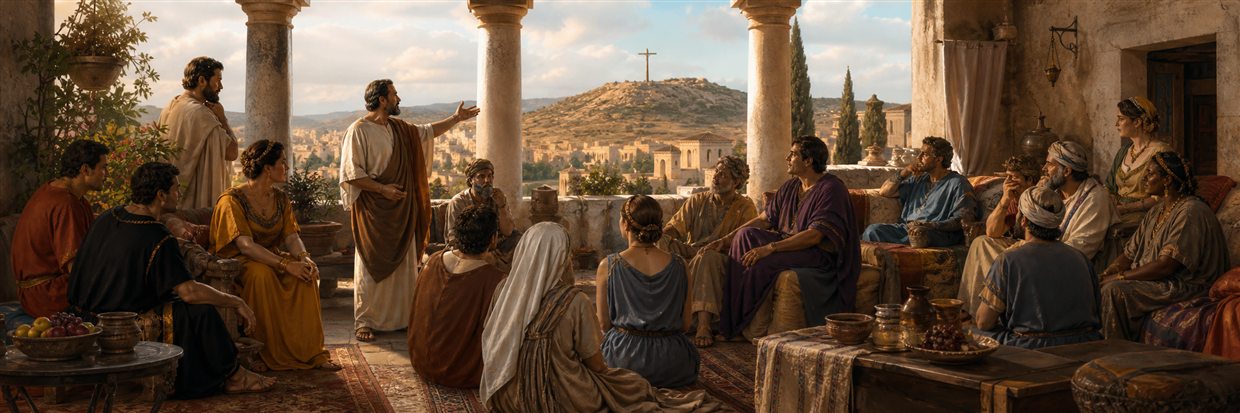
Prepared for BibleVerse · September 11, 2026. An initial editorial edition; independent specialist review is pending. Biblical references use the Berean Standard Bible. The illustration is interpretive artwork.