
The short summary
What is 2 Timothy about?
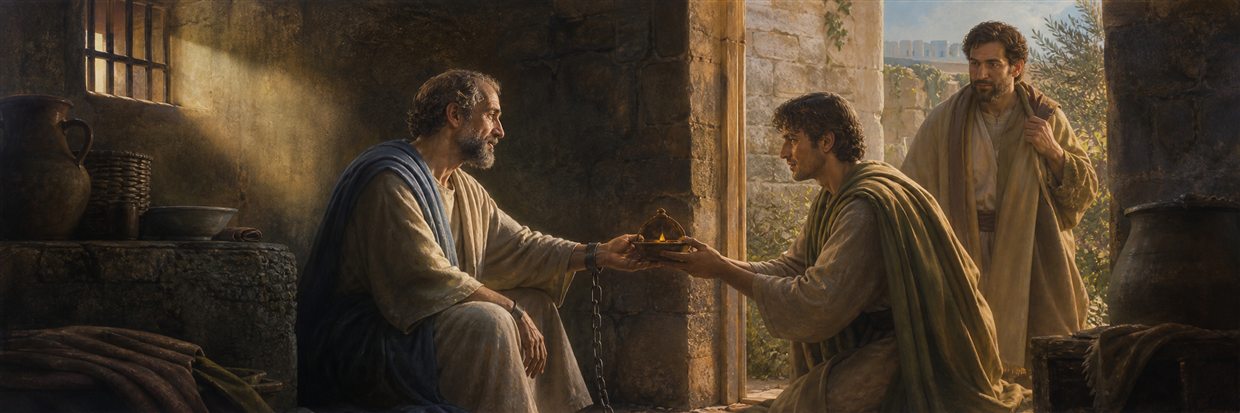
2 Timothy presents a personal appeal to remain faithful amid suffering, opposition, and discouragement. Timothy is urged to guard the message entrusted to him, teach others, avoid destructive disputes, and continue in the Scriptures he has learned. The letter portrays Paul facing the end of his course while asking for companionship and expressing confidence in the Lord.
2 Timothy 1:3–14; 2 Timothy 2:1–13; 2 Timothy 2:14–26; 2 Timothy 3:14–17; 2 Timothy 4:1–22.01 / Understand the whole
The book in context
The opening recalls Timothy’s faith and family and urges him to rekindle his gift. He is told not to be ashamed of the gospel or of Paul’s imprisonment, but to share in suffering through God’s power. The charge to guard sound teaching is paired with recollections of abandonment and the care shown by Onesiphorus. 2 Timothy 1:1–18.
Timothy is to entrust what he has heard to reliable people who can teach others. Images of a soldier, athlete, and farmer illustrate endurance and disciplined service. Warnings against quarrels and false teaching are balanced by a call to patient, gentle correction. The appeal then turns to Timothy’s example of perseverance and the Scriptures that equip him for good work. 2 Timothy 2:1–26; 2 Timothy 3:1–17.
The final charge calls for proclamation with patience, readiness, and endurance. Paul is portrayed as nearing death, looking back on a completed race and forward to the Lord’s judgment. The closing requests for Timothy, Mark, a cloak, and reading materials place that testimony within personal needs and strained relationships. Confidence in divine help accompanies the recollection of being deserted at his defense. 2 Timothy 4:1–22.
02 / Follow the structure
A reading outline
A chapter-level reading guide; some literary movements cross these boundaries. Each link opens the section’s first chapter.
- 1Courage and the entrusted messageTimothy’s faith is recalled, and he is encouraged not to be ashamed.
- 2Teaching with endurance and gentlenessPassing on the message requires perseverance and freedom from destructive quarrels.
- 3Perseverance and ScriptureWarnings about corrupt conduct lead to instruction about continuing in what has been learned.
- 4The final charge and personal requestsProclamation, hope, and the need for companionship bring the letter to a close.
03 / Notice the connections
Major themes
Faithfulness passed onward
Timothy is to guard the message and entrust it to teachers who can carry it further. Continuity depends on both teaching and faithful conduct. 2 Timothy 1:13–14; 2 Timothy 2:1–2.
Courage joined to gentleness
The call to endure suffering does not excuse quarrelsome teaching. The Lord’s servant is instructed to correct opponents with patience and gentleness. 2 Timothy 2:3–13; 2 Timothy 2:23–26.
Scripture equips for action
The appeal to Scripture arises within a call to remain faithful. Its usefulness includes teaching, correction, and formation for good work. 2 Timothy 3:14–17.
04 / Background
Background at a glance
- Literary form
- Pastoral letter with personal appeals
- Setting in the text
- Paul portrayed in imprisonment, addressing Timothy
More about the background
The USCCB introduction describes 2 Timothy as a personal final exhortation portraying Paul’s imprisonment and approaching death. It distinguishes direct Pauline authorship from proposals of composition within a Pauline school, some of which allow material from Paul himself. The suggested relationship to the other Pastoral Epistles depends on that judgment. [1]
The letter names Paul and Timothy and recalls Onesiphorus seeking Paul in Rome. Its final chapter presents an approaching departure and asks Timothy to come before winter. Those details belong to the letter’s portrayal; they do not settle every question about its composition or provide a precise date. 2 Timothy 1:1–2; 2 Timothy 1:16–18; 2 Timothy 4:6–8; 2 Timothy 4:21.
05 / Return to the text
Passages to explore
Passage links open the Berean Standard Bible. These selections offer starting points for exploring the book.
Courage and faithful teaching
Read the call to courage with its grounding in grace and the Spirit’s help.
2 Timothy 1:6–14 MemorizeGentle correction
Notice the qualities expected of a teacher amid disagreement.
2 Timothy 2:22–26 MemorizeLearning that equips
Keep the statement about Scripture connected to continued learning and good work.
2 Timothy 3:14–17 MemorizeWhat is the context of 2 Timothy 3:16–17?
Timothy is urged to continue in what he has learned, including the sacred writings known since childhood. The statement about Scripture explains its usefulness for instruction, correction, and training in righteousness, so that God’s servant is equipped for good work. It leads into the charge to proclaim the word patiently. 2 Timothy 3:14–17; 2 Timothy 4:1–5.
Read 2 Timothy
Sources and reading notes
The summaries describe the biblical text; passage references let you check them in context. Historical and authorship notes are attributed separately. The outlines and passage selections are editorial reading aids.
- United States Conference of Catholic Bishops. The Second Letter to Timothy. New American Bible introduction; opening description of the letter’s tone and the final paragraph on authorship. Catholic reference perspective. Accessed September 11, 2026. ↩
Prepared for BibleVerse · September 11, 2026. An initial editorial edition; independent specialist review is pending. Biblical references use the Berean Standard Bible. The illustration is interpretive artwork.