
The short summary
What is Song of Solomon about?
Song of Solomon, also called Song of Songs, is a collection of love poetry voiced through lovers and their companions. Rich images of gardens, animals, fragrance, and beauty express attraction, longing, delight, and separation. Repeated invitations and searches shape the poems, while the closing chapter celebrates love’s strength and its resistance to purchase.
Song of Solomon 1:1–4; Song of Solomon 2:8–17; Song of Solomon 3:1–5; Song of Solomon 5:2–8; Song of Solomon 8:6–7.01 / Understand the whole
The book in context
The opening announces Solomon’s Song of Songs and immediately introduces a voice longing for kisses and companionship. Exchanges of admiration use images drawn from vineyards, flowers, and the countryside. A springtime invitation urges the beloved to come away, while a recurring appeal cautions against awakening love before its time. These are poetic voices and images, not a dated sequence of historical events. Song of Solomon 1:1–17; Song of Solomon 2:1–17.
Scenes of seeking and finding alternate with celebration and praise. A nighttime search in chapter 3 ends in reunion and is followed by a royal procession. Later poems describe the beloved through elaborate comparisons and garden imagery. Another search in chapter 5 ends in distress, including an assault by the city watchmen. The companions’ questions lead into further descriptions of the beloved. Song of Solomon 3:1–11; Song of Solomon 4:1–16; Song of Solomon 5:1–16; Song of Solomon 6:1–3.
The later chapters continue the exchanges of admiration and invitations to shared life. In chapter 8, the image of a seal introduces a declaration that love is as strong as death and cannot be bought with wealth. Family and vineyard images follow, and the collection closes with a call for the beloved to hurry. The reading outline follows these broad movements; readers and scholars differ about some speakers and transitions. Song of Solomon 6:4–13; Song of Solomon 7:1–13; Song of Solomon 8:1–14.
02 / Follow the structure
A reading outline
A chapter-level reading guide; some literary movements cross these boundaries. Each link opens the section’s first chapter.
- 1–2Admiration and invitationOpening exchanges introduce longing, beauty, springtime, and a recurring refrain.
- 3Searching and a processionA nighttime search is followed by royal and wedding imagery.
- 4–5The garden and another searchCelebration and intimate imagery give way to absence and distress.
- 6–7Recognition and renewed delightQuestions and praise lead into invitations to the countryside.
- 8Love’s strength and the final invitationSeals, family, vineyards, and a closing call bring the poems to their conclusion.
03 / Notice the connections
Major themes
Mutual delight
The lovers speak in admiration and express belonging through repeated reciprocal language. Song of Solomon 2:16; Song of Solomon 6:3; Song of Solomon 7:10.
Longing and vulnerability
The searches portray desire alongside absence and danger; not every scene is an uncomplicated celebration. Song of Solomon 3:1–5; Song of Solomon 5:2–8.
Love beyond price
The declaration in chapter 8 compares love’s power with death and rejects wealth as an adequate price for it. Song of Solomon 8:6–7.
04 / Background
Background at a glance
- Literary form
- Love poetry and lyric dialogue
- Setting in the text
- Poetic scenes in gardens, countryside, and city streets
More about the background
The USCCB introduction describes the Song as love lyrics and notes that its structure is difficult to analyze. It distinguishes the traditional association with Solomon from a scholarly account of later collection and arrangement. This overview follows the poems’ human voices without presenting one reconstruction of their plot as certain. [1]
The opening title associates the Song with Solomon, and he appears in royal and vineyard imagery. These references do not by themselves settle who composed and arranged every poem. This overview does not assign a named final author or precise composition date. Song of Solomon 1:1; Song of Solomon 3:7–11; Song of Solomon 8:11–12.
05 / Return to the text
Passages to explore
Passage links open the Berean Standard Bible. These selections offer starting points for exploring the book.
A springtime invitation
Notice how movement, sound, flowers, and fragrance express longing and delight.
Song of Solomon 2:8–17 MemorizeSeeking and finding
Read the nighttime search with its reunion and closing refrain.
Song of Solomon 3:1–5 MemorizeThe strength of love
Consider the images of a seal, fire, water, and wealth together.
Song of Solomon 8:6–7 MemorizeAre Song of Solomon and Song of Songs the same biblical book?
Yes. They are alternative English titles for this collection. The BSB opening calls it Solomon’s Song of Songs. This site uses Song of Solomon in its reader routes and book listing. Song of Solomon 1:1.
Read Song of Solomon
Sources and reading notes
The summaries describe the biblical text; passage references let you check them in context. Historical and authorship notes are attributed separately. The outlines and passage selections are editorial reading aids.
- United States Conference of Catholic Bishops. The Song of Songs. New American Bible introduction; Opening description of love lyrics; paragraphs on attribution and the difficulty of analyzing the structure. Catholic reference perspective. Accessed September 11, 2026. ↩
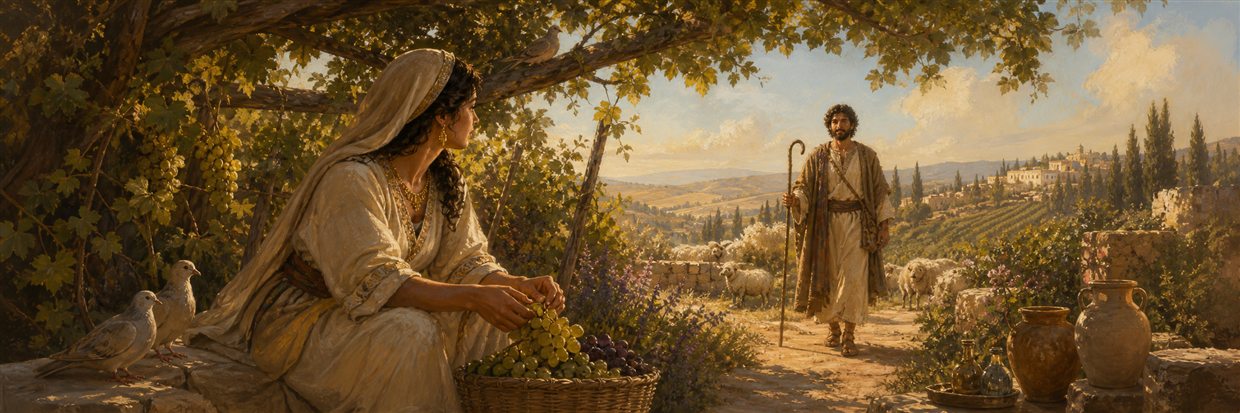
Prepared for BibleVerse · September 11, 2026. An initial editorial edition; independent specialist review is pending. Biblical references use the Berean Standard Bible. The illustration is interpretive artwork.