
The short summary
What is Titus about?
Titus presents instructions for organizing churches in Crete, appointing qualified elders, and confronting disruptive teaching. It connects sound instruction with the conduct of different groups within the community. God’s grace and mercy ground the appeal to self-control, kindness, and good works, while divisive controversies are to be avoided.
Titus 1:1–16; Titus 2:1–15; Titus 3:1–11.01 / Understand the whole
The book in context
The greeting leads into a charge to put unfinished matters in order and appoint elders in Crete. Qualifications emphasize character, hospitality, self-control, and faithful teaching. These requirements answer the problem of deceptive teachers whose conduct and motives undermine households. The chapter contrasts profession of knowing God with actions that deny that profession. Titus 1:1–16.
Instructions address older men, older women, younger women, younger men, Titus himself, and enslaved people. The emphasis falls on conduct consistent with sound teaching. A passage about the appearance of God’s grace supplies the reason for this formation: grace trains believers for upright lives as they await Christ and become eager to do good. Titus 2:1–15.
The final chapter urges readiness for good work, peaceable conduct, and gentleness toward everyone. Remembered wrongdoing is contrasted with salvation through God’s mercy and renewal by the Spirit. Good works are commended as beneficial, while fruitless disputes and persistent divisiveness are rejected. Travel plans and help for coworkers close with another appeal to meet urgent needs. Titus 3:1–15.
02 / Follow the structure
A reading outline
A chapter-level reading guide; some literary movements cross these boundaries. Each link opens the section’s first chapter.
- 1Leaders and trustworthy teachingTitus is charged to appoint elders and address teachers who disrupt households.
- 2Conduct shaped by graceInstructions to different groups lead into the appearance of grace and the hope of Christ.
- 3Mercy and practical responsibilityGentleness, renewal, useful work, and care for needs replace fruitless controversy.
03 / Notice the connections
Major themes
Character supports teaching
Leaders must hold to trustworthy instruction and demonstrate restraint, hospitality, and integrity. Conduct is treated as part of their fitness to serve. Titus 1:5–9.
Grace forms a way of life
Grace is described as training believers for godliness and good deeds. The ethical appeal follows from Christ’s saving action. Titus 2:11–14.
Mercy bears practical fruit
Salvation is attributed to mercy rather than prior righteous deeds, yet believers are urged to devote themselves to work that benefits others. Titus 3:3–8; Titus 3:14.
04 / Background
Background at a glance
- Literary form
- Pastoral letter of instruction
- Setting in the text
- Titus’s work among the churches in Crete
More about the background
The USCCB introduction identifies Titus as one of the Pastoral Epistles and highlights its concern with church leadership and conduct. It discusses both direct Pauline authorship and later composition associated with Pauline tradition. Its account of the letter’s purpose connects practical instruction with the grace and saving work of Christ. [1]
The text names Paul as sender and places Titus in Crete. Its severe generalization about Cretans appears within a polemic against disruptive teachers, not as a neutral description of a population. The instructions to enslaved people describe a social setting involving slavery and should not be relabeled as ordinary employment. Titus 1:1–5; Titus 1:10–16; Titus 2:9–10.
05 / Return to the text
Passages to explore
Passage links open the Berean Standard Bible. These selections offer starting points for exploring the book.
Character and leadership
Notice how personal conduct and the ability to teach belong together.
Titus 1:5–9 MemorizeGrace that teaches
Read salvation, present conduct, and future hope as connected elements.
Titus 2:11–14 MemorizeMercy and useful action
Follow the contrast between former conduct and renewal through mercy into the call to good works.
Titus 3:3–8 MemorizeHow does Titus connect grace and good works?
Titus says salvation comes through God’s mercy, not righteous deeds already performed. It also describes grace as training believers for godly living and repeatedly calls them to good works. These works express renewed life and meet real needs rather than purchase God’s mercy. Titus 2:11–14; Titus 3:4–8; Titus 3:14.
Read Titus
Sources and reading notes
The summaries describe the biblical text; passage references let you check them in context. Historical and authorship notes are attributed separately. The outlines and passage selections are editorial reading aids.
- United States Conference of Catholic Bishops. The Letter to Titus. New American Bible introduction; opening paragraphs on church life, the discussion of grace, and the final authorship paragraph. Catholic reference perspective. Accessed September 11, 2026. ↩
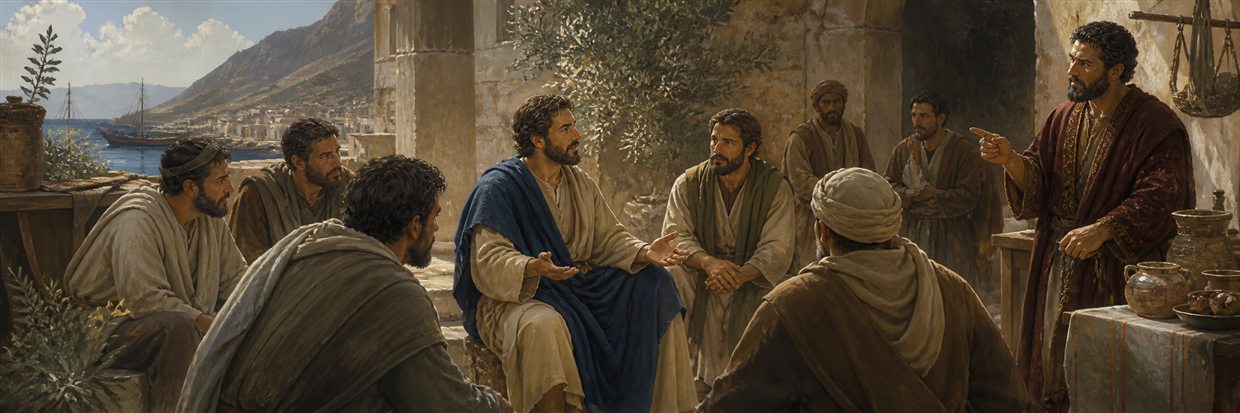
Prepared for BibleVerse · September 11, 2026. An initial editorial edition; independent specialist review is pending. Biblical references use the Berean Standard Bible. The illustration is interpretive artwork.