
The short summary
What is Tobit about?
Tobit tells of an exiled Israelite family, a father’s blindness, and a young woman’s suffering. Tobias, Tobit’s son, travels to Media with a guide who is eventually revealed as the angel Raphael. His marriage to Sarah and return home bring deliverance and healing. Prayer, generosity, family duty, and thanksgiving shape the story.
Tobit 1; Tobit 2; Tobit 3; Tobit 8; Tobit 11; Tobit 12.01 / Understand the whole
The book in context
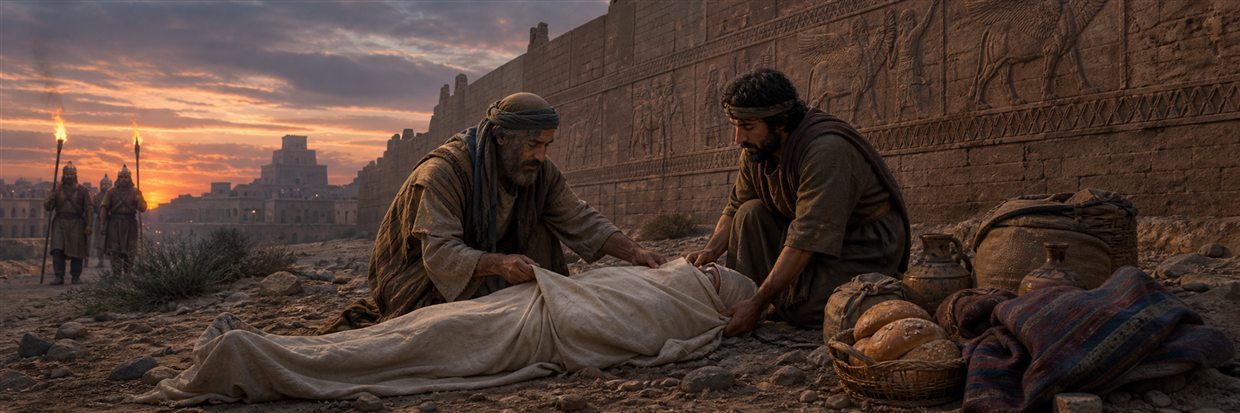
Tobit describes his devotion to God while living among the exiles in Nineveh, including giving food and burying the dead. After he becomes blind, distress and family conflict lead him to pray for death. In Media, Sarah also prays in anguish after losing seven husbands to an evil spirit. The narrative tells readers that both prayers are heard and Raphael is sent to help. Tobit 1; Tobit 2; Tobit 3.
Remembering money deposited in Media, Tobit sends Tobias to recover it and gives him instructions about righteousness and care for others. Raphael accompanies Tobias without initially revealing his identity. During the journey, a fish provides the means later used in Sarah’s deliverance and Tobit’s healing. Tobias marries Sarah, and they pray together before beginning their married life. Tobit 4; Tobit 5; Tobit 6; Tobit 7; Tobit 8.
The money is recovered, and Tobias returns with Sarah to his anxious parents. Tobit regains his sight. Raphael identifies himself and directs the family to praise God, presenting their prayers and acts of mercy as significant parts of the story. Tobit’s song and final instructions widen the perspective to Jerusalem’s future and the family’s departure from Nineveh. Tobit 9; Tobit 10; Tobit 11; Tobit 12; Tobit 13; Tobit 14.
02 / Follow the structure
A reading outline
A chapter-level reading guide; some literary movements cross these boundaries. Each link opens the section’s first chapter.
- 1–3Suffering and prayers heardTobit’s blindness and Sarah’s distress introduce two households in need.
- 4–6Counsel and the journeyTobias receives instruction and travels with Raphael.
- 7–9Marriage and deliveranceSarah and Tobias marry, pray, and celebrate; the deposited money is recovered.
- 10–12Return, healing, and revelationTobias returns, Tobit sees again, and Raphael reveals his identity.
- 13–14Praise and a future beyond NinevehThanksgiving, final counsel, and the family’s departure.
03 / Notice the connections
Major themes
Prayer amid distress
Tobit and Sarah pray from different places, but the narrative links their prayers through God’s response. Thanksgiving later answers their earlier grief. Tobit 3:1–17; Tobit 12:12–22.
Generosity as a way of life
Tobit’s instructions include giving according to one’s means, feeding the hungry, and paying workers promptly. These practices belong to the book’s portrait of righteousness. Tobit 4:7–19.
Care across generations
The journey grows out of family responsibilities, and the return restores relationships as well as sight. Tobit’s final instructions carry those responsibilities into the next generation. Tobit 4:3–4; Tobit 11; Tobit 14:8–13.
04 / Background
Background at a glance
- Literary form
- Didactic narrative with prayers and wisdom teaching
- Setting in the text
- An Israelite family in Nineveh and a journey to Media
More about the background
The USCCB introduction describes Tobit as an instructive religious narrative combining family piety, wisdom, and folklore. It notes an unknown author and multiple ancient textual forms, including Greek recensions and fragments in Aramaic and Hebrew. These textual differences help explain variations between translations; the overview’s passage links follow the edition named below. [1]
The narrative places Tobit among the Israelite exiles in Nineveh and sends Tobias to Media. Its setting within Israel’s past should be distinguished from the date of its composition. The chosen English edition calls the son Tobias; other translations use Tobiah. Raphael’s identity is disclosed to the reader before it is disclosed to the family. Tobit 1:1–3; Tobit 3:16–17; Tobit 12:11–22.
05 / Return to the text
Passages to explore
Passage links open the World English Bible, Catholic Edition. These selections offer starting points for exploring the book.
Counsel for daily conduct
Notice the practical responsibilities attached to generosity and righteousness.
Tobit 4:7–19 MemorizeA prayer at the beginning of marriage
Read the couple’s prayer in the context of Sarah’s earlier suffering.
Tobit 8:4–8 MemorizeThe guide’s identity
Follow the connection between thanksgiving, mercy, and Raphael’s explanation of his mission.
Tobit 12:6–15 MemorizeAre Tobit and Tobias the same person?
No. In the linked edition, Tobit is the father who becomes blind, and Tobias is his son who travels to Media and marries Sarah. Some translations call the son Tobiah. Keeping the two names distinct helps readers follow the departure, journey, and return. Tobit 4:1–3; Tobit 11:9–17.
Read Tobit
Sources and reading notes
The summaries describe the biblical text; passage references let you check them in context. Historical and authorship notes are attributed separately. The outlines and passage selections are editorial reading aids.
- United States Conference of Catholic Bishops. The Book of Tobit. New American Bible introduction; opening description, discussion of literary form, and final paragraphs on textual witnesses. Catholic reference perspective. Accessed September 11, 2026. ↩
Prepared for BibleVerse · September 11, 2026. An initial editorial edition; independent specialist review is pending. Biblical references use the World English Bible, Catholic Edition. The illustration is interpretive artwork.