
The short summary
What is Galatians about?
Galatians is Paul’s urgent response to pressure on Gentile believers to accept circumcision and obligations of the law. He defends his gospel and argues that belonging to Christ and receiving the promise rest on faith rather than works of the law. Freedom leads into service: believers are called to walk by the Spirit, love their neighbors, and carry one another’s burdens.
Galatians 1:1–12; Galatians 2:11–21; Galatians 3:23–29; Galatians 5:1–6; Galatians 5:13–26; Galatians 6:1–10.01 / Understand the whole
The book in context
Paul opens with alarm that the churches are turning toward a different gospel. He recounts his former persecution of the church, his calling, and meetings with other apostles to defend the message he preaches. His confrontation with Cephas over withdrawal from meals with Gentiles shows that the dispute concerns shared community life as well as theological claims. Galatians 1:1–24; Galatians 2:1–21.
Appealing to the Galatians’ reception of the Spirit and to Abraham, Paul argues about faith, promise, and the purpose of the law. He describes believers as children of God in Christ and heirs of the promise. Images of guardianship, adoption, and two contrasting covenants develop his appeal against accepting the proposed requirements as the basis of their standing. Galatians 3:1–29; Galatians 4:1–31.
The call to remain free is followed by a warning against treating freedom as an excuse for self-indulgence. Faith is to express itself through love, and life in the Spirit is contrasted with destructive conduct. Paul calls for gentle restoration, shared burdens, and persistent good work. The closing remarks return to circumcision, the cross, and new creation. Galatians 5:1–26; Galatians 6:1–18.
02 / Follow the structure
A reading outline
A chapter-level reading guide; some literary movements cross these boundaries. Each link opens the section’s first chapter.
- 1–2Paul defends his gospelPersonal testimony and the dispute at Antioch explain what is at stake.
- 3–4Faith, promise, and belongingAbraham, the law, and adoption shape the argument about inheritance.
- 5Freedom and the SpiritFreedom is expressed in loving service and the fruit of the Spirit.
- 6Burdens, good work, and the crossPractical care leads to a final contrast between outward boasting and new creation.
03 / Notice the connections
Major themes
Belonging through Christ
Paul connects faith and baptism with belonging to Christ and sharing Abraham’s promise. The argument addresses barriers within the believing community. Galatians 3:23–29.
Freedom serves the neighbor
Paul rejects self-indulgence as the purpose of freedom. Loving service and care for another’s burdens give freedom a practical direction. Galatians 5:6; Galatians 5:13–15; Galatians 6:1–2.
The Spirit shapes conduct
The contrast between destructive actions and the Spirit’s fruit makes character and relationships central to the letter’s ethical appeal. Galatians 5:16–26.
04 / Background
Background at a glance
- Literary form
- Apostolic letter of argument and exhortation
- Setting in the text
- Paul’s appeal to the churches of Galatia
More about the background
The USCCB introduction discusses two possible destinations: communities in northern Galatia or churches in the southern part of the Roman province. It explains that proposed dates depend partly on that choice and on how Paul’s Jerusalem visit is related to Acts. It presents the letter as a defense of Paul’s authority and gospel. [1]
Paul addresses multiple churches and gives his own account of earlier events. His argument concerns pressure on these believers over circumcision and their standing before God; it should not be flattened into a description of every Jewish practice or belief. The closing appeal pairs freedom with love and responsibility. Galatians 1:1–2; Galatians 2:1–14; Galatians 5:1–14; Galatians 6:12–15.
05 / Return to the text
Passages to explore
Passage links open the Berean Standard Bible. These selections offer starting points for exploring the book.
Table fellowship and the gospel
Read the claim about justification within the dispute over eating with Gentile believers.
Galatians 2:11–21 MemorizeChildren and heirs
Notice how faith, baptism, belonging, and the promise are connected.
Galatians 3:23–29 MemorizeFreedom and its fruit
Follow the movement from loving service to the contrast between the flesh and the Spirit.
Galatians 5:13–26 MemorizeDoes freedom in Galatians mean there are no responsibilities?
No. Paul explicitly warns against using freedom for self-indulgence and calls believers to serve one another in love. Walking by the Spirit involves transformed conduct, gentle restoration of others, bearing burdens, and continuing to do good. Galatians 5:13–26; Galatians 6:1–10.
Read Galatians
Sources and reading notes
The summaries describe the biblical text; passage references let you check them in context. Historical and authorship notes are attributed separately. The outlines and passage selections are editorial reading aids.
- United States Conference of Catholic Bishops. The Letter to the Galatians. New American Bible introduction; opening three paragraphs and the paragraph beginning “When Paul learned of the situation”. Catholic reference perspective. Accessed September 11, 2026. ↩
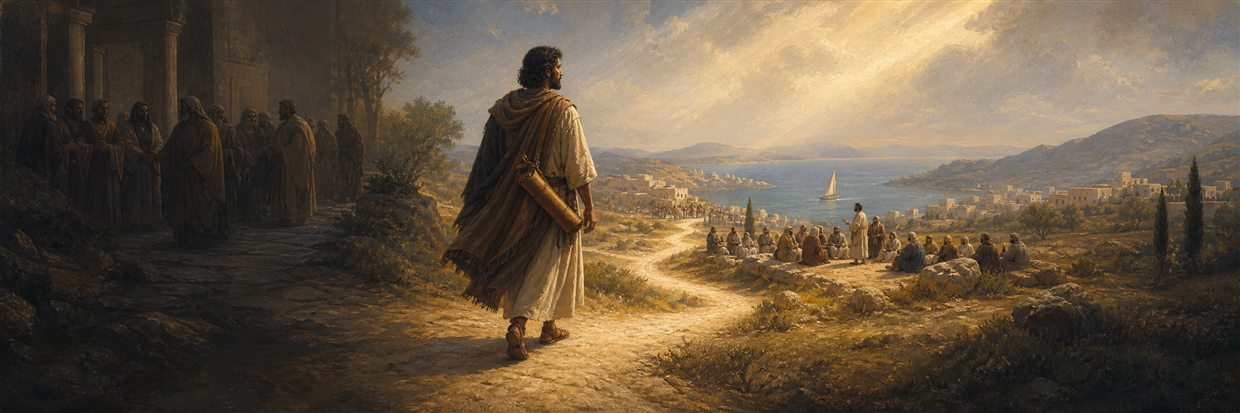
Prepared for BibleVerse · September 11, 2026. An initial editorial edition; independent specialist review is pending. Biblical references use the Berean Standard Bible. The illustration is interpretive artwork.