The short summary
What is Zechariah about?
Zechariah calls the people to return to the Lord and presents visions of Jerusalem’s restoration, renewed priestly service, and the rebuilding of the temple. It joins that hope to justice, mercy, and truthful living. Later oracles portray a humble king, troubled shepherds, mourning and cleansing, and the Lord’s kingship over all the earth.
Zechariah 1:1–6; Zechariah 1:16–17; Zechariah 3:1–10; Zechariah 4:6–10; Zechariah 7:9–10; Zechariah 9:9–10; Zechariah 11:15–17; Zechariah 12:10–14; Zechariah 13:1; Zechariah 14:9.01 / Understand the whole
The book in context
The opening call to return to the Lord introduces a sequence of visions concerning Jerusalem, its people, and its leaders. Joshua the high priest receives clean garments, while Zerubbabel is encouraged that the temple will be completed through God’s Spirit. Other visions portray the removal of wrongdoing and divine activity beyond Judah. The section also includes a symbolic crowning and a promise concerning the Branch. Zechariah 1:1–17; Zechariah 3:1–10; Zechariah 4:6–10; Zechariah 5:1–11; Zechariah 6:1–15.
A question about fasting turns attention to the earlier prophets’ calls for justice and compassion. Refusal to listen had brought scattering and desolation. Promises for Jerusalem then describe older people and children safely sharing its streets, exiles returning, and a renewed commitment to truth. Fasts will become joyful occasions, and peoples from many nations will seek the Lord. Zechariah 7:1–14; Zechariah 8:1–23.
Chapters 9–14 bring together varied oracles about nations, kingship, shepherds, and Jerusalem’s future. A humble king announces peace; scenes involving shepherds expose failed leadership. Later passages picture mourning, cleansing, and severe conflict before the Lord is acknowledged as king over the earth. The final vision extends holiness into everyday objects and describes survivors of the nations coming to worship. Zechariah 9:9–10; Zechariah 11:4–17; Zechariah 12:10–14; Zechariah 13:1–9; Zechariah 14:1–21.
02 / Follow the structure
A reading outline
A chapter-level reading guide; some literary movements cross these boundaries. Each link opens the section’s first chapter.
- 1–6Return and visions of renewalVisions and symbolic actions address Jerusalem, priestly service, and temple rebuilding.
- 7–8Fasting, justice, and restored lifeA question about mourning leads to ethical instruction and promises for the city.
- 9–11Kingship and shepherdsOracles move through deliverance, a humble king, and failed shepherding.
- 12–14Mourning, cleansing, and the coming dayJerusalem faces conflict as the vision looks toward the Lord’s universal reign.
03 / Notice the connections
Major themes
Restoration and God’s Spirit
The promise of temple completion addresses Zerubbabel’s task. Its emphasis on God’s Spirit encourages work that may appear small or uncertain. Zechariah 4:6–10.
Justice belongs with worship
Questions about fasting lead to demands for compassion, truthful judgment, and protection of vulnerable neighbors. Restored worship is connected to restored communal life. Zechariah 7:8–14; Zechariah 8:16–19.
Peace and universal kingship
The humble king’s rule is associated with an end to weapons and peace for the nations. The closing chapter proclaims the Lord’s rule over the whole earth. Zechariah 9:9–10; Zechariah 14:9; Zechariah 14:16–21.
04 / Background
Background at a glance
- Literary form
- Prophetic visions, messages, and symbolic actions
- Setting in the text
- Jerusalem’s restoration and the nations
More about the background
The USCCB introduction distinguishes chapters 1–8, associated with the late sixth-century setting of Haggai and temple restoration, from chapters 9–14, which it regards as later material. It presents the book as a composite work while also noting literary and thematic connections within its later oracles. [1]
The opening identifies Zechariah as the son of Berechiah and grandson of Iddo and dates the message to Darius’s second year. Chapters 9 and 12 introduce new oracles without equivalent dated headings. This overview describes their imagery in its literary setting rather than assigning each scene to a modern event. Zechariah 1:1; Zechariah 9:1; Zechariah 12:1.
05 / Return to the text
Passages to explore
Passage links open the Berean Standard Bible. These selections offer starting points for exploring the book.
The Spirit and the building work
Read the familiar saying about power with the promise that Zerubbabel will finish the temple.
Zechariah 4:6–10 MemorizeThe ethical demand behind fasting
Notice whose welfare the people were told to protect and the consequences of refusing to listen.
Zechariah 7:8–14 MemorizeThe humble king and peace
Keep the king’s arrival together with the removal of weapons and peace for the nations.
Zechariah 9:9–10 MemorizeWhat is the context of Zechariah 4:6?
The words are addressed to Zerubbabel within the vision of a lampstand and olive trees. The surrounding passage promises that he will complete the temple whose foundation he laid. The emphasis on God’s Spirit speaks directly to this rebuilding task and the temptation to dismiss small beginnings. Zechariah 4:1–10.
Read Zechariah
Sources and reading notes
The summaries describe the biblical text; passage references let you check them in context. Historical and authorship notes are attributed separately. The outlines and passage selections are editorial reading aids.
- United States Conference of Catholic Bishops. The Book of Zechariah. New American Bible introduction; opening two paragraphs and the paragraph beginning “Coming nearly a century later”. Catholic reference perspective. Accessed September 11, 2026. ↩
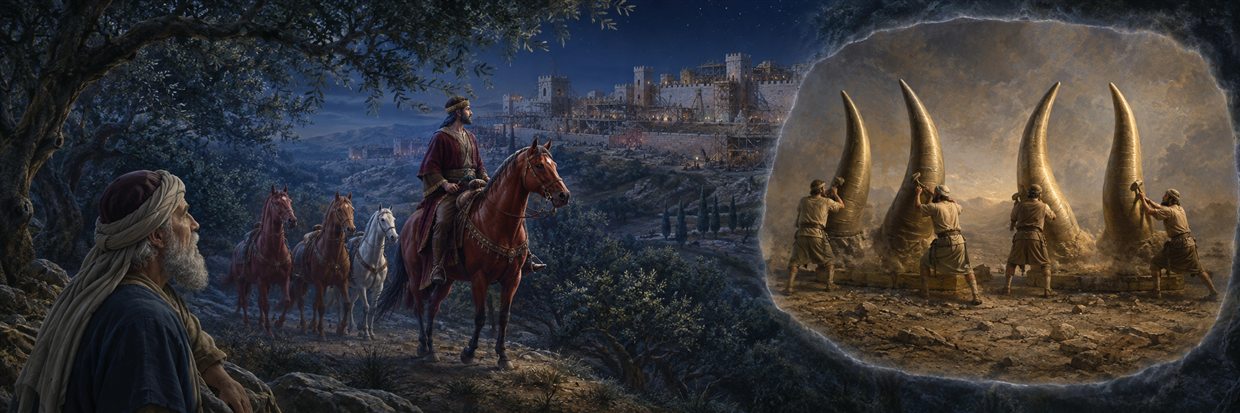
Prepared for BibleVerse · September 11, 2026. An initial editorial edition; independent specialist review is pending. Biblical references use the Berean Standard Bible. The illustration is interpretive artwork.