
The short summary
What is Sirach about?
Sirach offers wisdom for daily life grounded in reverence for God and fidelity to the law. Its teachings address speech, friendship, family responsibilities, wealth, work, and worship. Poems praise wisdom and creation, while a long remembrance of Israel’s ancestors leads to praise of the high priest Simon. The book closes with thanksgiving and an invitation to learn.
Sirach 1; Sirach 6; Sirach 24; Sirach 38; Sirach 43; Sirach 44; Sirach 50; Sirach 51.01 / Understand the whole
The book in context
The opening locates wisdom in God and connects it with reverence, humility, and faithful conduct. Collections of sayings then explore ordinary relationships and choices: care for parents, generosity, friendship, speech, and the dangers of pride. These instructions revisit related subjects rather than forming a single continuous argument or narrative. Sirach 1; Sirach 3; Sirach 4; Sirach 5; Sirach 6; Sirach 10.
Wisdom speaks in her own praise in chapter 24 and is linked with the law given through Moses. Further teachings consider judgment, money, meals, work, illness, and prayer. The book recognizes physicians and skilled workers while giving particular attention to the life of the learned scribe. Praise of the Creator expands the perspective from human society to the order and wonder of the world. Sirach 24; Sirach 29; Sirach 31; Sirach 32; Sirach 38; Sirach 39; Sirach 42:15–25; Sirach 43.
The final major section remembers Israel’s ancestors, from early figures and patriarchs through leaders, priests, kings, and prophets. The portrait of Simon the high priest gives special prominence to worship in Jerusalem. A concluding identification of the teacher is followed by thanksgiving for deliverance and a personal account of seeking wisdom that becomes an invitation to students. Sirach 44; Sirach 45; Sirach 46; Sirach 47; Sirach 48; Sirach 49; Sirach 50; Sirach 51.
02 / Follow the structure
A reading outline
A chapter-level reading guide; some literary movements cross these boundaries. Each link opens the section’s first chapter.
- 1–6The foundations of wise conductReverence, humility, responsibility, speech, and friendship.
- 7–23Counsel for relationships and choicesRecurring instruction on justice, pride, speech, and self-discipline.
- 24Wisdom’s praisePersonified wisdom and the law given to Israel.
- 25–42Life within the communityFurther counsel on households, wealth, work, worship, and human limits.
- 43Praise of creationThe heavens, weather, and wonders of God’s works.
- 44–50Remembering Israel’s ancestorsAncestral praise culminating in the high priest Simon.
- 51Thanksgiving and invitationDeliverance remembered and wisdom offered to learners.
03 / Notice the connections
Major themes
Wisdom joined to reverence
Wisdom is described as coming from God. The invitation to seek it includes humility, attentive listening, and a life shaped by the commandments. Sirach 1:1–10; Sirach 1:26–30; Sirach 6:32–37.
Faithfulness in relationships
Friendship is tested over time, while responsibility toward parents and people in need takes practical form. The book makes everyday conduct a central subject of instruction. Sirach 3:1–16; Sirach 4:1–10; Sirach 6:5–17.
Learning through memory and worship
The praise of ancestors recalls both leadership and covenant faithfulness. Its movement toward the temple service connects remembered history with the community’s worship. Sirach 44; Sirach 50:1–24.
04 / Background
Background at a glance
- Literary form
- Wisdom instruction, hymns, and ancestral praise
- Setting in the text
- A Jerusalem teacher’s counsel on family, community, worship, and learning
More about the background
The USCCB introduction identifies Ben Sira as a Jerusalem sage who composed his instruction in Hebrew. It explains that his grandson translated the work into Greek and supplied a foreword, and notes the recovery of substantial Hebrew manuscript evidence. The introduction distinguishes this transmission history from the arrangement of the book’s teachings. [1]
Sirach is also known as Ben Sira or Ecclesiasticus. Near the end, the teacher identifies himself as Jesus, son of Sirach Eleazar, of Jerusalem in the linked translation. Its advice reflects an ancient social setting, including hierarchical assumptions about households and occupations. The outline groups topics for reading; it does not imply that each subject appears only once. Sirach 33:25–33; Sirach 38:24–34; Sirach 50:27–29.
05 / Return to the text
Passages to explore
Passage links open the World English Bible, Catholic Edition. These selections offer starting points for exploring the book.
Friendship tested by adversity
Compare a faithful friend with companions who disappear in difficulty.
Sirach 6:5–17 MemorizeWisdom finding a dwelling
Follow wisdom’s speech and its connection with Israel’s law.
Sirach 24:1–23 MemorizeAn invitation to learn
Notice how the teacher’s own search becomes a call to students.
Sirach 51:13–30 MemorizeAre Sirach and Ecclesiastes the same book?
No. Sirach is also called Ecclesiasticus, a similar-looking title, but it is distinct from Ecclesiastes. Sirach contains extensive practical instruction and identifies its teacher near the end. Its concluding chapter invites learners to seek wisdom. Sirach 50:27–29; Sirach 51:13–30.
Read Sirach
Sources and reading notes
The summaries describe the biblical text; passage references let you check them in context. Historical and authorship notes are attributed separately. The outlines and passage selections are editorial reading aids.
- United States Conference of Catholic Bishops. The Wisdom of Ben Sira (Ecclesiasticus). New American Bible introduction; opening identification of the author and the paragraph on Hebrew composition, Greek translation, and manuscripts. Catholic reference perspective. Accessed September 11, 2026. ↩
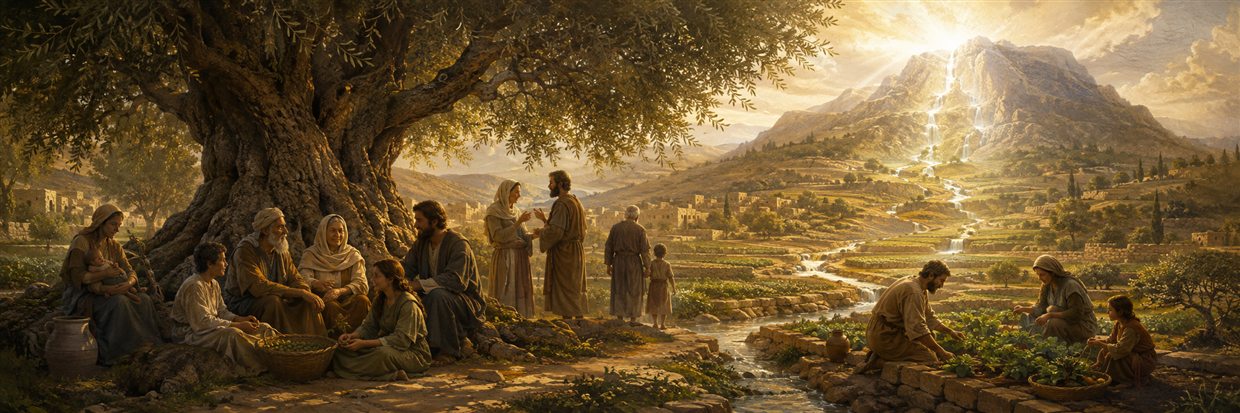
Prepared for BibleVerse · September 11, 2026. An initial editorial edition; independent specialist review is pending. Biblical references use the World English Bible, Catholic Edition. The illustration is interpretive artwork.