The short summary
What is 2 Meqabyan about?
2 Meqabyan tells of Meqabees’ attack on Israel, prophetic rebuke, and repentance. His descendants inherit religious instruction but face persecution. Their refusal of idol sacrifices becomes an example in the book’s extended teaching about resurrection and judgment.
2 Meqabyan 1 ↗; 2 Meqabyan 2 ↗; 2 Meqabyan 4 ↗; 2 Meqabyan 5 ↗; 2 Meqabyan 13 ↗; 2 Meqabyan 14 ↗.01 / Understand the whole
The book in context
Meqabees attacks Israel. A prophet challenges him, and he repents, seeking instruction and changing his conduct. 2 Meqabyan 1 ↗; 2 Meqabyan 2 ↗; 2 Meqabyan 3 ↗; 2 Meqabyan 4 ↗.
His children care for vulnerable people before captivity brings pressure to abandon their observances. The text praises their refusal of idol offerings. 2 Meqabyan 5 ↗; 2 Meqabyan 13 ↗.
The concluding movement argues for resurrection, recalls the passing of worldly possessions, and urges readers to reckon with judgment. 2 Meqabyan 14 ↗; 2 Meqabyan 16 ↗; 2 Meqabyan 18 ↗; 2 Meqabyan 21 ↗.
02 / Follow the structure
A reading outline
A chapter-level reading guide; some literary movements cross these boundaries. Links open the external translation at the relevant chapter or chapter group.
03 / Notice the connections
Major themes
Repentance
Correction becomes an occasion for changed conduct. 2 Meqabyan 2 ↗; 2 Meqabyan 3 ↗; 2 Meqabyan 4 ↗.
Care
The children assist poor people, widows, and orphans. 2 Meqabyan 5 ↗.
Future judgment
Resurrection gives present choices lasting significance. 2 Meqabyan 13 ↗; 2 Meqabyan 14 ↗; 2 Meqabyan 21 ↗.
04 / Background
Background at a glance
- Literary form
- Religious narrative and teaching on resurrection
- Setting in the text
- Meqabees, his descendants, and a persecuting ruler
More about the background
The linked Iyaric rendering supplies the narrative and chapter references used here. Its opening identifies Meqabees as a man of Moab, while the first book introduces a Benjaminite bearing a similar name. This guide preserves the second book’s own presentation rather than forcing the accounts into a single biography. [1]
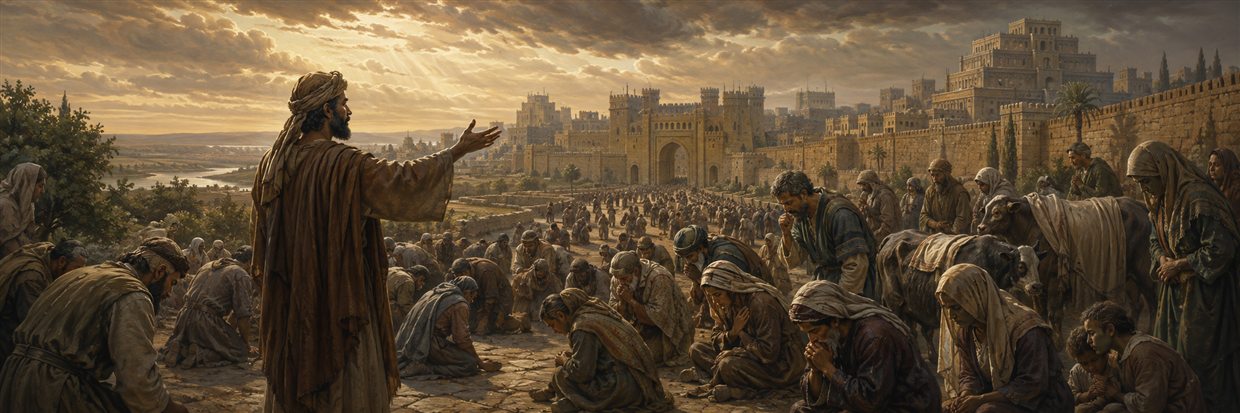
This edition contains 21 chapter sections. After chapter 16, its heading mistakenly repeats “Chapter 7” before chapter 18; this guide does not link to that ambiguous heading. The host does not identify its translator or manuscript. Names and chapter divisions remain edition-specific, and specialist review is pending. The reused Jonah 3 illustration evokes repentance rather than claiming to depict Meqabees.
05 / Return to the text
Passages to explore
Passage links open the Iyaric English rendering hosted by Pseudepigrapha.com. These selections offer starting points for exploring the book.
What the children inherit
How is religious instruction expressed in their treatment of others?
2 Meqabyan 5 ↗Does 2 Meqabyan only narrate events?
No. Its narrative leads into sustained instruction about resurrection, the passing of possessions, and judgment. 2 Meqabyan 14 ↗; 2 Meqabyan 18 ↗; 2 Meqabyan 21 ↗.
Read the source text
The complete text is not yet in the BibleVerse reader. Read the Iyaric English rendering hosted by Pseudepigrapha.com on the external source site; chapter references above use that edition.
Sources and reading notes
The summaries describe the biblical text; passage references let you check them in context. Historical and authorship notes are attributed separately. The outlines and passage selections are editorial reading aids.
- Pseudepigrapha.com. The Book of Meqabyan 2: complete working text. Working English source text; chapters 1–5 and 13–21. Translation-specific reading guide; independent specialist review pending. Accessed September 12, 2026. ↩
- Pseudepigrapha.com, host; translator not identified on the linked page. 2 Meqabyan: English source text. External edition; chapter references above identify the passages discussed. Accessed September 12, 2026.
Prepared for BibleVerse · September 12, 2026. An initial editorial edition; independent specialist review is pending. Biblical references use the Iyaric English rendering hosted by Pseudepigrapha.com. The illustration is interpretive artwork.