
The short summary
What is 2 Kings about?
2 Kings continues the histories of Israel and Judah, beginning with Elijah’s final ministry and Elisha’s succession. Prophetic accounts and successive reigns lead to Assyria’s capture of Samaria and the fall of the northern kingdom. Judah survives longer, but despite reforms under Hezekiah and Josiah, Jerusalem and its temple fall to Babylon. The book ends with the exiled king Jehoiachin receiving improved treatment in Babylon.
2 Kings 2:1–15; 2 Kings 17:5–23; 2 Kings 18:1–6; 2 Kings 23:1–3; 2 Kings 25:8–12; 2 Kings 25:27–30.01 / Understand the whole
The book in context
Elijah’s ministry gives way to Elisha’s after Elijah is taken up in a whirlwind. Accounts of Elisha include provision for a widow, the restoration of a child’s life, and Naaman’s healing. The narrative also follows wars and changes of dynasty. Jehu’s violent seizure of power destroys Ahab’s house, while in Judah the child Joash survives Athaliah’s attempt to eliminate the royal family and is later crowned. 2 Kings 2:1–15; 2 Kings 4:1–7; 2 Kings 4:18–37; 2 Kings 5:1–19; 2 Kings 9:14–37; 2 Kings 10:1–17; 2 Kings 11:1–20.
Successive reigns bring military pressure and repeated judgments on the kings’ worship. Assyria captures Samaria and deports Israelites. Chapter 17 interprets the northern kingdom’s fall as the consequence of persistent unfaithfulness and rejection of prophetic warnings. Judah remains, and under Hezekiah Jerusalem faces an Assyrian threat; the account attributes the city’s deliverance to God. The narrative then looks ahead to a future Babylonian exile. 2 Kings 15:1–31; 2 Kings 17:1–23; 2 Kings 18:1–13; 2 Kings 19:20–37; 2 Kings 20:12–19.
Manasseh’s reign is condemned for idolatry and bloodshed. Later, a book of the Law is found during temple repairs under Josiah, who consults the prophet Huldah and undertakes reforms. The narrative praises Josiah but says that judgment against Judah remains. After further reigns and Babylonian campaigns, Jerusalem is burned and many of its inhabitants are deported. A final notice records Jehoiachin’s release from prison and support at the Babylonian king’s table, without describing a national return from exile. 2 Kings 21:1–16; 2 Kings 22:8–20; 2 Kings 23:1–25; 2 Kings 23:26–27; 2 Kings 24:1–20; 2 Kings 25:1–12; 2 Kings 25:27–30.
02 / Follow the structure
A reading outline
A chapter-level reading guide; some literary movements cross these boundaries. Each link opens the section’s first chapter.
- 1–2Elijah’s last ministry and Elisha’s successionRoyal confrontation is followed by Elijah’s departure and Elisha’s recognition.
- 3–8Elisha among households and kingdomsProvision, healing, and war place prophetic ministry in both everyday and royal life.
- 9–12Upheaval in Israel and JudahJehu’s coup and Joash’s accession bring violence and changes in leadership.
- 13–17The northern kingdom’s final yearsSuccessive kings and Assyrian pressure lead to Samaria’s fall and the narrator’s explanation.
- 18–20Hezekiah and the Assyrian threatJerusalem’s deliverance, Hezekiah’s illness, and Babylonian visitors shape these chapters.
- 21–23Manasseh, Josiah, and reformJudgment, discovery of the Law, and reform precede Judah’s final decline.
- 24–25Jerusalem falls to BabylonDeportations, the temple’s destruction, and Jehoiachin’s release close the book.
03 / Notice the connections
Major themes
Warnings and response
The narrator explains Israel’s fall in terms of rejected warnings. Josiah’s response to the recovered Law offers a contrasting account of humility and action. 2 Kings 17:7–23; 2 Kings 22:8–20; 2 Kings 23:1–3.
Prophetic ministry beyond the palace
Elisha’s work includes the needs of a widow and the healing of Naaman, an Aramean commander. The accounts extend beyond the royal succession. 2 Kings 4:1–7; 2 Kings 5:1–19.
Reform and enduring consequences
Josiah receives exceptional praise, yet the narrative says earlier wrongdoing still brings judgment on Judah. Reform and national survival are not treated as interchangeable. 2 Kings 23:25–27.
04 / Background
Background at a glance
- Literary form
- Royal narrative and prophetic accounts
- Setting in the text
- Israel and Judah through the fall of Samaria and Jerusalem
More about the background
The USCCB introduction reads 1 and 2 Kings together as a theological account that draws on older records. It places the surviving form in the exilic period while acknowledging debate over earlier editions. That is an attributed scholarly assessment, not an author or date supplied by the biblical text itself. [1]
The book cites chronicles of the kings and ends with an event in the thirty-seventh year of Jehoiachin’s exile. Those are textual clues to its retrospective presentation. The ending should not be confused with an account of the exiles returning to Judah. 2 Kings 15:6; 2 Kings 15:11; 2 Kings 25:27–30.
05 / Return to the text
Passages to explore
Passage links open the Berean Standard Bible. These selections offer starting points for exploring the book.
Naaman’s healing
Notice the roles of servants and messengers, and Naaman’s changing response to Elisha’s instructions.
2 Kings 5:1–19 MemorizeThe narrator explains Israel’s fall
Distinguish the report of Assyrian conquest from the theological explanation that follows.
2 Kings 17:6–23 MemorizeThe Law is found and Huldah consulted
Read the discovery, Josiah’s reaction, and Huldah’s response together.
2 Kings 22:8–20 MemorizeDo Israel and Judah fall to the same empire at the same time?
No. The book describes Assyria capturing Samaria and deporting Israelites before the later Babylonian destruction of Jerusalem and deportations from Judah. Keeping the northern kingdom’s fall separate from Judah’s fall makes the sequence easier to follow. 2 Kings 17:5–6; 2 Kings 25:8–12.
Read 2 Kings
Sources and reading notes
The summaries describe the biblical text; passage references let you check them in context. Historical and authorship notes are attributed separately. The outlines and passage selections are editorial reading aids.
- United States Conference of Catholic Bishops. The Books of Kings. New American Bible introduction; Closing paragraphs on older sources, disputed editorial stages, and the exilic form. Catholic reference perspective. Accessed September 11, 2026. ↩
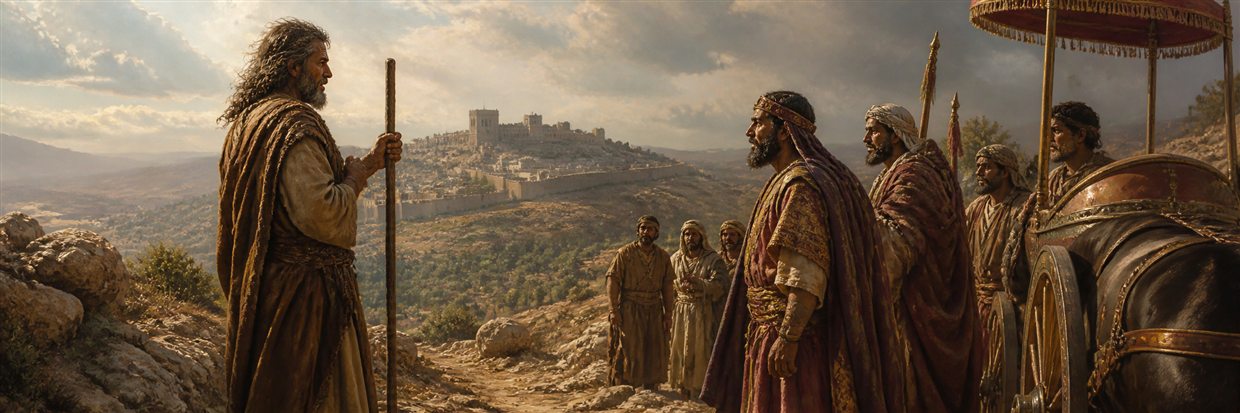
Prepared for BibleVerse · September 11, 2026. An initial editorial edition; independent specialist review is pending. Biblical references use the Berean Standard Bible. The illustration is interpretive artwork.