
The short summary
What is 2 John about?
2 John is a brief letter from the elder to the chosen lady and her children. It joins the command to love one another with fidelity to the teaching about Jesus Christ. The writer warns against deceivers who do not confess Christ’s coming in the flesh, sets limits on receiving such teachers, and hopes for a face-to-face visit.
2 John 1:1–13.01 / Understand the whole
The book in context
The greeting brings together truth and love and names God the Father and Jesus Christ, the Father’s Son. The elder rejoices that some of the addressee’s children are walking in truth. His central appeal is a familiar command rather than a new instruction: the recipients are to love one another by living according to God’s commands. 2 John 1:1–6.
The warning concerns deceivers who do not acknowledge Jesus Christ’s coming in the flesh. Readers are urged to guard what has been accomplished and remain in Christ’s teaching. The letter then forbids receiving or greeting someone who arrives without that teaching, explaining this as avoiding participation in the person’s harmful work. 2 John 1:7–11.
The closing returns to personal contact. The elder has more to communicate but hopes to speak face to face rather than continue with paper and ink. Greetings from the children of the addressee’s chosen sister connect the recipients with another group and end the letter on a note of relationship and anticipated joy. 2 John 1:12–13.
02 / Follow the structure
A reading outline
A chapter-level reading guide; some literary movements cross these boundaries. Each link opens the section’s first chapter.
- 1:1–6Truth expressed through loveThe greeting, encouragement, and renewed command to love one another.
- 1:7–11Discernment about visiting teachersThe confession of Jesus Christ and limits on receiving contrary teaching.
- 1:12–13A hoped-for visitFace-to-face conversation and greetings from the chosen sister’s children.
03 / Notice the connections
Major themes
Truth and love together
The greeting and main appeal hold truth and love together. Love is expressed through a way of life shaped by the command already received. 2 John 1:1–6.
Remaining in Christ’s teaching
The letter’s warning centers on the confession of Jesus Christ’s coming in the flesh. Remaining in this teaching is connected with fellowship with the Father and the Son. 2 John 1:7–9.
Responsibility for what is supported
Receiving a teacher is treated as a consequential action. The elder links his restriction to sharing in that teacher’s work, giving the warning a specific setting within the letter’s dispute. 2 John 1:10–11.
04 / Background
Background at a glance
- Literary form
- Brief pastoral letter
- Setting in the text
- The chosen lady and her children
More about the background
The USCCB introduction identifies connections among the Johannine writings while treating the elder’s personal identity as uncertain. It distinguishes traditional attribution to John the apostle from a possible disciple or scribe. It interprets the chosen lady and her children as a Christian community and its members, rather than a named household. [1]
The writer identifies himself by the title elder, without a personal name. The address and closing use family language, and the wish to visit signals an existing relationship. The community interpretation noted above is an interpretation of that language; the text itself does not name a city or explain the imagery. 2 John 1:1–3; 2 John 1:12–13.
05 / Return to the text
Passages to explore
Passage links open the Berean Standard Bible. These selections offer starting points for exploring the book.
A familiar command
Notice how the greeting prepares for the call to walk in truth and love.
2 John 1:1–6 MemorizeTeaching and participation
Read the restriction on hospitality alongside the specific claim about Jesus and the concern about sharing in a teacher’s work.
2 John 1:7–11 MemorizeBeyond paper and ink
Consider how the hoped-for visit and shared greetings frame this short letter as communication within a relationship.
2 John 1:12–13 MemorizeWhy does 2 John warn against receiving certain teachers?
The warning follows the description of deceivers who do not confess Jesus Christ’s coming in the flesh. The elder says that receiving or greeting someone who brings contrary teaching makes the host a participant in that person’s work. The passage addresses this particular teaching dispute; it should be read together with the letter’s command to love one another. 2 John 1:4–11.
Read 2 John
Sources and reading notes
The summaries describe the biblical text; passage references let you check them in context. Historical and authorship notes are attributed separately. The outlines and passage selections are editorial reading aids.
- United States Conference of Catholic Bishops. The Second Letter of John. New American Bible introduction; first paragraph on the elder and second paragraph on the addressee and purpose. Catholic reference perspective. Accessed September 11, 2026. ↩
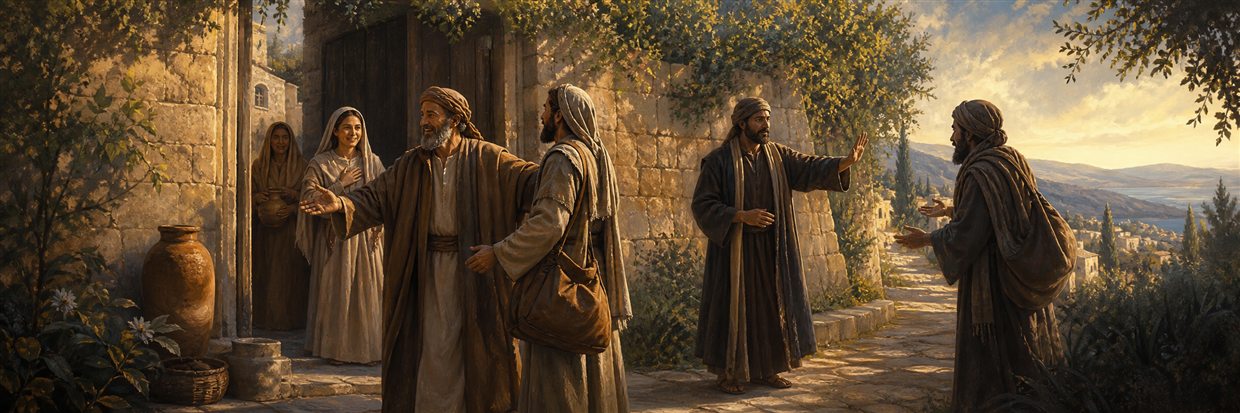
Prepared for BibleVerse · September 11, 2026. An initial editorial edition; independent specialist review is pending. Biblical references use the Berean Standard Bible. The illustration is interpretive artwork.