
The short summary
What is Acts about?
Acts follows the spread of the message about Jesus after his resurrection and ascension. The Holy Spirit empowers witnesses, new communities form, and the mission reaches beyond Jerusalem to Samaritans and Gentiles. Peter and Paul become central figures amid opposition and internal disputes. The narrative ends with Paul in Rome, receiving visitors and teaching about Jesus.
Acts 1:1–11; Acts 2:1–47; Acts 8:4–25; Acts 10:34–48; Acts 15:1–21; Acts 28:30–31.01 / Understand the whole
The book in context
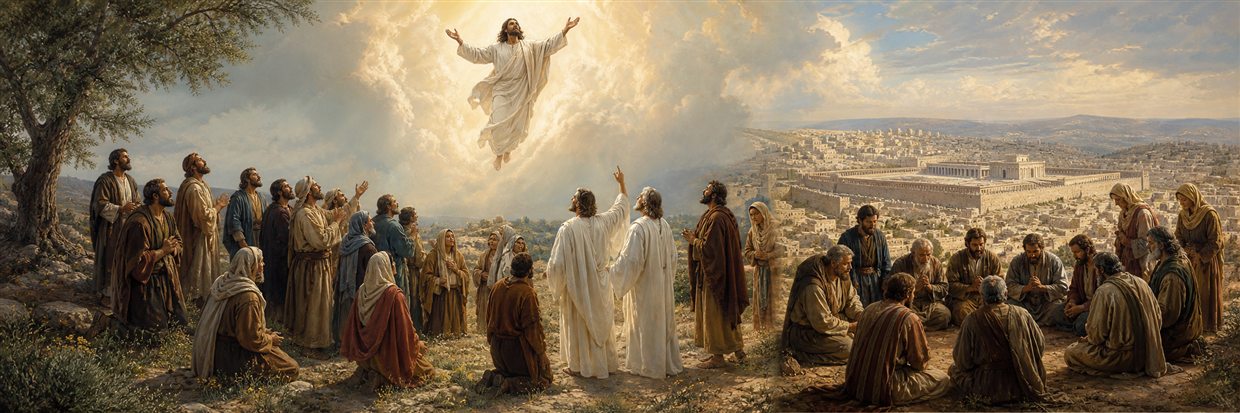
Addressing Theophilus, Acts recalls an earlier account of Jesus and introduces the promise of the Spirit. At Pentecost, the disciples speak in other languages and Peter proclaims Jesus’ resurrection. Baptism, teaching, shared meals, prayer, and care for those in need shape the growing community. Opposition and internal challenges accompany its growth, including disputes over the daily distribution of food. Acts 1:1–11; Acts 2:1–47; Acts 4:1–35; Acts 6:1–7.
Stephen’s death and subsequent persecution scatter believers, and Philip proclaims the message in Samaria. Saul encounters Jesus and joins the movement he had opposed. Peter’s visit to Cornelius becomes a turning point in the welcome of Gentiles. Mission from Antioch and debate in Jerusalem address whether Gentile believers must be circumcised and keep the law of Moses. Acts 7:54–60; Acts 8:1–40; Acts 9:1–31; Acts 10:1–48; Acts 13:1–12; Acts 15:1–29.
Paul and his companions establish and encourage communities through journeys marked by both welcome and resistance. Paul later travels to Jerusalem, is arrested, and makes his defense before several authorities. His appeal to Caesar leads to a sea voyage and shipwreck before he reaches Rome. Acts closes with two years of teaching there under guard, without narrating the outcome of his case. Acts 16:1–40; Acts 18:1–23; Acts 20:17–38; Acts 21:27–40; Acts 25:1–12; Acts 27:1–44; Acts 28:16–31.
02 / Follow the structure
A reading outline
A chapter-level reading guide; some literary movements cross these boundaries. Each link opens the section’s first chapter.
- 1–7Witness in JerusalemThe Spirit, public preaching, community life, and opposition shape the early chapters.
- 8–12The mission crosses boundariesSamaria, Saul’s conversion, and Cornelius broaden the story.
- 13–15Mission and a councilAntioch sends missionaries, and Jerusalem debates Gentile inclusion.
- 16–20Journeys and growing communitiesPaul and his companions travel, teach, and strengthen churches.
- 21–26Arrest and testimonyPaul faces accusations, detention, and hearings before rulers.
- 27–28The journey to RomeShipwreck and arrival lead to the book’s closing scene of continued proclamation.
03 / Notice the connections
Major themes
The Spirit empowers witness
Jesus’ opening promise gives the mission its direction. Pentecost and later encounters connect the Spirit’s work with public testimony and new communities. Acts 1:8; Acts 2:1–18; Acts 10:44–48.
Inclusion requires discernment
The welcome of Gentiles raises questions that the community must address. Testimony, debate, and scriptural reasoning shape the decision in Jerusalem. Acts 10:34–48; Acts 15:6–29.
A shared life under pressure
Prayer, generosity, and practical organization sustain the community. Opposition does not remove the need to respond to inequity within it. Acts 4:23–35; Acts 6:1–7.
04 / Background
Background at a glance
- Literary form
- Narrative of early Christian witness
- Setting in the text
- Jerusalem, Judea, Samaria, and the Mediterranean world
More about the background
The USCCB introduction identifies Acts as the second volume of Luke’s work. It emphasizes the Spirit-guided extension of the message to Gentiles and explains that the narrative selects episodes serving that purpose, with Peter and Paul prominent, rather than providing detailed histories of every early preacher. [1]
Acts addresses Theophilus and refers to an earlier book about Jesus. Its opening commission supplies a geographical direction for the narrative. The closing scene leaves Paul teaching in Rome; it does not report his death or the final result of his appeal to Caesar. Acts 1:1–8; Acts 25:10–12; Acts 28:16–31.
05 / Return to the text
Passages to explore
Passage links open the Berean Standard Bible. These selections offer starting points for exploring the book.
The direction of the story
Read the promise of the Spirit and witness alongside the disciples’ question about the kingdom.
Acts 1:1–11 MemorizeThe Jerusalem debate
Notice the roles of testimony, grace, Scripture, and communal decision.
Acts 15:6–21 MemorizeAn open ending
Observe the mixed response to Paul and the continued proclamation in the final verses.
Acts 28:23–31 MemorizeDoes Acts tell the lives of all twelve apostles?
No. It introduces the apostles but follows selected people and events, especially those involving Peter and Paul, as the message spreads. Its stated direction is witness from Jerusalem outward, and its last scene concerns Paul’s continuing ministry in Rome. Acts 1:8–14; Acts 28:30–31.
Read Acts
Sources and reading notes
The summaries describe the biblical text; passage references let you check them in context. Historical and authorship notes are attributed separately. The outlines and passage selections are editorial reading aids.
- United States Conference of Catholic Bishops. The Acts of the Apostles. New American Bible introduction; opening three paragraphs on the two-volume work and its narrative focus. Catholic reference perspective. Accessed September 11, 2026. ↩
Prepared for BibleVerse · September 11, 2026. An initial editorial edition; independent specialist review is pending. Biblical references use the Berean Standard Bible. The illustration is interpretive artwork.