The short summary
What is Ezra about?
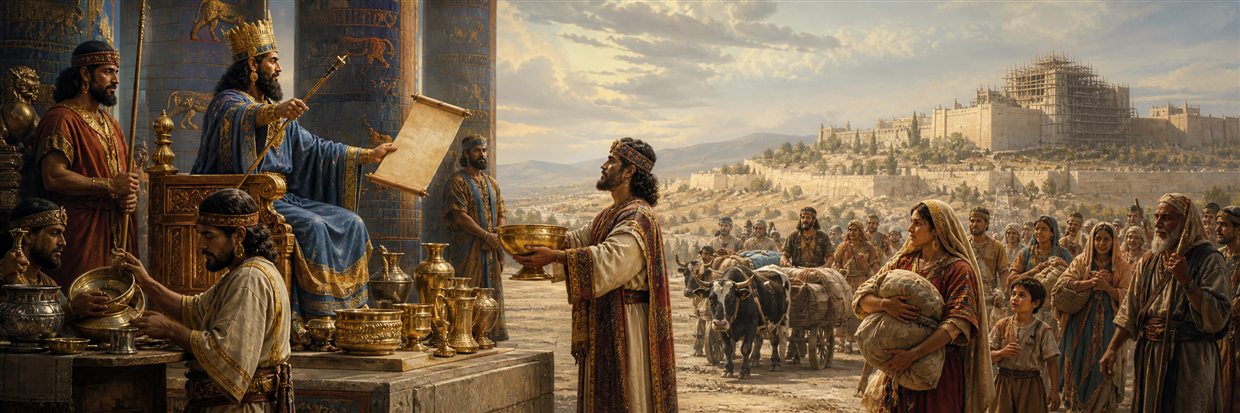
Ezra recounts the return of exiles to Judah and the rebuilding of the Jerusalem temple under Persian rule. Opposition delays the work, but it is completed and dedicated in the reign of Darius. The later chapters introduce Ezra, a priest and scribe who comes to teach the Law. The book closes with a crisis over marriages to foreign women and a process of separation.
Ezra 1:1–5; Ezra 4:4–5; Ezra 6:14–22; Ezra 7:1–10; Ezra 10:2–17.01 / Understand the whole
The book in context
Cyrus authorizes the rebuilding of the house of God in Jerusalem, and returning families prepare to go. A list records members of the returning community. Jeshua and Zerubbabel lead the restoration of the altar and offerings, and work begins on the temple’s foundation. The celebration includes both joyful shouts and weeping from older people who had seen the former temple. Ezra 1:1–11; Ezra 2:1–2; Ezra 2:64–70; Ezra 3:1–13.
Opposition and exchanges with Persian officials interrupt the rebuilding narrative. Haggai and Zechariah encourage renewed construction, and Darius confirms the earlier authorization after a search of royal records. The temple is completed in his sixth year, dedicated with offerings, and followed by Passover observance. These events precede Ezra’s arrival in the book’s sequence. Ezra 4:1–24; Ezra 5:1–5; Ezra 6:1–12; Ezra 6:14–22; Ezra 7:1–10.
Ezra arrives from Babylon with royal authorization and a commitment to study, practice, and teach the Law. His account describes gathering travelers, fasting for protection, and delivering offerings in Jerusalem. After hearing that members of the community have married women from surrounding peoples, he mourns and prays. The concluding chapter records a covenant to send away the foreign wives and their children, an assembly, and an investigation of the marriages. The narrative presents this as a response to unfaithfulness; its description includes the serious consequences for the affected families. Ezra 7:6–10; Ezra 7:11–26; Ezra 8:15–36; Ezra 9:1–15; Ezra 10:2–17; Ezra 10:18–44.
02 / Follow the structure
A reading outline
A chapter-level reading guide; some literary movements cross these boundaries. Each link opens the section’s first chapter.
- 1–2Authorization and the returning communityCyrus’s proclamation, restored temple vessels, and lists introduce the return.
- 3Altar and foundationOfferings resume and the temple foundation prompts joy and tears.
- 4–6Opposition and completionLetters, prophetic encouragement, and royal authorization frame the temple’s rebuilding.
- 7–8Ezra’s commission and journeyEzra travels with authorization, companions, and gifts for the temple.
- 9–10Confession and the marriage crisisEzra’s prayer is followed by an assembly and a process addressing the disputed marriages.
03 / Notice the connections
Major themes
Restoring worship together
The return involves family groups, temple servants, offerings, and shared labor. Rebuilding includes the altar, temple, and the rhythms of communal worship. Ezra 2:64–70; Ezra 3:1–6; Ezra 6:16–22.
Study, practice, and teaching
Ezra’s commitment joins learning the Law with acting on it and teaching it. His role is introduced in connection with his journey and royal authorization. Ezra 7:6–10; Ezra 7:25–26.
Community identity and costly decisions
The final chapters connect the marriage crisis with the community’s understanding of faithfulness. The proposed separation explicitly includes wives and children, an important part of what the passage describes. Ezra 9:1–4; Ezra 10:2–4; Ezra 10:10–17.
04 / Background
Background at a glance
- Literary form
- Restoration narrative, lists, letters, and memoir
- Setting in the text
- Judah under Persian rule after the Babylonian exile
More about the background
The USCCB introduction treats Ezra and Nehemiah as closely related works and describes their authorship as a complex question. It distinguishes Ezra’s first-person material from the larger compilation. This overview follows the order of the present text without assuming that Ezra personally wrote every section. [1]
The text includes lists, royal correspondence, and first-person narration. Chapter 4 also names opposition under Xerxes and Artaxerxes before returning to the temple work under Darius. Readers should therefore follow the named rulers and subject matter rather than assume every paragraph describes the next event in a continuous timeline. Ezra 2:1–2; Ezra 4:6–7; Ezra 4:23–24; Ezra 7:27–28.
05 / Return to the text
Passages to explore
Passage links open the Berean Standard Bible. These selections offer starting points for exploring the book.
Worship amid a new beginning
Read the restored offerings and foundation celebration, including the mixed responses of the people.
Ezra 3:1–13 MemorizeEzra’s vocation
Notice how the passage introduces Ezra’s learning, journey, and commitment to teach.
Ezra 7:6–10 MemorizeA prayer of confession
Read how Ezra speaks about the community’s past, its present situation, and its responsibility.
Ezra 9:5–15 MemorizeDoes Ezra lead the initial return and rebuild the temple himself?
No. The first six chapters recount the return and temple rebuilding before Ezra is introduced in chapter 7. Jeshua and Zerubbabel are named as leaders of the early worship and rebuilding work. Ezra arrives later in the reign of Artaxerxes. Ezra 3:1–2; Ezra 5:1–2; Ezra 6:15; Ezra 7:1–10.
Read Ezra
Sources and reading notes
The summaries describe the biblical text; passage references let you check them in context. Historical and authorship notes are attributed separately. The outlines and passage selections are editorial reading aids.
- United States Conference of Catholic Bishops. The Book of Ezra. New American Bible introduction; Opening paragraphs on authorship and the discussion of the Ezra Memoirs. Catholic reference perspective. Accessed September 11, 2026. ↩
Prepared for BibleVerse · September 11, 2026. An initial editorial edition; independent specialist review is pending. Biblical references use the Berean Standard Bible. The illustration is interpretive artwork.