

2 Esdras
2 Esdras has 16 chapters. Read 2 Esdras in the King James Version + Apocrypha, chapter by chapter, free and without an account.
2 Esdras explores judgment, suffering, and hope through revelations associated with Ezra. Its central chapters follow his questions about Jerusalem’s ruin, human wrongdoing, and God’s justice. Angelic answers and symbolic visions lead toward judgment, restoration, and the preservation of sacred writings. Opening and closing sections add warnings, promises, and calls to endurance.
2 Esdras survives in Latin rather than in the Greek Septuagint. It is received in the Slavonic and Ethiopian Orthodox canons and printed in the Apocrypha of some Protestant Bibles; it is not in the Greek Orthodox, Catholic or Protestant canons or the Jewish Tanakh. See it on the shelf.
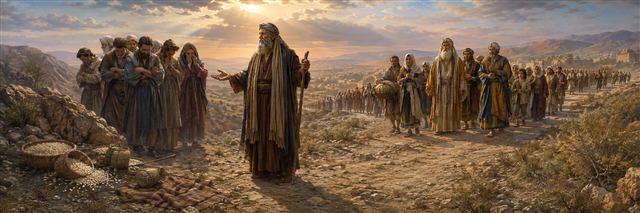
2 Esdras 1 recalls Israel's deliverance and rebellion before envisioning a faithful people arriving from the east.
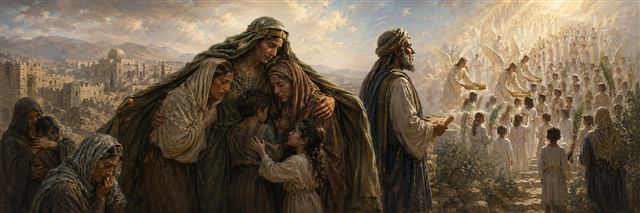
2 Esdras 2 joins care for widows and orphans with Ezra's vision of a faithful multitude receiving crowns and palms.
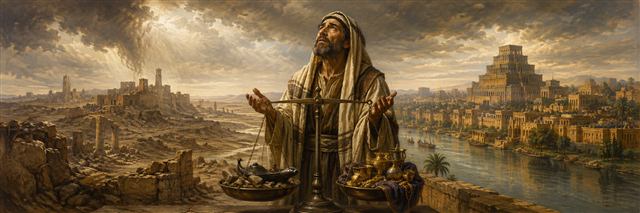
2 Esdras 3 records Ezra's lament over ruined Zion, prosperous Babylon, universal sin, and the apparent imbalance of justice.

2 Esdras 4 shows Uriel confronting Ezra's limited understanding while revealing that the appointed ages will reach fulfillment.
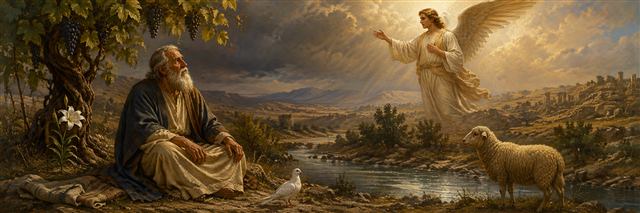
2 Esdras 5 combines signs of upheaval with Ezra's fast, symbolic lament for Israel, and Uriel's teaching about time.

2 Esdras 6 surveys creation, the separated land and sea creatures, end-time signs, and Ezra's question about Israel.

2 Esdras 7 uses the narrow path to a spacious city to explore perseverance, judgment, mortality, and divine mercy.
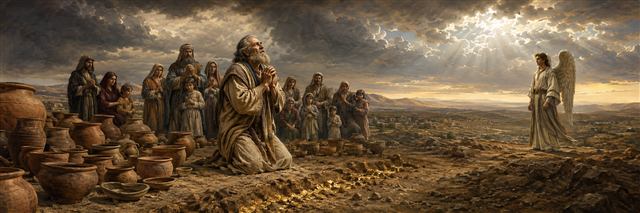
2 Esdras 8 pairs the parable of abundant clay and rare gold with Ezra's prayer for fragile humanity and mercy.
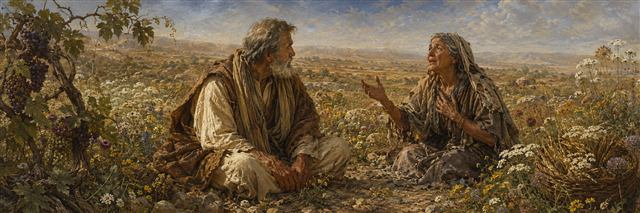
2 Esdras 9 brings Ezra from signs and fasting in a flowered field to his encounter with a mysterious grieving woman.
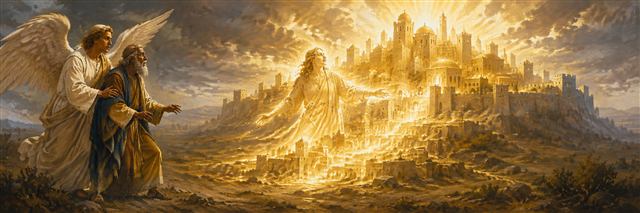
2 Esdras 10 reveals the mourning woman as Zion when she transforms before Ezra into a radiant restored city.

2 Esdras 11 presents Ezra's vision of the three-headed, twelve-winged eagle and the judgment ending its rule.
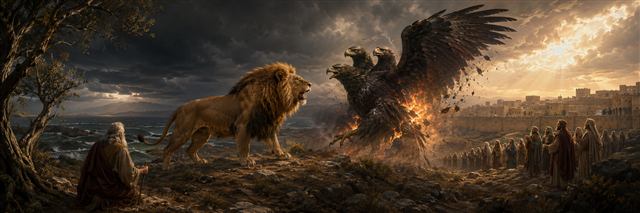
2 Esdras 12 interprets the eagle's rulers and reveals the lion as the Anointed One who judges oppression and delivers his people.

2 Esdras 13 presents the Man from the sea, whose fiery word defeats hostile nations and gathers God's peaceful people.

2 Esdras 14 recounts Ezra receiving fiery wisdom and dictating restored revelation to five scribes over forty days.
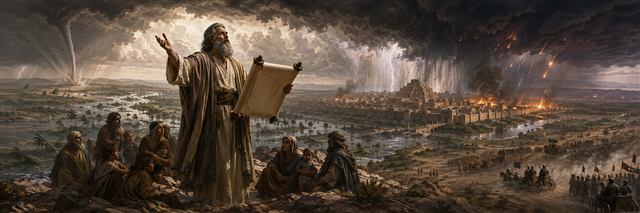
2 Esdras 15 warns that violence and innocent blood bring war, famine, plague, storms, and judgment upon oppressive nations.

2 Esdras 16 calls God's servants to repentance and courage as calamity tests the faithful like gold and God guides them.