Holidays in the Bible
See which Jewish, Christian and Islamic holidays the Bible commands, tells or names, and where the rest come from.
Holidays in the Bible · Christian
Pascha · the Resurrection of the Lord
Easter celebrates the resurrection of Jesus. It falls on a Sunday, though Eastern and Western churches often celebrate on different dates.
When The first Sunday after the first full moon on or after 21 March (Gregorian in the West, Julian in the East). 2026 5 April (Orthodox 12 April).
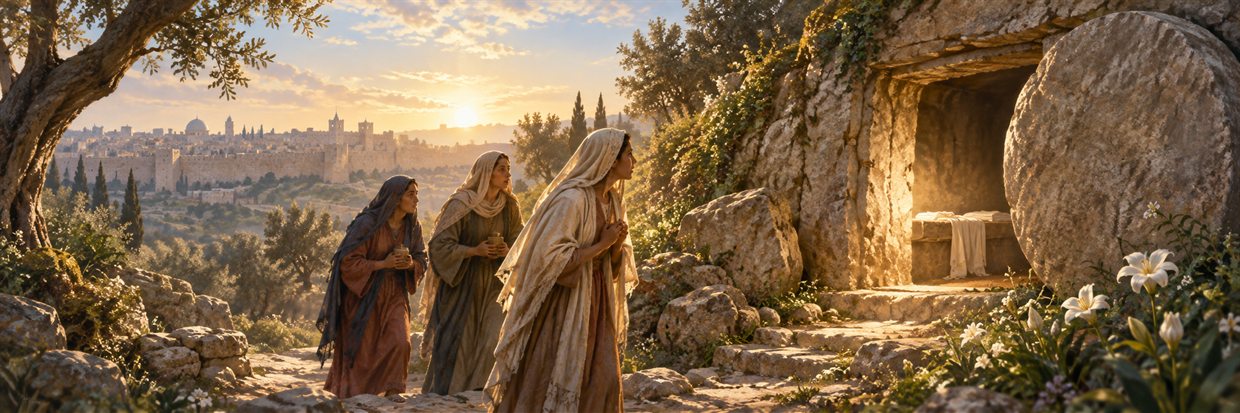
Easter celebrates the resurrection of Jesus. It falls on a Sunday, though Eastern and Western churches often celebrate on different dates.
All four Gospels tell it. The Gospel accounts describe the discovery of the empty tomb in different ways. In Matthew, Mark and Luke a heavenly messenger announces the resurrection; in John 20 Mary encounters Jesus after speaking with angels (Matthew 28, Mark 16, Luke 24, John 20). Paul, writing about twenty-five years later, passes on what he says he received as of first importance: that Christ died, was buried, and was raised on the third day, and was seen (1 Corinthians 15:3-8) 1.
The churches call the resurrection the centre of everything they believe, and Easter the feast of feasts. The Catholic Church keeps the Easter Vigil as the high point of the whole year, and the Orthodox Church calls Pascha the feast that gives every other feast its meaning 2,3. Christians meet on Sunday because of this day: the first day of the week, when the tomb was found empty.
Easter developed from the early Christian commemoration of Jesus' death and resurrection in the setting of Passover. Churches debated its annual date, and different methods of calculation developed over time.
What the New Testament gives is a season and a weekday. Jesus died at Passover, in the month of Nisan, and rose on the first day of the week (Mark 14:12, John 19:14, Luke 24:1). The earliest Christians kept a yearly Pascha, the Greek form of the Hebrew Pesach, and Paul already speaks of keeping the feast with Christ as the Passover lamb (1 Corinthians 5:7-8) 4.
They did not agree on the day. The churches of Asia Minor kept Pascha on the fourteenth of Nisan by the Jewish calendar, whatever day of the week it fell; Rome and Alexandria kept the Sunday after. About the year 190 Polycrates of Ephesus wrote to Victor of Rome that his churches kept the exact day, neither adding nor taking away, and Victor tried to cut the Asian churches off; Irenaeus of Lyons wrote to Victor urging him to keep the peace, and the churches went on differing 5. In 325 the Council of Nicaea sought a common date for Easter. The later tables and precise methods of calculation should not all be attributed directly to that council. The letter Constantine sent afterwards, which Eusebius preserves, gives independence from the Jews as a reason for the rule, in language hostile to them; a part of the council's reception that should be distinguished from the calendar calculation itself 6,7.
Church calendars calculate Easter using an ecclesiastical equinox and a tabulated full moon, rather than simply observing the sky. The Western Gregorian calculation and the Julian calculation used by many Orthodox churches can produce different Sundays. The development of these systems extended over centuries 7,8. The 1997 ecumenical consultation explains the role of differing calendars and lunar tables. 15
The name is the one part of Easter that is English rather than biblical. Many languages use Pascha or a related name derived from Pesach. Bede wrote in 725 that the English called the month of the feast Eosturmonath after a goddess named Eostre, and that the name had passed to the Christian feast 9. The history of the English name is a separate question from the origins of the Christian feast and its later customs.
| Passage | What it is | Edition |
|---|---|---|
| Matthew 28:1-10 | Tells the event | Berean Standard Bible |
| Mark 16:1-8 | Tells the event | Berean Standard Bible |
| Luke 24:1-12 | Tells the event | Berean Standard Bible |
| John 20:1-18 | Tells the event | Berean Standard Bible |
| 1 Corinthians 15:1-8 | Read on the day | Berean Standard Bible |
| 1 Corinthians 15:20-22 | Read on the day | Berean Standard Bible |
| Acts 10:34-43 | Read on the day | Berean Standard Bible |
| Colossians 3:1-4 | Read on the day | Berean Standard Bible |
| 1 Peter 1:3 | Read on the day | Berean Standard Bible |
| Romans 6:4 | Read on the day | Berean Standard Bible |
| 1 Corinthians 5:7-8 | A Christian reading | Berean Standard Bible |
Who keeps it Every Christian church, on the Gregorian date in the West and in the Orthodox Church of Finland, and on the Julian date in the rest of the Orthodox world; the two coincide in some years (2028) and can be five weeks apart (2027). Jehovah's Witnesses keep the Memorial of Christ's death on 14 Nisan instead.
Churches keep a night service that ends in the announcement that Christ is risen, then a morning of the year's most joyful worship, and then fifty days of Easter to Pentecost.
In the Catholic Church the Easter Vigil begins after dark on Holy Saturday with a new fire and the Easter candle, then the readings of salvation history from Genesis, Exodus and the prophets, then the baptism of new Christians and the first Mass of Easter; the bishops call it the greatest and most noble of all solemnities. Easter Sunday follows, then an octave of eight days kept as one feast, and the Easter season runs fifty days to Pentecost 2. Anglican and Lutheran churches keep the vigil and the season in the same shape; Methodist, Presbyterian and Reformed churches keep Easter Sunday with sunrise services and the season of fifty days in their lectionaries.
In the Orthodox Church the feast is Pascha. Just before midnight the church goes dark, the people go out in procession around the building with candles, and at the doors the priest proclaims Christ is risen and the people answer Truly he is risen; the Paschal Divine Liturgy follows, sung throughout, with the opening of John's Gospel read and the Paschal sermon of John Chrysostom, which invites everyone to the feast whether they have fasted or not. The week after is Bright Week, and the greeting is used for forty days 3. The Orthodox reckon the date on the Julian calendar, so their Pascha is the same Sunday as the Western Easter in some years and one, four or five weeks later in others; the Orthodox Church of Finland alone uses the Gregorian date 7.
Many Baptist, Pentecostal and non-denominational congregations mark Easter Sunday; a vigil or a fixed liturgical season is not universal among them. Jehovah's Witnesses do not keep Easter, holding that the New Testament commands the remembrance of Jesus' death and not his resurrection, and that the feast's name and customs come from outside Scripture; they keep the Memorial of Christ's death on 14 Nisan instead, in their own words 10.
Everywhere, Easter is the day for baptisms, for white vestments, for the word alleluia which the Western churches put away during Lent, and for the greeting that the Orthodox make the whole season's password: Christ is risen.
These passages offer a starting point for study. Service readings and verse numbering can differ by tradition, Bible edition and year; use the relevant community's calendar for a particular service.
The Easter Vigil reads the whole story of salvation from creation to the empty tomb; Easter morning reads the tomb and the first sermon about it.
The Catholic vigil reads Genesis 1 and 22, Exodus 14, Isaiah 54 and 55, Baruch 3 and Ezekiel 36, then Romans 6:3-11 and the resurrection Gospel of the year. Easter Sunday: Acts 10:34-43, Peter's sermon to Cornelius; Colossians 3:1-4; and John 20:1-9. The Revised Common Lectionary used by many Anglican, Lutheran, Methodist and Presbyterian churches includes year-dependent alternatives; its Year B epistle is 1 Corinthians 15:1-11 2.
The Orthodox Paschal Liturgy reads Acts 1:1-8 and John 1:1-17, In the beginning was the Word, rather than using an empty-tomb passage at this particular service. Other Paschal services have their own readings and local customs 3.
In brief Easter Sunday: Acts 10:34, 37-43; Colossians 3:1-4; John 20:1-9. Byzantine Pascha: John 1:1-17; Acts 1:1-8.
Jewish Passover and Christian Easter are historically connected, but they commemorate different events and have distinct religious meanings.
Jewish and Christian writers have explored both the connections and the differences. Rabbi Ismar Schorsch offers one such comparison, emphasizing communal responsibility in Passover and resurrection hope in Easter. This is one author's interpretation, not a complete description of either tradition 11.
This history also includes anti-Jewish hostility and violence. For centuries Holy Week, when the churches read the passion story, was a season of dread for Jews in Christian lands, who often came under attack at Easter; the Catholic Good Friday prayer spoke of the Jews as faithless until Pope John XXIII removed the word in 1959, and the prayer was rewritten in 1970 12. In 1965 the Second Vatican Council's declaration Nostra Aetate said that what happened in the passion cannot be charged against all the Jews then alive nor against the Jews of today, and that the church decries hatred, persecutions and displays of antisemitism against Jews at any time and by anyone 13. These developments are important context for reading the Passion narratives responsibly.
The date question runs the other way from Passover's. Passover keeps its place at the full moon of Nisan on the Hebrew calendar; the church set Easter on a Sunday reckoned without that calendar, so Western Easter usually falls the Sunday after Passover begins and occasionally, as in 2027, a month before it. The Passover page explains the festival.
Easter is the first Sunday after the first full moon on or after 21 March, so it falls between 22 March and 25 April in the West.
The calculation developed within the tradition of a common Sunday Easter; its moon is an ecclesiastical calculation rather than a direct observation, and the two Christian calendars apply the rule differently. The West uses the Gregorian calendar, corrected in 1582; the Orthodox use the Julian, whose 21 March now falls on 3 April, so Orthodox Pascha runs from 4 April to 8 May in Gregorian terms and is never earlier than the Western Easter 7. In 2026 the two fall a week apart, in 2027 five weeks apart, and in 2028 on the same day, 16 April.
Proposals for a common date have been made since a World Council of Churches consultation at Aleppo in 1997 recommended keeping the Nicene rule with the moon calculated astronomically for the meridian of Jerusalem, and were raised again around the seventeen-hundredth anniversary of Nicaea in 2025; this page continues to show the Gregorian and Julian Easter calculations separately 14. Ash Wednesday, Palm Sunday, Ascension, Pentecost, Trinity Sunday and Corpus Christi are all counted from Easter, so the whole spring moves with it. The dates below are the Western ones with the Orthodox Pascha in brackets.
| Rule | 2026 | 2027 |
|---|---|---|
| The first Sunday after the first full moon on or after 21 March (Gregorian in the West, Julian in the East) | 5 April (Orthodox 12 April) | 28 March (Orthodox 2 May) |
The resurrection is, in all four Gospels and in Paul, who calls it the message of first importance. The feast is not: the New Testament gives a season, Passover, and a weekday, the first of the week, and the Council of Nicaea sought agreement on Easter observance in 325; the calendar calculation developed over time. The name Easter is English, from Bede's Eosturmonath; many languages use Pascha or related names derived from Pesach 1,7,9.
Because it follows the moon. The rule set at Nicaea is the first Sunday after the first full moon on or after 21 March, using the church's tables of the moon, so Easter can fall anywhere from 22 March to 25 April in the West. Everything from Ash Wednesday to Pentecost is counted from it 7.
They use the same rule on the Julian calendar, whose 21 March now falls on 3 April in Gregorian terms. So Orthodox Pascha is the same Sunday as Western Easter in some years, such as 2028, and one, four or five weeks later in others. The Orthodox Church of Finland is the one Orthodox church that uses the Gregorian date 7.
The day is not; it celebrates the resurrection the Gospels tell, and its date follows Passover. The English name is: Bede wrote in 725 that the month was named for a goddess, Eostre, and the name passed to the feast, though most languages call the day Pascha. Eggs, rabbits and spring customs are folk traditions that the Bible has nothing to say about, and Christians differ about them 9.
Passover is the Jewish festival of the exodus from Egypt, commanded in the Torah and kept at the full moon of Nisan; Easter is the Christian feast of the resurrection, which the Gospels place at Passover and the church set on a Sunday reckoned without the Jewish calendar. They share a season and the word Pascha, and Christians read the Passover lamb in Christ; Jews keep Passover as the Jewish festival commemorating the Exodus 4,11.
Quoted from the Berean Standard Bible; each links to its chapter and carries a Memorize button that starts the five-step path. Switch the edition to read them in another Bible here.
As the women bowed their faces to the ground in terror, the two men asked them, “Why do you look for the living among the dead? He is not here; He has risen! Remember how He told you while He was still in Galilee:
The question at the tomb, read at the Easter Vigil in the year of Luke. He is not here; he has risen.
For what I received I passed on to you as of first importance: that Christ died for our sins according to the Scriptures, that He was buried, that He was raised on the third day according to the Scriptures,
The oldest written statement of Easter, which Paul says he received and passed on: died, buried, raised on the third day.
But Christ has indeed been raised from the dead, the firstfruits of those who have fallen asleep.
Firstfruits was the barley offering of the second day of Passover; Paul makes the risen Christ the firstfruits of the dead.
Blessed be the God and Father of our Lord Jesus Christ! By His great mercy He has given us new birth into a living hope through the resurrection of Jesus Christ from the dead,
The Anglican and Lutheran epistle for the second Sunday of Easter: a living hope through the resurrection.
Make it part of your day
Optional further reading: you can explore the text without sharing its beliefs or taking part in the observance.
The two sentences the women heard at the tomb, which every Easter service repeats.
As the women bowed their faces to the ground in terror, the two men asked them, “Why do you look for the living among the dead? He is not here; He has risen! Remember how He told you while He was still in Galilee:
The numbers match the references in the article. Links include religious texts, community explanations and historical studies. Read more about how this guide was researched.
BibleVerse Editorial, "Easter: What It Marks, Where It Comes From, and How It Is Kept", BibleVerse, published 2026-09-11, updated 2026-09-12, https://bibleverse.site/holidays/easter/
Version 1.1. Awaiting review by a member of the community it describes. Dates in the table are for 2026 and 2027 and are refreshed yearly. Corrections are welcome through the contact page.
See which Jewish, Christian and Islamic holidays the Bible commands, tells or names, and where the rest come from.
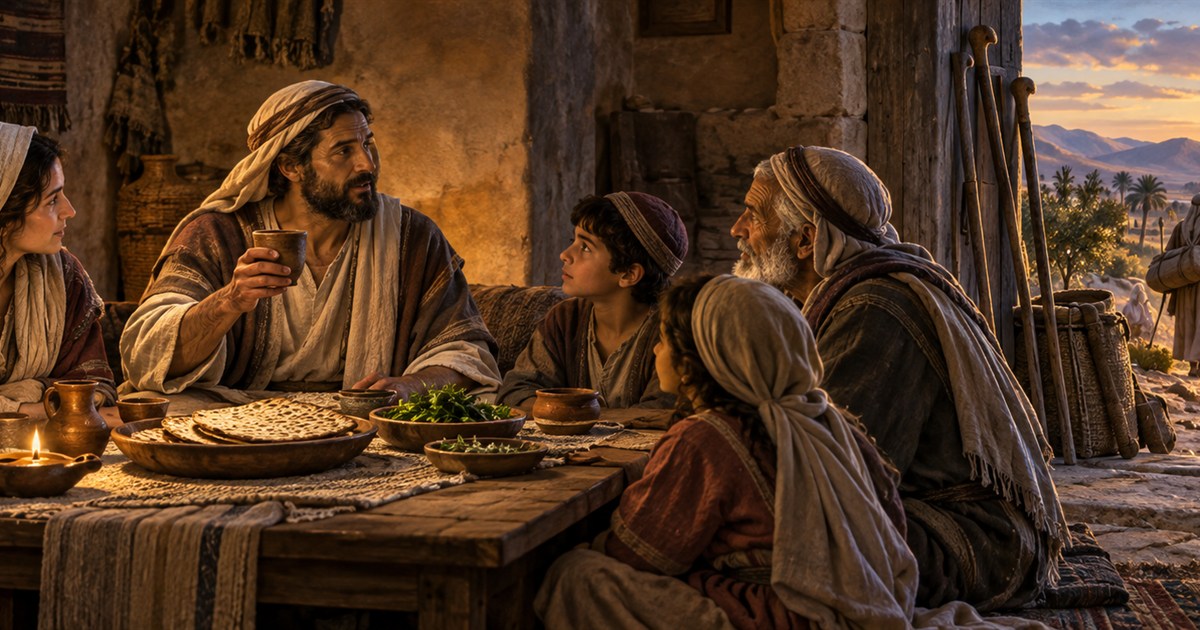
Passover, or Pesach, is the Jewish festival commemorating the Israelites' freedom from slavery in Egypt. The seder meal brings families and friends together to tell the Exodus story.
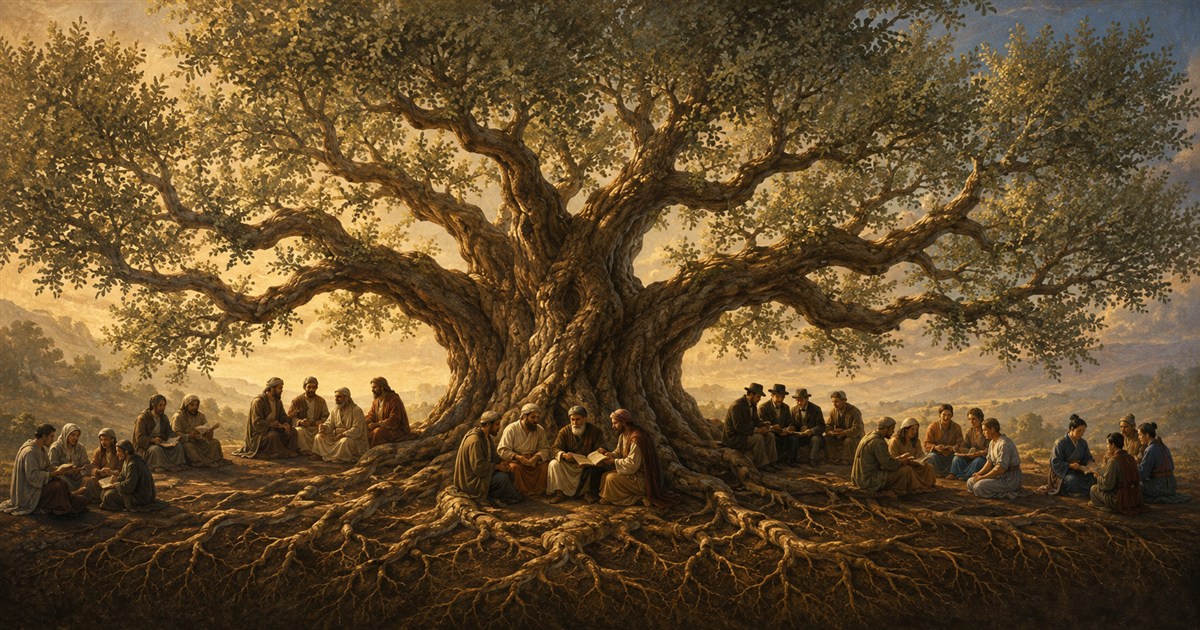
Follow the branching histories of Christian and Jewish traditions.