Holidays in the Bible
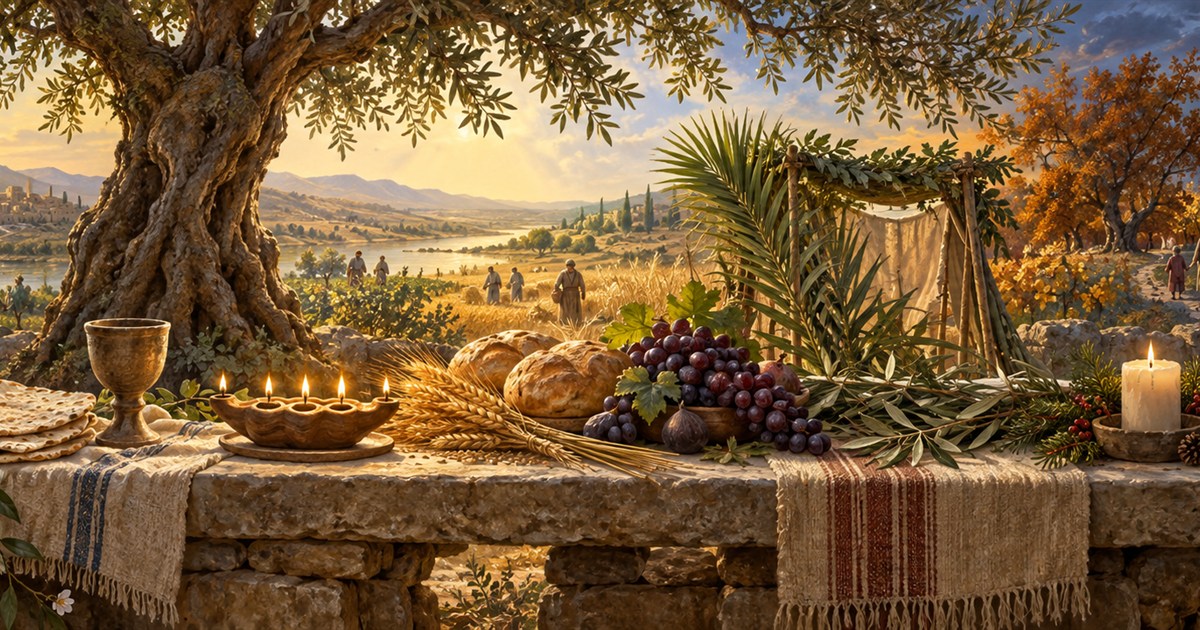
See which Jewish, Christian and Islamic holidays the Bible commands, tells or names, and where the rest come from.

Communities through the centuries
Explore selected Christian churches and Jewish movements, their historical connections, and the Scriptures they read. These paths show relationships, not a ranking or a claim that one living tradition replaced another.
A selected historical map, not a literal genealogy. Judaism is a living tradition in its own right, not a Christian denomination. Catholicism is part of Christianity. The map also includes ancient settings and movements that are not denominations. Connections do not establish theological agreement or decide a community's religious identity.
Dates and scale. Time runs left to right, but spacing is not proportional to elapsed years. Dates mark selected events, organizational beginnings or approximate periods of emergence; they are not always a community's first appearance. A line ending marks the boundary of this chart's category, not the disappearance of its people or influence.
Lines and dots. Solid connections summarize historical origins. A hollow dot marks a movement arising within a wider setting; a dashed curve marks influence or a later union. These simplify histories that may have several roots. The early-church lane groups a complex period that already included disagreements and divisions before the East–West separation conventionally dated to 1054.
The Reformation lanes. Lutheran, Reformed, Anabaptist and Anglican histories developed through distinct reform movements in Western Christianity. They were not all offshoots of Lutheran churches. The chart distinguishes historical connections from influence; later communities do not all identify as Protestant.
Tap any dot on the tree to read what happened, who it came from, and which Bible its people read today.
The destruction of the Second Temple. Roman forces destroy the Temple in Jerusalem. The loss transforms Jewish communal life. Rabbinic Judaism and Christianity develop along distinct paths over subsequent centuries; there is no single date when all Jewish and Christian communities become separate5.
Chalcedon. The council defines Christ as one person in two natures. Churches now called Oriental Orthodox do not receive its formula. The Church of the East has a distinct history associated with earlier divisions. These separations develop over time and involve theology, language and imperial politics6.
The East–West Schism. The exchange of excommunications between representatives of Rome and Constantinople becomes a landmark in a longer separation. Catholic and Eastern Orthodox churches interpret authority and other questions differently. The 1054 excommunications were lifted in 1965, without restoring full communion7.
The Reformation. Luther's protest becomes a landmark in Western Christian reform. Lutheran, Reformed, Anabaptist and Anglican movements take distinct paths; Catholic reform includes the Council of Trent. Print, politics, theological disagreement and local circumstances all shape these developments8.
Azusa Street. The Los Angeles revival led by William Seymour, a Black Holiness preacher, becomes an important center of early Pentecostalism. Pentecostal and charismatic movements later develop worldwide and cross denominational boundaries, including Catholic ones; they are not a single Protestant body9.
Jewish and Christian traditions share many scriptural writings while interpreting them in different ways. Most Christian churches receive the familiar 27-book New Testament, but the Ethiopian Orthodox Tewahedo canon is broader4. Many Christian churches affirm Nicene teaching; some communities on this chart reject that doctrine, while others do not require a creed. These are substantive differences, not simply different names for the same belief. The community comparison explains selected teachings with sources. This timeline describes history without deciding whose religious claims are true.
Which Bible does each branch read?The same fifty-four entries as the tree, ordered by the dates used in this chart, for reading straight down or for anyone the chart does not reach. Each branch cites an encyclopaedia entry, the body's own account of its history where it publishes one, and a reference article.
| When | Branch | What happened, and what it reads | Source |
|---|---|---|---|
| c. 960-586 BC | Israel and Judah: the First Temple Shared roots · the root of the tree | Long ago the people of Israel had one Temple in Jerusalem, built by King Solomon, until Babylon destroyed it in 586 BC. The biblical account associates Solomon with the first Temple in Jerusalem, traditionally dated to the tenth century BC; the chronology and scale of the early monarchy remain debated. Assyria conquered the northern kingdom of Israel in the late eighth century BC. Babylon destroyed Jerusalem and its Temple in 587/586 BC and exiled part of Judah's population. The Hebrew Bible preserves traditions about this period and earlier ancestors, the Exodus and Sinai; its books developed over centuries rather than at one datable moment. Reads: The Torah, the histories, the prophets and the Psalms as they were being written, and sung in the Temple. | Britannica: Temple of Jerusalem Britannica: Babylonian Captivity Jewish Virtual Library: The First Temple Jewish Virtual Library: The Babylonian Exile Wikipedia: History of ancient Israel and Judah |
| 516 BC to 70 CE | Second Temple Judaism Shared roots · grew out of Israel and Judah: the First Temple | After the exile the Jewish people built a second Temple, and this is the world that Jesus and the first rabbis grew up in. A second Temple was dedicated in Jerusalem under Persian rule, traditionally dated to about 516 BC. Later enlarged under Herod, it stood until Rome destroyed it in 70 CE. During this period Jewish scriptures, interpretation and institutions developed; the Torah began to be translated into Greek in the third century BC. Pharisees, Sadducees, Essenes and other groups differed over law and religious life. Rabbinic Judaism and Christianity emerged from this diverse world over time; neither their separation nor the boundaries of scripture were settled by a single event in 70. Reads: The Hebrew Bible; the Septuagint in Greek-speaking communities. | Britannica: Judaism Jewish Virtual Library: The Second Temple Wikipedia: Second Temple Judaism |
| c. 30 to 1054 | The early, undivided Church Shared roots · grew out of Second Temple Judaism | Early Christians shared roots in the followers of Jesus; divisions developed over centuries, including the East-West separation traditionally dated to 1054. Christianity began among Jewish followers of Jesus and spread through the Roman world and beyond. The New Testament writings developed in the first and early second centuries, with individual dates debated. Fourth-century councils formulated the Nicene faith, and prominent bishops and regional councils affirmed a 27-book New Testament, though reception varied. Divisions associated with the fifth-century councils preceded the later East-West schism. Catholic, Eastern Orthodox and other churches understand their continuity with these early communities in different ways. Reads: The Septuagint and, soon, the Greek New Testament; the Old Latin and Jerome's Vulgate in the West, the Syriac Peshitta in the East. | Britannica: The history of Christianity Wikipedia: Early Christianity |
| 70 | Rabbinic Judaism Judaism · grew out of Second Temple Judaism | When the Temple was gone, teachers called rabbis led Jewish life through the synagogue and the study of Torah, as they still do. After the Temple's destruction in 70 CE, rabbinic communities increasingly organised Jewish life around Torah study, prayer and law. The Mishnah was compiled around 200 CE; the Jerusalem and Babylonian Talmuds developed in later centuries. Medieval Masoretes transmitted the Hebrew text with vocalisation and annotations. The Leningrad Codex is a major source for modern Hebrew Bible editions, not the basis of every printed Tanakh. Reads: The Tanakh in Hebrew, with Aramaic Targums; today the JPS, ArtScroll and Koren editions in English. Which Bible they use › | Britannica: Rabbinic Judaism Wikipedia: Rabbinic Judaism German Bible Society: Biblia Hebraica Stuttgartensia |
| 431 | Church of the East Eastern churches · grew out of The early, undivided Church | The Church of the East grew up in Persia, outside the Roman Empire, and sent missionaries as far as China. The church of the Persian Empire, beyond Rome's border, went its own way after the Council of Ephesus (431) condemned Nestorius, whose way of speaking about Christ its theologians shared. Its missionaries reached India and Tang-dynasty China. Today the Assyrian Church of the East and the Ancient Church of the East, small in number and ancient in liturgy. Reads: The Syriac Peshitta. Which Bible they use › | Britannica: Nestorianism Assyrian Church of the East (official) CNEWA: The Eastern Christian Churches Wikipedia: Church of the East |
| 451 | Oriental Orthodox Eastern churches · grew out of The early, undivided Church | The Oriental Orthodox churches of Egypt, Ethiopia, Armenia and Syria went their own way after a great council in 451. The Coptic, Ethiopian, Armenian and Syriac churches did not accept the Council of Chalcedon's formula of Christ in two natures (451) and have been a distinct family since. Six churches today, in Egypt, Ethiopia, Eritrea, Armenia, Syria and India, with the Ethiopian holding the broadest canon in Christianity. Reads: Coptic, Ge'ez, Armenian and Syriac liturgies; the Arabic Van Dyck and the Amharic Bible at home. Which Bible they use › | Britannica: Miaphysitism World Council of Churches: Oriental Orthodox churches CNEWA: The Eastern Christian Churches Wikipedia: Oriental Orthodox Churches |
| 8th century | Karaite Judaism Judaism · grew out of Rabbinic Judaism | Karaite Jews follow the written Bible alone and do not accept the rabbis' oral law. Karaite Judaism developed among medieval Jewish movements that rejected the rabbinic oral law as binding and gave scriptural interpretation central authority; Anan ben David was an important precursor. Strong from the ninth to the twelfth century, with famous grammarians and Bible commentators, Karaite communities have roots in Egypt, Crimea and Lithuania, as well as an important presence in Israel. Reads: The Tanakh in Hebrew, read without rabbinic commentary. Which Bible they use › | Britannica: Karaism Jewish Virtual Library: Karaites Wikipedia: Karaite Judaism |
| 1054 | Eastern Orthodox Eastern churches · grew out of The early, undivided Church | Eastern Orthodox churches share an ancient Christian heritage; 1054 is a conventional marker of their gradual separation from Rome. Differences between the Greek East and Latin West developed over centuries. The excommunications of 1054 became a conventional marker of the East-West schism, not an instantaneous separation everywhere. Eastern Orthodox churches share a doctrinal and sacramental tradition and recognise seven ecumenical councils. They are self-governing churches with several liturgical forms; the recognition and boundaries of some jurisdictions are disputed. Reads: The Septuagint and the Byzantine Greek New Testament; the Orthodox Study Bible and NKJV in English, the Synodal translation in Russian. Which Bible they use › | Britannica: Eastern Orthodoxy Orthodox Church in America: Church History World Council of Churches: Eastern Orthodox churches Wikipedia: Eastern Orthodox Church |
| 1054 | Catholic Church Catholic · grew out of The early, undivided Church | The Catholic Church, led by the Pope, is the largest Christian body and traces itself back to the apostle Peter. The Catholic Church includes the Latin Church and Eastern Catholic churches in communion with the bishop of Rome. The year 1054 marks a conventional date for the East-West schism, not the Catholic Church's beginning. Catholics trace the papacy to Peter. The Council of Trent (1545–63) affirmed the Catholic biblical canon. The Second Vatican Council (1962–65) provided for wider use of vernacular languages in the Latin liturgy. Reads: The Vulgate for fifteen centuries; today the NABRE, ESV-CE, NRSV-CE and Jerusalem Bible in English. Which Bible they use › | Britannica: Roman Catholicism USCCB: What We Believe World Council of Churches: The Roman Catholic Church Wikipedia: Catholic Church |
| 1173 / 1532 | Waldensians Reformed · grew out of Catholic Church | The Waldensians began with a merchant who gave away his wealth to preach, three hundred years before Luther. Valdes, a merchant of Lyon, gave away his goods around 1173 and set out to preach the Gospel in the people's language; his followers were excommunicated in 1184 and survived for three centuries in the Alpine valleys of Piedmont. In 1532, at Chanforan, they joined the Reformed movement and paid for Olivétan's French Bible of 1535. Massacred in 1655 (Milton's sonnet is about them), granted civil rights in 1848, they are Italy's historic Protestant church, united with the Methodists since 1975. Reads: Scripture in the vernacular from the start; today the Italian Riveduta and Nuova Riveduta. Which Bible they use › | Britannica: Waldenses Chiesa Evangelica Valdese (official) Wikipedia: Waldensians |
| 1517 | Lutheran Lutheran · grew out of Catholic Church | Lutherans follow Martin Luther, whose protest in 1517 started the Reformation. Martin Luther's Ninety-five Theses (31 October 1517) began as an academic protest against indulgences and became the Reformation: justification by faith alone, Scripture as the final authority, the Bible and the liturgy in German. It became one of the major traditions of the Protestant Reformation. The Reformed, Anabaptist and Anglican branches each broke with Rome on their own terms within twenty years rather than splitting from a Lutheran church, which is why their solid lines rise from the Catholic one; the dashed lines show that they took up what Luther had begun. The Augsburg Confession (1530) defined the churches that took his name, in Germany, Scandinavia and, by emigration, the American Midwest. Reads: Luther's German Bible (1534); the ESV (Missouri Synod) and NRSV (ELCA) in America. Which Bible they use › | Britannica: Lutheranism ELCA: History World Council of Churches: Lutheran churches Wikipedia: Lutheranism |
| 1519-1536 | Reformed (Zwingli, Calvin) Reformed · grew out of Catholic Church, with Lutheran | The Reformed churches follow Zwingli and Calvin, who reformed the churches of Switzerland in the 1500s. Huldrych Zwingli began preaching straight through Matthew in Zurich in 1519, and always insisted he had begun preaching reform before he had read Luther; John Calvin's Institutes (1536) and his Geneva gave the movement its theology and its model. A parallel reformation, then, not a branch of the Lutheran one: the two failed to agree on the Lord's Supper at Marburg in 1529 and have kept separate names since. The Reformed churches of Switzerland, the Netherlands, Hungary, France (the Huguenots) and Scotland, and their Korean, African and American descendants. Reads: The Geneva Bible of 1560 in English; the Statenvertaling in Dutch. Which Bible they use › | Britannica: Reformed church World Council of Churches: Reformed churches Wikipedia: Reformed Christianity |
| 1525 | Anabaptist Anabaptist & Baptist · grew out of Reformed (Zwingli, Calvin) | Anabaptists were reformers who baptised adults and refused to fight, and were persecuted for both. In Zurich in January 1525, students of Zwingli who thought him too slow baptised one another as believing adults, for which many were drowned or burned. The Schleitheim Confession (1527) set out their marks: believers' baptism, nonresistance, separation from the world. The radical Reformation. Reads: The Froschauer Bible of Zurich; later Luther's German Bible. Which Bible they use › | Britannica: Anabaptists GAMEO: Anabaptism Wikipedia: Anabaptism |
| 1534 | Church of England (Anglican) Anglican & Methodist · grew out of Catholic Church, with Lutheran | The Church of England began when King Henry VIII broke with the Pope in 1534; Anglicans keep bishops and a prayer book. Henry VIII's Act of Supremacy (1534) made the English crown head of the English church, for reasons more dynastic than doctrinal: the same king had written against Luther in 1521 and been named Defender of the Faith by the pope for it. Under Edward VI and Elizabeth I the church took a Protestant theology shaped by Lutheran and Reformed thought, and kept bishops and a liturgy, the Book of Common Prayer (1549). The Authorized Version of 1611 is its gift to the English language. The Anglican Communion now includes self-governing churches around the world. Reads: The KJV for three centuries; the NRSV in most lectionaries today. Which Bible they use › | Britannica: Anglicanism Anglican Communion: Member churches World Council of Churches: Anglican churches Wikipedia: Anglicanism |
| 1536 | Mennonite Anabaptist & Baptist · grew out of Anabaptist | Mennonites are Anabaptists named after Menno Simons, known for peace, simple living and service. Menno Simons, a Dutch priest, left the Catholic Church in 1536 and gathered the scattered, peaceful Anabaptists of the Low Countries and northern Germany; they took his name. Mennonites spread to Prussia, Russia and the Americas and, in the twentieth century, to Africa and Asia. Reads: Luther's German Bible in the Old Order groups; the NIV, NRSV and CEB elsewhere. Which Bible they use › | Britannica: Mennonite Britannica: Menno Simons Wikipedia: Mennonites |
| 1560 | Presbyterian Reformed · grew out of Reformed (Zwingli, Calvin) | Presbyterians are Reformed Christians led by elders rather than bishops, beginning in Scotland with John Knox. John Knox brought Reformed ideas from Geneva to Scotland; Parliament adopted the Scots Confession in 1560. Presbyterian churches govern through assemblies of elders rather than bishops. Migration and mission spread them internationally, including to Korea. The Presbyterian Church (USA) and Presbyterian Church in America are two US bodies, not a complete list of the worldwide tradition. Reads: The Geneva Bible, then the KJV; the NRSV in the PC(USA) and the ESV in the PCA now. Which Bible they use › | Britannica: Presbyterian Presbyterian Church in America: Who We Are World Council of Churches: Reformed churches Wikipedia: Presbyterianism |
| 1580s | Congregational (Puritan) Reformed · grew out of Reformed (Zwingli, Calvin) | Congregationalists believe each local church should govern itself; the Pilgrims of 1620 were Congregationalists. English Separatists and Puritans developed forms of church life in which each congregation governed its own affairs. Examples include Robert Browne's followers, the Plymouth settlers of 1620 and Massachusetts Bay communities. Congregationalists helped establish Harvard and Yale as colleges that also educated ministers. Modern heirs include the United Church of Christ and the Conservative Congregational Christian Conference, alongside other bodies. Reads: The Geneva Bible, then the KJV; the NRSV now. Which Bible they use › | Britannica: Congregationalism United Church of Christ: History Wikipedia: Congregationalism |
| 1596 and after | Eastern Catholic churches Catholic · grew out of Eastern Orthodox, with Catholic Church | Eastern Catholic churches worship in Eastern ways but are joined with the Pope in Rome. Twenty-three churches that keep Eastern liturgies while in communion with Rome. Some, like the Maronites, hold that they never broke with Rome; most entered communion later, as the Ukrainian Greek Catholics did at the Union of Brest in 1596. Reads: Their own rites in Greek, Syriac, Arabic, Ukrainian and more. Which Bible they use › | Britannica: Eastern rite church CNEWA: The Eastern Christian Churches Wikipedia: Eastern Catholic Churches |
| 1609 | Baptist Anabaptist & Baptist · grew out of Congregational (Puritan) | Baptists baptise people only when they are old enough to choose faith for themselves. John Smyth's English Separatist congregation in Amsterdam adopted believers' baptism in 1609; Thomas Helwys returned to England and helped establish a congregation there in 1612. Baptist traditions emphasise believers' baptism, congregational government and religious liberty. Immersion became characteristic of most Baptist churches, but the tradition developed through several streams. Reads: The KJV for three centuries; the CSB, NIV, ESV and NKJV now. Which Bible they use › | Britannica: Baptist Baptist World Alliance: History World Council of Churches: Baptist churches Wikipedia: Baptists |
| 1652 | Quakers (Friends) Reformed · arose within Congregational (Puritan) | Quakers, or Friends, include both silent meetings and churches with pastors, singing and sermons, and have a longstanding peace testimony. George Fox and other early Friends emphasised direct experience of Christ and worship guided by the Spirit. Quakers faced persecution and helped establish Pennsylvania as a refuge. Some became influential opponents of slavery, although Quaker communities also had a history of slaveholding. Later branches developed different approaches to worship and ministry; some gather in silence and others have pastors. Reads: The KJV, historically; unprogrammed meetings have no lectionary. Which Bible they use › | Britannica: Society of Friends Friends World Committee for Consultation Wikipedia: Quakers |
| 1666 | Old Believers Eastern churches · grew out of Eastern Orthodox | Old Believers are Russian Christians who refused changes to their prayers and rituals in the 1660s and have kept the old ways since. Patriarch Nikon revised Russian service books and rituals in the 1650s to align them with contemporary Greek practice. Opponents defended the older Russian forms; the council of 1666–67 condemned them, and persecution followed. Avvakum was executed in 1682. Old Believer communities include priested and priestless traditions and survive in Russia and several diaspora communities. Reads: The Church Slavonic Bible and service books in their pre-reform editions. Which Bible they use › | Britannica: Old Believers Wikipedia: Old Believers |
| 1675 | Pietism Lutheran · arose within Lutheran | Pietism was a movement of Lutherans who wanted a warm, heartfelt faith and Bible study in small groups. Philipp Jakob Spener's Pia Desideria (1675) called for Lutheran renewal through Bible study, lay participation and Christian practice. August Hermann Francke developed educational and charitable institutions at Halle. Pietists supported the Danish-Halle mission to India from 1706 and the Canstein Bible Institute from 1710. Pietist currents influenced Moravians, Methodists and other renewal movements. Reads: Luther's Bible, in the Canstein editions. Which Bible they use › | Britannica: Pietism Britannica: Philipp Jakob Spener Wikipedia: Pietism |
| 1693 | Amish Anabaptist & Baptist · grew out of Mennonite | The Amish are an Anabaptist tradition known for plain living; Old Order communities use horse-drawn buggies and worship largely in German. Jakob Ammann and other Swiss Anabaptists separated from fellow Mennonites in 1693 over church discipline and related practices. Amish families settled in Pennsylvania from the eighteenth century. The tradition includes different affiliations; the familiar horse-and-buggy pattern does not describe every group bearing the Amish name. See the profile for the dated Young Center estimate and its scope. Reads: Luther's German Bible, with the KJV beside it. Which Bible they use › | Britannica: Amish Young Center, Elizabethtown College: Amish Studies Wikipedia: Amish |
| 1708 | Church of the Brethren Anabaptist & Baptist · arose within Anabaptist, with Pietism | The Church of the Brethren joined Anabaptist beliefs to Pietist warmth, and still practises feet-washing and peace. Alexander Mack and seven others baptised one another in the Eder river at Schwarzenau in 1708, joining Anabaptist convictions to Pietist devotion. Known for the love feast, feet-washing and a peace witness; most emigrated to Pennsylvania within a generation. Reads: Luther's Bible, then the KJV; the NRSV now. Which Bible they use › | Britannica: Brethren Church of the Brethren: History Wikipedia: Schwarzenau Brethren |
| 1457 / 1727 | Moravian Church Lutheran · arose within Lutheran | The Moravians are an old Czech church renewed in 1727, whose missionaries began work in the Caribbean in 1732. The Unity of the Brethren organised in Bohemia in 1457, drawing on the legacy of Jan Hus. After persecution and exile, refugees founded Herrnhut on Count Zinzendorf's Saxon estate in 1722. The community's renewal in 1727 is a second major milestone, not its original founding. Moravian missionaries began work in the Caribbean in 1732, and Moravians influenced John Wesley. Reads: Historically the Kralice Bible in Czech and Luther's Bible in German; modern translation choices vary by province and language. Which Bible they use › | Britannica: Moravian church Moravian Church: A Brief History Wikipedia: Moravian Church |
| 1730s | Evangelical revivals Pentecostal & evangelical · arose within Church of England (Anglican) | The evangelical revivals were great waves of preaching and conversion in the 1700s and 1800s that shaped many churches. The Great Awakening: Jonathan Edwards in Northampton (1734), George Whitefield preaching to tens of thousands in the open air (1739), the Wesleys in England. Not a denomination but a temperament that runs through many of them: conversion, the cross, the Bible, activism. The Second Great Awakening (1790s to 1840s) shaped American Protestantism and produced several of the movements below. Reads: The KJV then; the NIV, ESV, NLT and CSB now. Which Bible they use › | Britannica: Great Awakening Britannica: Evangelical church Wikipedia: First Great Awakening |
| 1738 / 1784 | Methodist Anglican & Methodist · grew out of Church of England (Anglican) | Methodists follow John Wesley, who preached outdoors to ordinary people and gathered them into small groups. John Wesley's experience at Aldersgate Street on 24 May 1738 is a major Methodist landmark. An Anglican priest, he organised societies and small groups intended to renew Christian life. The Methodist Episcopal Church formed in the United States in 1784, during Wesley's lifetime; he died in 1791. British Methodism's separation from the Church of England developed over time. Methodist churches now form an international family. Reads: The KJV, which Wesley annotated; today the CEB and NRSV in the United Methodist Church, the NIV and NLT elsewhere. Which Bible they use › | Britannica: Methodism United Methodist Church: History World Council of Churches: Methodist churches Wikipedia: Methodism United Methodist Church: Roots (1736–1816) |
| 1740s | Hasidic Judaism Judaism · grew out of Rabbinic Judaism | Hasidic Judaism began with a beloved teacher, the Baal Shem Tov, who taught that God is found in joy and prayer. Israel ben Eliezer, the Baal Shem Tov, began teaching in Podolia in the 1740s: joy, fervent prayer and devotion to a rebbe over scholarship alone. Fiercely opposed at first by the Vilna Gaon and the Mitnagdim, Hasidism became one of the great forms of traditional Judaism and today sits within the Haredi world, in dynasties such as Chabad, Satmar, Belz and Ger. Reads: Hebrew first; the ArtScroll Tanakh and Chabad's own editions in English. Which Bible they use › | Britannica: Baal Shem Tov My Jewish Learning: The Hasidic Movement, a History Wikipedia: Hasidic Judaism |
| 1789 | Episcopal Church Anglican & Methodist · grew out of Church of England (Anglican) | The Episcopal Church is the Anglican church of the United States, formed after independence in 1789. American Anglicans, cut off from the crown by independence, organised as a self-governing church in 1789, with bishops consecrated in Scotland and England and a prayer book of their own. Reads: The NRSV; its canons also list the KJV, RSV, NIV, New Jerusalem, REB and CEB. Which Bible they use › | Britannica: The Episcopal Church The Episcopal Church: Episcopal Dictionary of the Church Wikipedia: Episcopal Church (United States) |
| 1801-1832 | Restoration Movement (Stone-Campbell) Restorationist & other movements · arose within Evangelical revivals | The Restoration Movement wanted to be Christians only, with no creed but the Bible; the Churches of Christ come from it. Out of the Cane Ridge revival of 1801, the great camp meeting of the Second Great Awakening, Barton Stone and, separately, Thomas and Alexander Campbell, all of them Presbyterians, set out to be Christians only, with no creed but the Bible; their movements united in 1832. From it come the Churches of Christ, the independent Christian Churches and the Disciples of Christ. Reads: The ASV for a century; the NASB, ESV and NKJV now. Which Bible they use › | Britannica: Disciples of Christ Disciples of Christ: History of the Disciples World Council of Churches: Disciples of Christ / Churches of Christ Wikipedia: Restoration Movement |
| 1810s | Reform Judaism Judaism · grew out of Rabbinic Judaism | Reform Judaism began in Germany, praying in everyday language and adapting old customs to modern life. Began in Germany with Israel Jacobson's synagogue at Seesen (1810) and the Hamburg Temple (1818): sermons and some prayers in the vernacular, an organ, and a view of Jewish law as evolving rather than fixed. Reform institutions developed differently across countries. Reads: The Torah: A Modern Commentary (Plaut), with the JPS translation. Which Bible they use › | Britannica: Reform Judaism Union for Reform Judaism: History of the Reform Movement Wikipedia: Reform Judaism |
| 1816 | African Methodist Episcopal Anglican & Methodist · grew out of Methodist | The African Methodist Episcopal Church was founded by Black Methodists in Philadelphia who were pushed out of a segregated congregation. Richard Allen and the Black Methodists of Philadelphia, pushed out of a segregated congregation, founded their own church, the first independent Black denomination in the United States. The AME Zion (1821) and CME (1870) churches followed. Reads: The KJV, and today the NRSV and NIV. Which Bible they use › | Britannica: African Methodist Episcopal Church AME Church: Our History Wikipedia: African Methodist Episcopal Church |
| 1825 / 1961 | Unitarian Universalist Reformed · grew out of Congregational (Puritan) | Unitarian Universalists began among Christians who did not accept the Trinity, and today welcome many beliefs. Anti-trinitarian Reformation currents took church form in Transylvania in 1568, when Francis Dávid's Unitarian Church won legal standing under the Edict of Torda, and among the Polish Brethren. In New England the Unitarian controversy split the Congregational churches, and William Ellery Channing's party formed the American Unitarian Association in 1825. Merged with the Universalists (1793) in 1961 into the Unitarian Universalist Association, now non-creedal, with many members who do not describe themselves as Christian. Reads: No prescribed scripture; historically the KJV and RSV, read alongside other traditions. Which Bible they use › | Britannica: Unitarianism Britannica: Unitarian Universalist Association Unitarian Universalist Association: History Wikipedia: Unitarian Universalism |
| 1827 | Plymouth Brethren Restorationist & other movements · arose within Evangelical revivals | The Plymouth Brethren meet without clergy and shaped how many Christians think about the end times. John Nelson Darby, an Anglican priest in Dublin, and a few friends began breaking bread together without clergy in 1827. Small in number, large in influence: Darby's dispensationalism, spread by the Scofield Reference Bible, shaped evangelical thinking about prophecy for a century. His own translation of the Bible is on this site. Reads: The KJV and the Darby Translation. Which Bible they use › | Britannica: Plymouth Brethren Wikipedia: Plymouth Brethren |
| 1830 | Latter-day Saints Restorationist & other movements · arose within Evangelical revivals | Latter-day Saints, often called Mormons, follow Joseph Smith and read the Book of Mormon alongside the Bible. Joseph Smith organised the Church of Christ in upstate New York on 6 April 1830, in the ferment of the Second Great Awakening, on the strength of the Book of Mormon and what he described as restored priesthood authority. Its members, driven west, built Utah. It calls itself the restored Church of Jesus Christ; many other Christian bodies do not accept its teachings as consistent with historic creedal Christianity. The tree describes these differences without deciding who may identify as Christian. Reads: The King James Version, in the church's own edition. Which Bible they use › | Britannica: Church of Jesus Christ of Latter-day Saints The Church of Jesus Christ of Latter-day Saints: Facts and Statistics The Church of Jesus Christ of Latter-day Saints: Church History Wikipedia: Church of Jesus Christ of Latter-day Saints |
| 1845 | Southern Baptist Convention Anabaptist & Baptist · grew out of Baptist | The Southern Baptist Convention is the largest Protestant body in the United States. Southern Baptists formed a separate convention in 1845 amid disputes over whether slaveholders could serve as missionaries. The Convention formally repudiated slavery and apologised for its role in racism in 1995. Its churches are autonomous. The CSB is published by Holman, part of the Convention's Lifeway ministry, but is not a required translation for every Southern Baptist church. Reads: The CSB, NIV, ESV, KJV and NKJV. Which Bible they use › | Britannica: Southern Baptist Convention SBC: Resolution on Racial Reconciliation (1995) Wikipedia: Southern Baptist Convention |
| 19th century | Orthodox Judaism Judaism · grew out of Rabbinic Judaism | Orthodox Judaism keeps the traditional laws and customs as they were handed down, in communities from Hasidic to Modern Orthodox. The name arose in nineteenth-century Germany and Hungary as traditionalists defined themselves against Reform. It spans the Hasidic and Lithuanian yeshiva worlds and Modern Orthodoxy, and holds the written and oral Torah to be binding and divinely given. Reads: Hebrew first; the ArtScroll Stone Edition and the Koren Tanakh in English. Which Bible they use › | Britannica: Orthodox Judaism My Jewish Learning: Orthodox Judaism Wikipedia: Orthodox Judaism |
| 1832 / 1863 | New Apostolic Church Restorationist & other movements · arose within Evangelical revivals | The New Apostolic Church is led by apostles and a Chief Apostle, and most of its members live in Africa. The Catholic Apostolic movement emerged from nineteenth-century British revivals and called apostles from 1832. A disagreement about replacing deceased apostles led to the Hamburg separation in 1863, from which the New Apostolic Church developed. The Dutch mission began in 1863; the Chief Apostle ministry developed from 1897. These are distinct milestones, not interchangeable founding dates. Reads: Luther's Bible in German-speaking countries; local translations elsewhere. Which Bible they use › | Britannica: New Apostolic Church New Apostolic Church International (official) Wikipedia: New Apostolic Church New Apostolic Church: History New Apostolic Church Netherlands: History |
| 1863 | Seventh-day Adventist Restorationist & other movements · arose within Evangelical revivals | Seventh-day Adventists keep Saturday as the Sabbath and look forward to the return of Jesus. After the failure of Millerite expectations for Christ's return in 1844, several Adventist groups developed. The movement that became the Seventh-day Adventist Church combined Saturday Sabbath observance, expectation of Christ's return and teachings associated with Ellen G. White. The General Conference organised in 1863. The church operates international health and education institutions; see the profile for dated membership figures. Reads: The NKJV, NIV and KJV. Which Bible they use › | Britannica: Seventh-day Adventist Church Adventist.org: History Wikipedia: Seventh-day Adventist Church |
| 1860s | Holiness movement Anglican & Methodist · grew out of Methodist | The Holiness movement grew from Methodism, seeking a life wholly given to God; the Salvation Army and the Nazarenes come from it. Methodists who pressed Wesley's teaching on entire sanctification founded camp meetings (the National Camp Meeting Association, 1867) and, in time, churches: the Salvation Army (1865), the Church of the Nazarene (1908), the Wesleyan and Free Methodist churches. Pentecostalism grew out of this soil. Reads: The KJV, NIV and NLT. Which Bible they use › | Britannica: Holiness movement World Council of Churches: Holiness churches Wikipedia: Holiness movement |
| 1870 / 1889 | Old Catholic Church Catholic · grew out of Catholic Church | Old Catholics left Rome in 1870 because they could not accept that the Pope is infallible. Catholics in Germany, Switzerland and Austria who could not accept the First Vatican Council's definition of papal infallibility (1870) organised their own dioceses, and in 1889 joined the archbishopric of Utrecht, independent of Rome since 1723, in the Union of Utrecht. The Union of Utrecht entered full communion with Anglican churches through the Bonn Agreement of 1931. Reads: The ordinary Catholic Bibles of their languages: the Einheitsübersetzung in German, the Willibrord in Dutch. Which Bible they use › | Britannica: Old Catholic church Union of Utrecht of the Old Catholic Churches (official) Wikipedia: Old Catholic Church |
| 1872 | Jehovah's Witnesses Restorationist & other movements · arose within Seventh-day Adventist | Jehovah's Witnesses use God's name Jehovah, go door to door, and read their own translation of the Bible. Charles Taze Russell's Bible Student movement developed in the 1870s amid interest in biblical prophecy. Under Joseph Rutherford, the name Jehovah's Witnesses was adopted in 1931. Witnesses are known for public preaching and distinctive teachings on political neutrality and blood transfusions. Their reported active publishers are a specific measure, not interchangeable with baptised membership; see the profile for dated figures. Reads: The New World Translation, their own, since 1950. Which Bible they use › | Britannica: Jehovah's Witnesses jw.org: Jehovah's Witnesses Around the World Wikipedia: Jehovah's Witnesses |
| 1879 | Christian Science Restorationist & other movements · arose within Evangelical revivals | Christian Scientists, founded by Mary Baker Eddy, believe prayer heals and read the Bible together with her book Science and Health. Mary Baker Eddy published Science and Health in 1875 and founded the Church of Christ, Scientist in Boston in 1879, teaching that sickness is healed by prayer and spiritual understanding rather than medicine. The Christian Science Monitor (1908) is its newspaper. Small today, its reading rooms remain in many cities. Reads: The King James Version, read each week alongside Science and Health with Key to the Scriptures. Which Bible they use › | Britannica: Christian Science Christian Science (official): What we believe Wikipedia: Christian Science |
| 1886 | Conservative Judaism Judaism · grew out of Rabbinic Judaism | Conservative Judaism keeps Jewish law while studying how it grew and changed over time. The Jewish Theological Seminary was founded in New York in 1886 and began classes in 1887. It became a major institution of Conservative Judaism, which combines commitment to Jewish law with historical study of its development. The movement is also known as Masorti, especially outside North America. Reads: Etz Hayim, with the JPS translation. Which Bible they use › | Britannica: Conservative Judaism United Synagogue of Conservative Judaism Wikipedia: Conservative Judaism JTS: History of the Seminary |
| 1895 | National Baptist Convention Anabaptist & Baptist · grew out of Baptist | The National Baptist Convention is the largest historically Black church in the United States. Black Baptist organisations merged in Atlanta in 1895 to form the National Baptist Convention, USA. Subsequent divisions produced other conventions. The Progressive National Baptist Convention formed in 1961 amid disputes over leadership and civil-rights engagement; Martin Luther King Jr. was associated with it. Reads: The King James Version, and the NIV. Which Bible they use › | Britannica: Baptist Wikipedia: National Baptist Convention, USA |
| 1906 | Pentecostal Pentecostal & evangelical · grew out of Holiness movement | Pentecostals believe the Holy Spirit gives gifts such as speaking in tongues today, as at the first Pentecost; the modern movement emerged in the early 1900s. Speaking in tongues at Charles Parham's Bible school in Topeka (1901) and the Azusa Street revival in Los Angeles (1906-09), led by William Seymour, a Black Holiness preacher, launched the movement. Interracial at first, it now includes hundreds of millions of Christians when charismatic movements are counted, many in the global South. Charismatic Catholics and other overlapping groups mean this is not a count of a single Protestant family. Reads: The KJV in the early days; the NIV, NLT and NKJV today. Which Bible they use › | Britannica: Pentecostalism Pew Research: Spirit and Power (2006) World Council of Churches: Pentecostal churches Wikipedia: Pentecostalism |
| 1907 | Church of God in Christ Pentecostal & evangelical · grew out of Pentecostal | The Church of God in Christ is a major historically Black Pentecostal denomination. Charles Harrison Mason and Charles Price Jones helped establish the Church of God in Christ in the 1890s. Mason's experience at Azusa Street in 1907 led to a Pentecostal reorganisation and a separation from Jones. The church became an influential historically Black Pentecostal denomination. Reads: The King James Version. Which Bible they use › | Britannica: Church of God in Christ Wikipedia: Church of God in Christ |
| 1914 | Assemblies of God Pentecostal & evangelical · grew out of Pentecostal | The Assemblies of God comprises national Pentecostal church bodies linked through a worldwide fellowship. The US Assemblies of God formed at Hot Springs, Arkansas, in 1914. Other national bodies have their own histories; Brazil's dates to 1911. Following preparations in 1988, the World Assemblies of God Fellowship was established in 1989. It is a cooperative worldwide fellowship, not simply the US denomination expanded abroad. Reads: The NIV, NLT, NKJV, ESV and KJV; no prescribed version. Which Bible they use › | Britannica: Assemblies of God Assemblies of God: History Wikipedia: Assemblies of God World AG Fellowship: History of WAGF |
| 1916 | Oneness Pentecostal Pentecostal & evangelical · grew out of Pentecostal | Oneness Pentecostals baptise in the name of Jesus alone and understand God as one person rather than three. Oneness Pentecostal teaching emerged in the early twentieth century around baptism in Jesus' name and a non-Trinitarian understanding of God. Disagreement over these teachings led ministers to leave the Assemblies of God in 1916. The Pentecostal Assemblies of the World and the United Pentecostal Church International (formed in 1945) are two important Oneness bodies. Reads: The KJV, in most congregations. Which Bible they use › | Britannica: Pentecostalism Wikipedia: Oneness Pentecostalism |
| 1890s-1920s | African Initiated Churches Pentecostal & evangelical · arose within Evangelical revivals | African Initiated Churches were founded by Africans themselves, with prophecy, healing and African worship at their heart. Churches founded by Africans, independent of the mission societies that had planted Christianity: the Ethiopian churches of South Africa from 1892, the Aladura (praying) churches of Nigeria such as the Cherubim and Seraphim (1925) and Christ Apostolic Church, the Zion Christian Church (1924), and the Kimbanguist Church that grew from Simon Kimbangu's healing ministry in the Congo in 1921 and now counts several million members. Tens of millions of Christians in all, with prophecy, healing and African worship at their centre, and largely missing from Western charts. Reads: The Bible in Yoruba, Igbo, Zulu, Lingala, Kikongo, Swahili and the other languages of their people. Which Bible they use › | Britannica: Kimbanguist Church World Council of Churches: African Instituted Churches Wikipedia: African initiated church |
| 1922 | Reconstructionist Judaism Judaism · grew out of Conservative Judaism | Reconstructionist Judaism sees Judaism as a whole living culture that keeps growing, not only a set of laws. Mordecai Kaplan, a professor at the Jewish Theological Seminary, founded the Society for the Advancement of Judaism in New York in 1922 and held a pioneering public American bat mitzvah there the same year, for his daughter Judith. Judaism, he taught, is an evolving religious civilisation rather than a revealed law. A movement in its own right since the Reconstructionist Rabbinical College opened in 1968. Reads: The JPS Tanakh; the Kol Haneshamah prayer books. Which Bible they use › | Britannica: Reconstructionism Britannica: Mordecai Kaplan Reconstructing Judaism (official) Wikipedia: Reconstructionist Judaism Reconstructing Judaism: America’s First Bat Mitzvah |
| 1960 | Charismatic renewal Pentecostal & evangelical · arose within Pentecostal | The charismatic renewal brought Pentecostal-style worship into Catholic, Anglican and other older churches. When Dennis Bennett, an Episcopal rector in Van Nuys, California, told his congregation in 1960 that he had spoken in tongues, Pentecostal experience began to spread inside the older churches without leaving them: Catholic (from 1967), Anglican, Lutheran, Presbyterian. The Vineyard and many independent churches came out of the same wave. Reads: Whatever the host church reads. Which Bible they use › | Britannica: Pentecostalism Pew Research: Spirit and Power (2006) Wikipedia: Charismatic movement |
| 1960s on | Non-denominational churches Pentecostal & evangelical · arose within Evangelical revivals, with Restoration Movement (Stone-Campbell) and Charismatic renewal | Non-denominational churches do not formally belong to an established denomination, though some participate in networks. Some operate independently, while others participate in networks or associations. Examples include Bible churches, community churches and congregations associated with the Jesus movement. Their beliefs, governance and worship vary; non-denominational is an organisational description rather than one shared creed. Reads: Translation choices vary by congregation. Which Bible they use › | Pew Research: 2023-24 Religious Landscape Study Britannica: Evangelical church Wikipedia: Nondenominational Christianity |
| 1970s | Messianic Judaism Restorationist & other movements · arose within Evangelical revivals | Messianic communities combine belief in Jesus (Yeshua) with forms of Jewish religious life. Modern Messianic congregations developed during the late 1960s and 1970s; the UMJC formed in 1979. The chart marks that period, not a single founding year. The UMJC teaches belief in Yeshua as the divine Son alongside continuing Jewish covenantal life. A Conservative Jewish responsum and a Reform Jewish commentary classify these beliefs as Christian, not as a form of Judaism. These institutional perspectives should be distinguished from an individual's ancestry or self-identification. Reads: Translation examples: the Complete Jewish Bible and the Tree of Life Version; Scripture samples here use the World Messianic Bible. Which Bible they use › | Union of Messianic Jewish Congregations: Statement of Faith (2012) Union of Messianic Jewish Congregations: History Kassel Abelson and Reuven Hammer: The Status of Messianic Jews (Conservative responsum, 2012) Union for Reform Judaism: What Would Moses Say? (2014 Torah commentary) |
There is no single count independent of definitions. Some demographic studies count national church bodies separately, while this chart groups selected historical families and movements. Those methods answer different questions; the 54 entries here are not 54 mutually exclusive denominations or an exhaustive list.2
The modern term denomination does not map neatly onto early Christianity. Early communities shared origins in the followers of Jesus but also had disagreements and divisions. Catholic, Eastern Orthodox, Oriental Orthodox and Church of the East traditions each claim continuity with the apostolic church; this chart does not adjudicate those claims.6
Both trace their histories to early Christianity. The separation of the churches of Rome and Constantinople developed over centuries; 1054 is a conventional landmark, not the founding date of either tradition. They understand continuity and church authority differently.7
Different movements formed for different reasons, including disagreements about teaching, worship and governance, as well as political, national and social circumstances. Some arose through revival or new organization rather than a formal split. Cooperation and church unions are also part of this history.8
Population figures come from the sources named beside each claim; estimates use different dates and definitions. Every branch in the tree and the table above carries its own references: an Encyclopaedia Britannica entry, the body's own published history where it has one (the ELCA, the United Methodist Church, the AME Church, the Assemblies of God, the Southern Baptist Convention, the Disciples, the Church of the Brethren, the Moravian Church, the Union for Reform Judaism and others), the World Council of Churches' church-family profiles, the Catholic Near East Welfare Association's survey of the Eastern churches, and a Wikipedia article for further reading. Dates were checked against the Britannica entries in September 2026; where sources differ by a year or two, the page gives the date the tradition itself keeps.
See which Jewish, Christian and Islamic holidays the Bible commands, tells or names, and where the rest come from.
Explore the world’s religions by population, region and change over time.
Explore profiles of Christian traditions, Jewish movements and their historical contexts.