
Esther
Esther has 16 chapters. Read Esther in the Douay-Rheims 1899, chapter by chapter, free and without an account.
In the Hebrew form of Esther summarized here, a Jewish queen and her guardian Mordecai confront Haman’s plan to destroy the Jews throughout the Persian Empire. Esther risks approaching the king and exposes the threat to her people. Haman falls, a new decree permits Jewish defense, and deliverance is commemorated in the festival of Purim.
In Christian Bibles, Esther is one of the Historical Books of the Old Testament. In the Jewish Tanakh it belongs to the Ketuvim, the Writings. See it on the shelf.
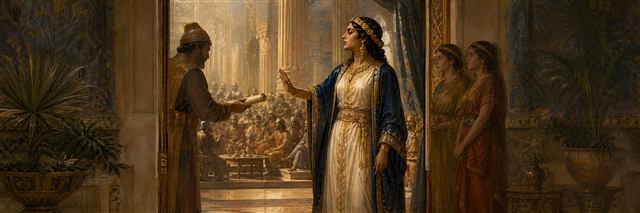
Esther 1 recounts the royal feasts at Susa, Queen Vashti’s refusal, her removal, and the decree sent throughout the Persian Empire.
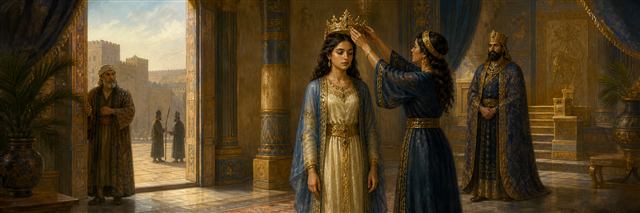
Esther 2 tells how Esther becomes queen, keeps her Jewish identity private, and reports Mordecai’s discovery of a palace conspiracy.
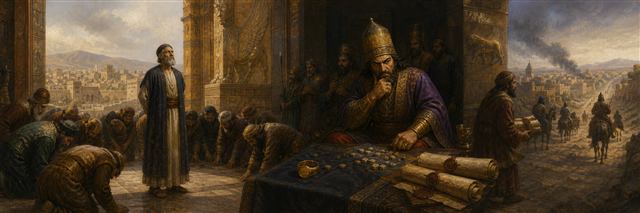
Esther 3 follows Mordecai’s refusal to bow, Haman’s genocidal plot, the casting of Pur, and the empire-wide decree against the Jews.
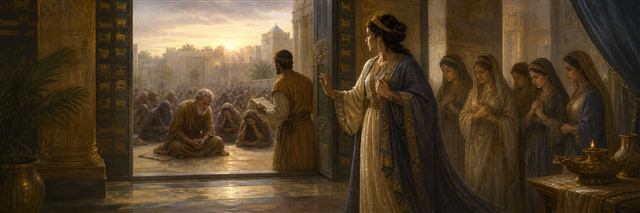
Esther 4 moves from communal mourning to Esther’s decision to approach the king, asking the Jews of Susa to fast with her.
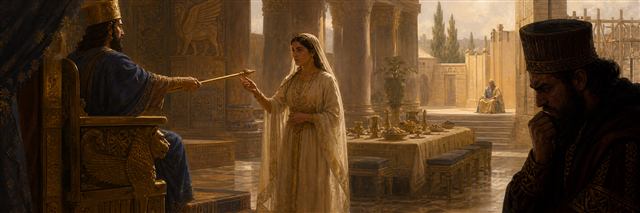
Esther 5 recounts Esther’s approach to the king, her first banquet, and Haman’s renewed rage against Mordecai.
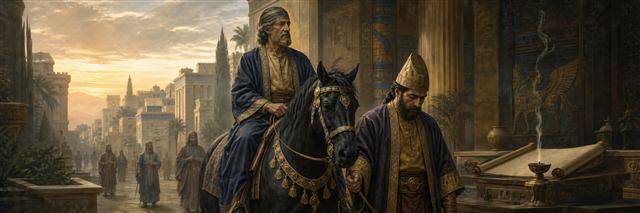
Esther 6 recounts the king’s sleepless discovery, Mordecai’s public honor, and Haman’s humiliating reversal.
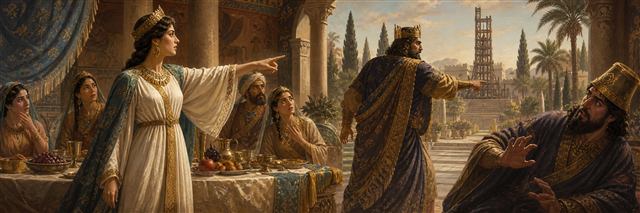
Esther 7 tells how Esther identifies Haman’s plot, the king responds in anger, and Haman faces the judgment he prepared for Mordecai.
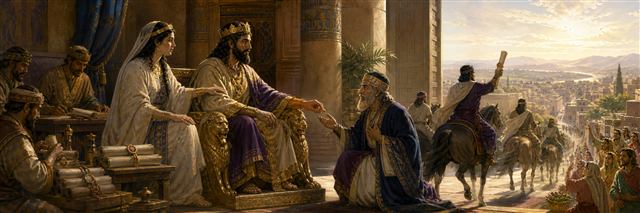
Esther 8 follows Esther’s renewed appeal, Mordecai’s authority, and the counter-decree that brings hope across the empire.
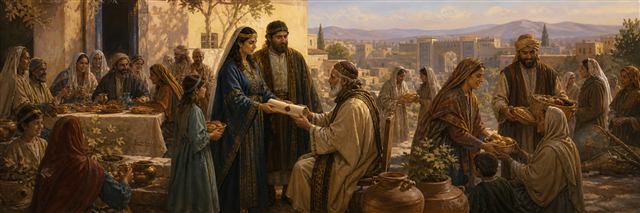
Esther 9 recounts Jewish survival, days of rest and feasting, gifts to the poor, and Esther and Mordecai’s establishment of Purim.
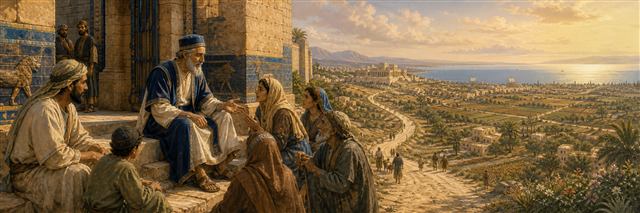
Esther 10 closes with Mordecai’s high position, public service, and pursuit of the welfare and peace of his people.
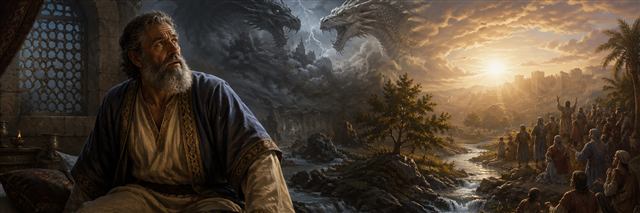
Esther 11 records Mordecai's prophetic dream of conflict, prayer, and God's deliverance of the threatened righteous people.
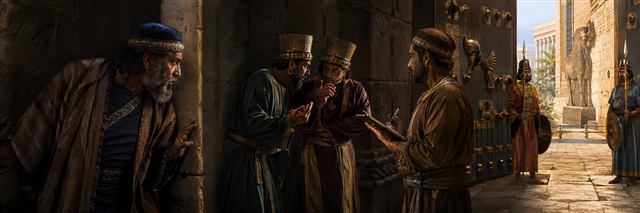
Esther 12 tells how Mordecai uncovered a plot against the king and how Haman began seeking harm against him and his people.
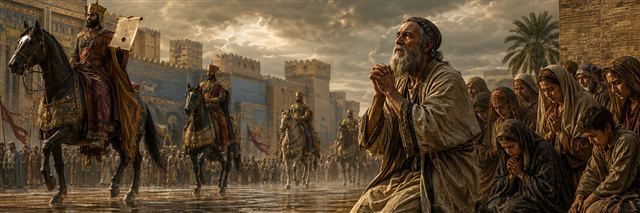
Esther 13 contrasts Haman's decree against the Jews with Mordecai's urgent prayer for God's mercy and deliverance.

Esther 14 portrays the queen fasting and praying for courage, wise words, and deliverance for her endangered people.
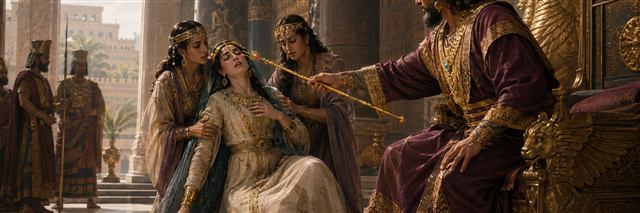
Esther 15 recounts Esther's fearful approach to the throne and the king's merciful welcome with his golden sceptre.
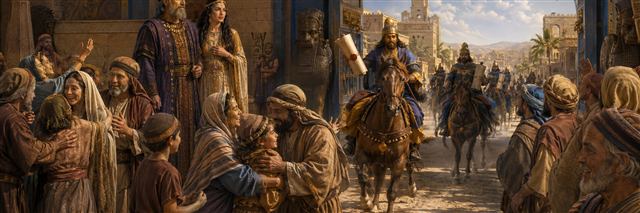
Esther 16 reverses Haman's decree, vindicates the Jews, and establishes a joyful remembrance of their deliverance.