
4 Maccabees
4 Maccabees has 18 chapters. Read 4 Maccabees in the Brenton Septuagint Translation, chapter by chapter, free and without an account.
4 Maccabees argues that religious reason can govern the passions. It develops this claim through the law and ancestral examples, then through the suffering of Eleazar, seven brothers, and their mother under Antiochus. Their refusal to abandon their faith becomes the author’s central demonstration of disciplined conviction, with a concluding appeal to remain faithful to the law.
4 Maccabees is printed as an appendix in Greek Orthodox Bibles, outside the canon proper. It is not in the Catholic or Protestant canons or the Jewish Tanakh. See it on the shelf.
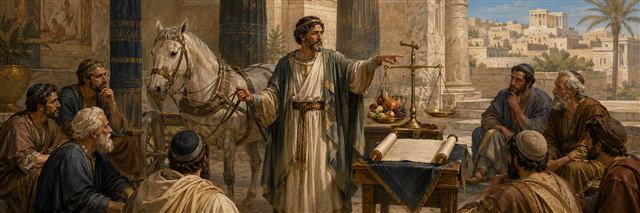
4 Maccabees 1 introduces the claim that devout reason, guided by the law, governs appetite and the passions.
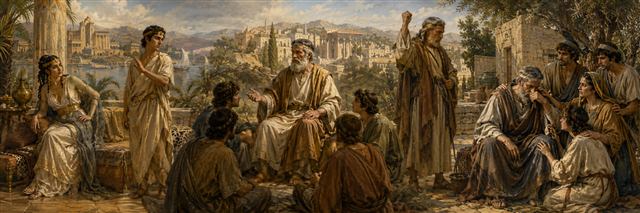
4 Maccabees 2 explains through biblical examples how reason restrains desire and anger while guiding human passions.
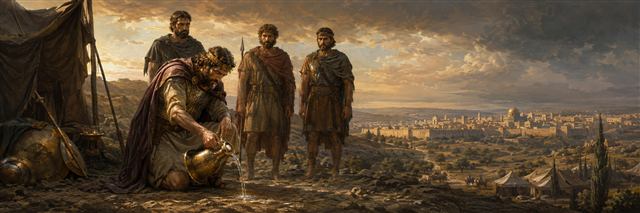
4 Maccabees 3 uses David's refusal of hard-won water to show reason mastering desire before the history begins.
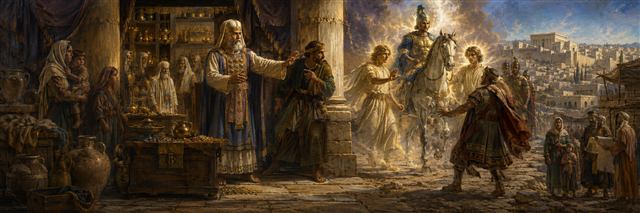
4 Maccabees 4 traces Simon's betrayal, the protected temple treasury, and Antiochus's failed attempt to suppress Jewish law.
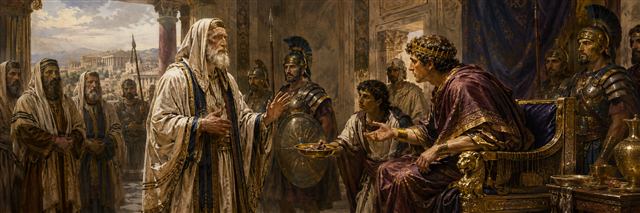
4 Maccabees 5 presents Eleazar's reasoned refusal to eat forbidden food despite Antiochus's threats and persuasion.
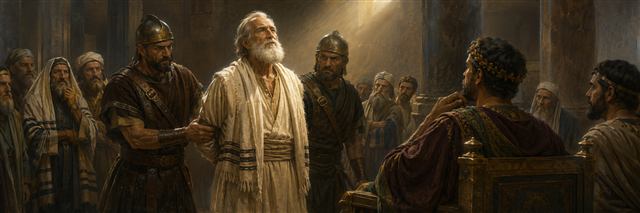
4 Maccabees 6 recounts Eleazar's steadfast martyrdom and argues that devout reason can master extreme bodily pain.
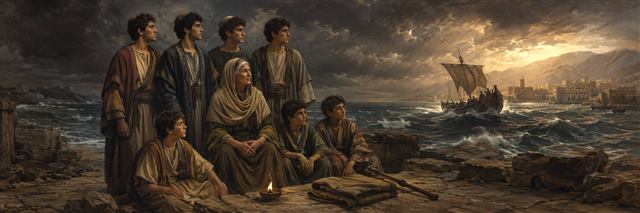
4 Maccabees 7 celebrates Eleazar's victory as an enduring example and introduces the seven brothers who follow him.
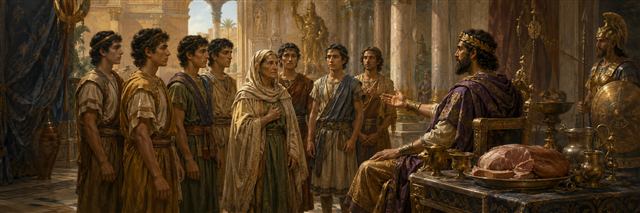
4 Maccabees 8 shows Antiochus tempting seven brothers with favor and safety before they unite in refusing forbidden food.
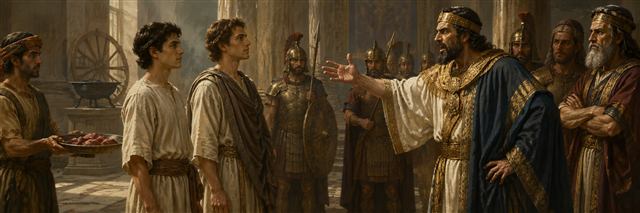
4 Maccabees 9 portrays the first brothers meeting Antiochus's threats with courage that exposes the tyrant's own enslavement.
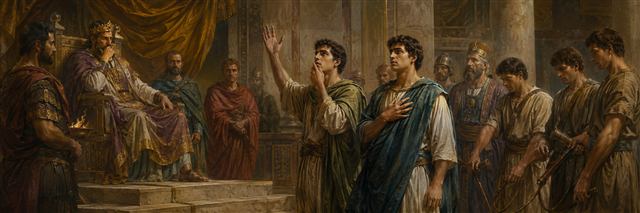
4 Maccabees 10 follows the third and fourth brothers as they declare that bodily violence cannot conquer the faithful soul.
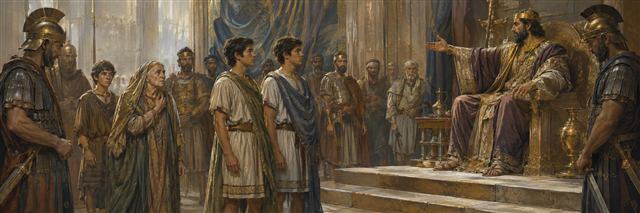
4 Maccabees 11 presents the fifth and sixth brothers voluntarily resisting Antiochus through reason and trust in divine law.
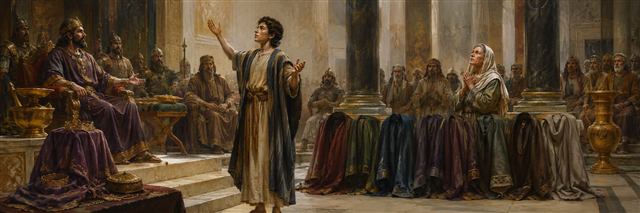
4 Maccabees 12 recounts the youngest brother's rejection of Antiochus's promises and his final prayer for his people.
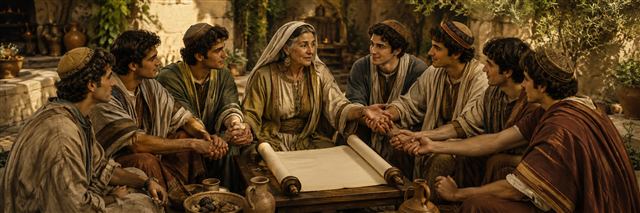
4 Maccabees 13 explains how shared law, virtue, and brotherly love united the seven brothers in courageous endurance.
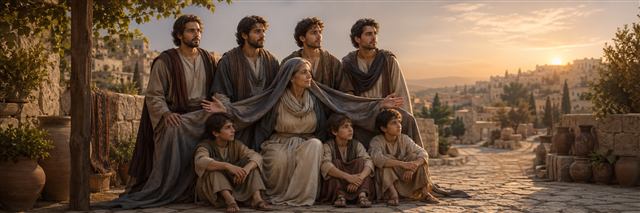
4 Maccabees 14 reflects on the brothers' harmony and their mother's Abraham-like mastery of protective love through faith.
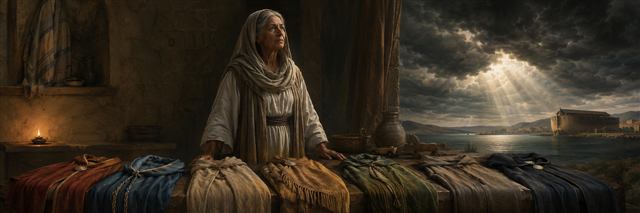
4 Maccabees 15 portrays the mother's profound grief and her ark-like endurance in choosing eternal faithfulness for her sons.
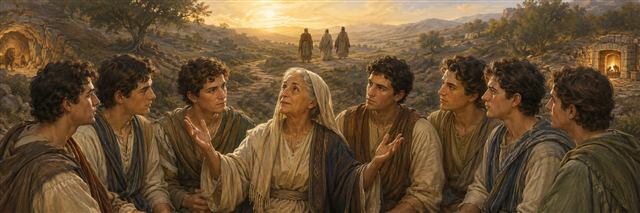
4 Maccabees 16 shows the mother strengthening her sons with examples of Abraham, Daniel, and the patriarchs' living faith.

4 Maccabees 17 honors the mother, her sons, and Eleazar whose faithful witness defeats tyranny and renews Israel.
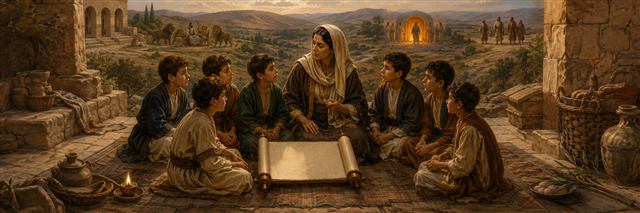
4 Maccabees 18 concludes with the mother's scriptural teaching, her family's immortal hope, and Israel's renewed peace.