
Ezekiel
Ezekiel has 48 chapters. Read Ezekiel in the Literal Standard Version, chapter by chapter, free and without an account.
Ezekiel presents the calling and messages of a priest among the exiles in Babylonia. Visions and symbolic actions announce judgment on Jerusalem, followed by oracles against surrounding nations. After news of the city’s fall, promises of restoration include a new heart, renewed life, and a reunited people. The book closes with a vision of a restored sanctuary, land, and city marked by God’s presence.
In Christian Bibles, Ezekiel is one of the Major Prophets of the Old Testament. In the Jewish Tanakh it belongs to the Nevi’im, the Prophets. See it on the shelf.
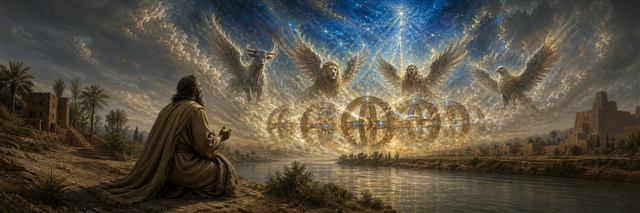
Ezekiel 1: beside the Chebar, Ezekiel sees living creatures, radiant wheels, and an overwhelming vision of divine glory.
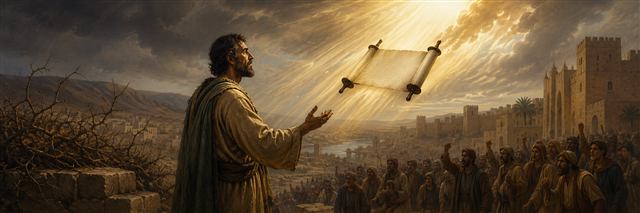
Ezekiel 2: the prophet is commissioned to speak without fear to a rebellious people and receives a scroll of lamentation.
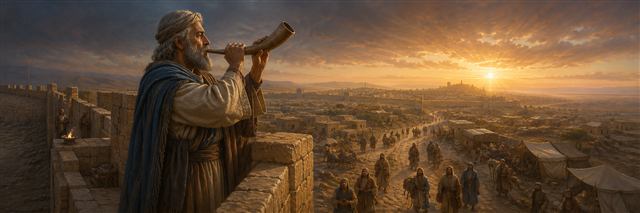
Ezekiel 3: after eating the scroll, Ezekiel becomes Israel's watchman, responsible to hear and faithfully warn.
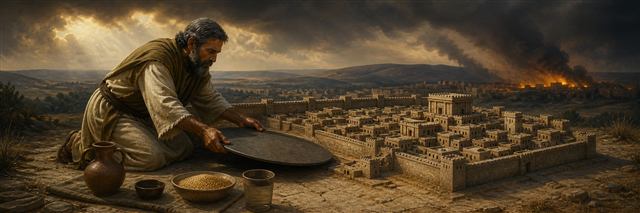
Ezekiel 4: a siege model, an iron barrier, appointed days, and measured food dramatize Jerusalem's coming hardship.
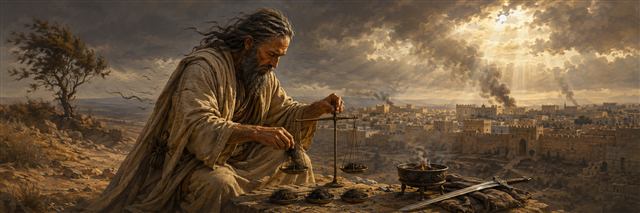
Ezekiel 5: divided hair symbolizes Jerusalem's fire, sword, scattering, and the preservation of only a small remnant.
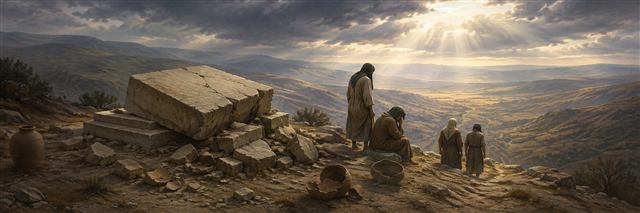
Ezekiel 6: Israel's idolatrous high places fall, while scattered survivors remember, turn, and recognize the warning.
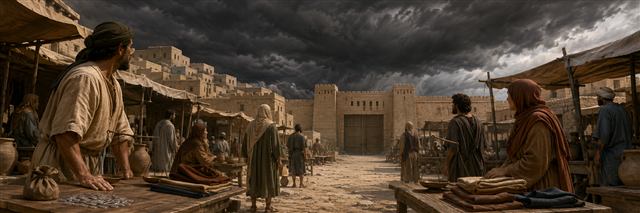
Ezekiel 7: the land's end exposes violence and pride, while wealth and commerce prove powerless to rescue.
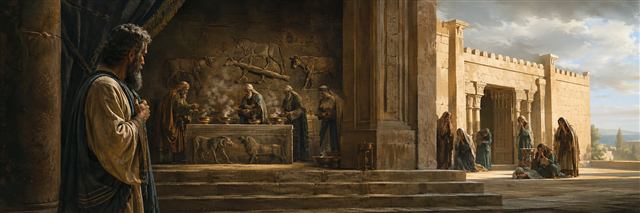
Ezekiel 8: a temple vision exposes secret incense rites, false worship, and violence hidden within Jerusalem.
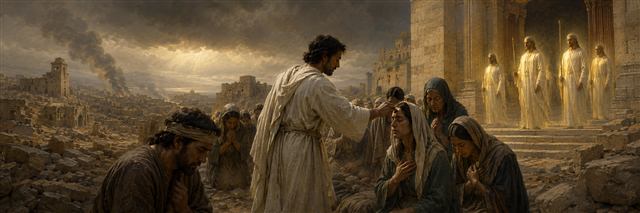
Ezekiel 9: the grieving faithful are marked before judgment begins at the temple, and Ezekiel pleads for the remnant.
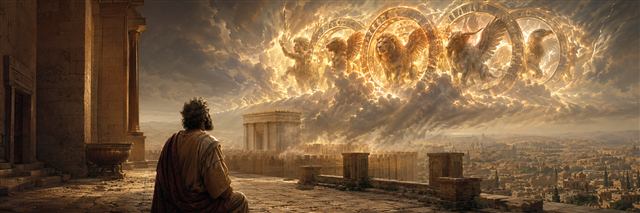
Ezekiel 10: radiant wheels and cherubim accompany the divine glory as it moves from the temple toward the eastern gate.
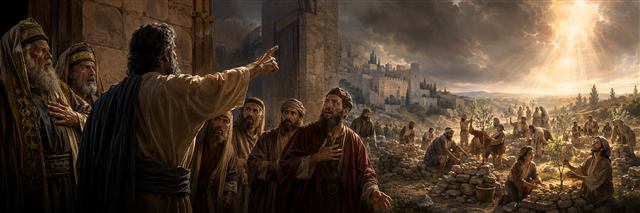
Ezekiel 11: corrupt leaders are confronted while scattered exiles receive promises of sanctuary, gathering, and a new heart.
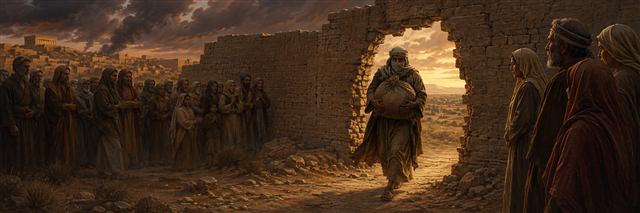
Ezekiel 12: exile baggage and a passage through the wall warn Jerusalem that displacement and fulfillment are near.
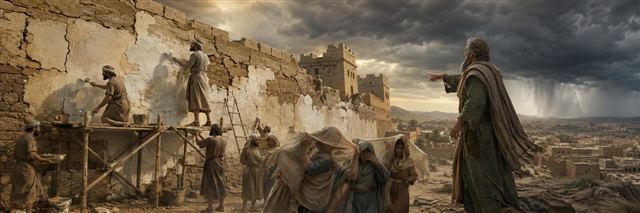
Ezekiel 13: false prophets whitewash a failing wall with promises of peace, but the coming storm exposes deception.
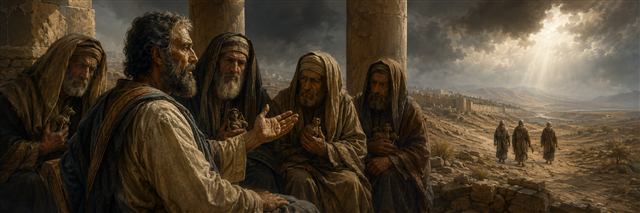
Ezekiel 14: hidden heart-idols block true counsel, and even exemplary righteousness cannot substitute for personal repentance.
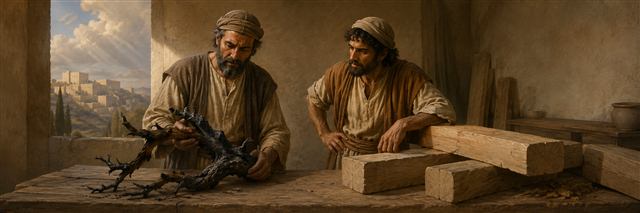
Ezekiel 15: Jerusalem is compared to burned vine wood, useless when it no longer bears the fruit of faithfulness.
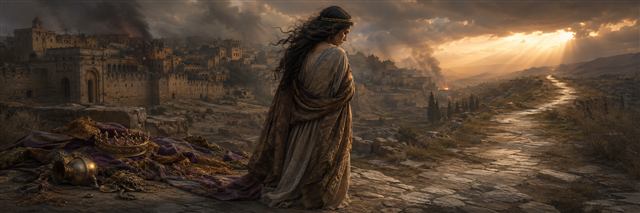
Ezekiel 16: Jerusalem's rescue, covenant betrayal, shame, and judgment end with the promise of an enduring covenant.
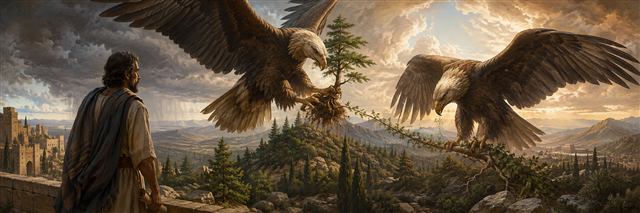
Ezekiel 17: two eagles expose Judah's faithless alliances, while God promises to plant a lasting cedar shoot.
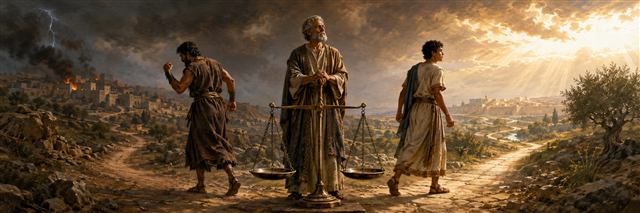
Ezekiel 18: personal responsibility replaces inherited blame, and every person is invited to turn, receive a new heart, and live.
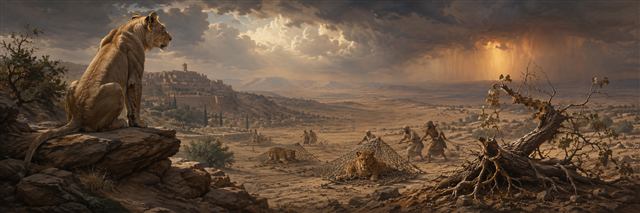
Ezekiel 19: a lioness, captured cubs, and an uprooted vine lament Judah's princes and the fall of its royal line.
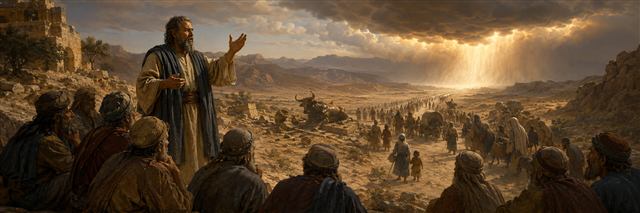
Ezekiel 20: Israel's long rebellion meets judgment and restraint, followed by gathering, purification, and renewed worship.
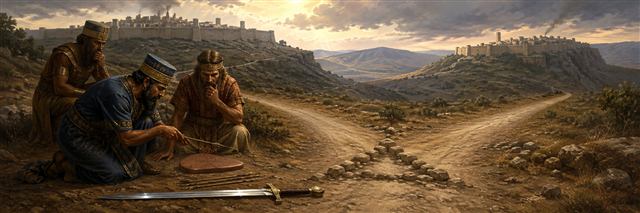
Ezekiel 21: a sharpened sword and Babylon's crossroads decision announce judgment against Jerusalem and Ammon.
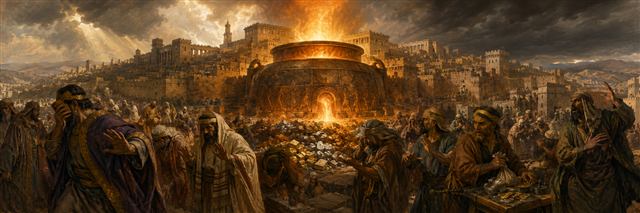
Ezekiel 22: Jerusalem's corruption across every class turns the violent city into a refining furnace without a defender.
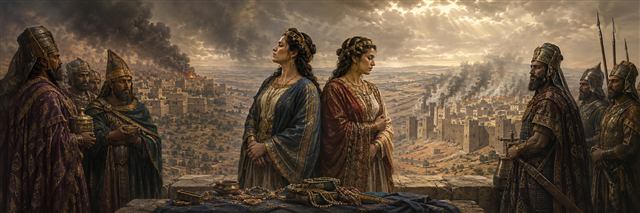
Ezekiel 23: two symbolic sisters portray Samaria and Jerusalem repeating faithless alliances and facing their consequences.
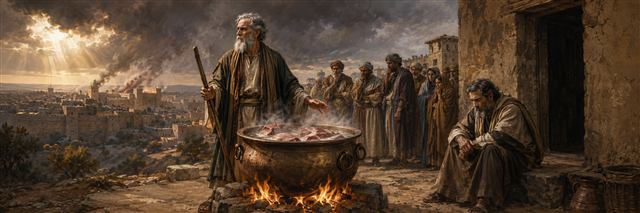
Ezekiel 24: a boiling pot marks Jerusalem's siege, while Ezekiel's restrained mourning becomes a sign of coming loss.
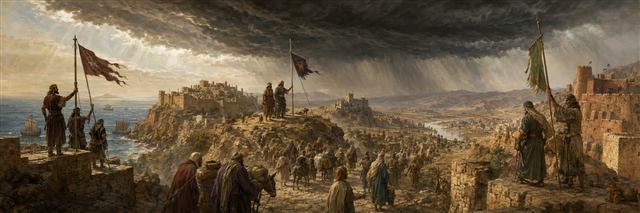
Ezekiel 25: Ammon, Moab, Edom, and Philistia face judgment for contempt, celebration, and revenge against Judah.
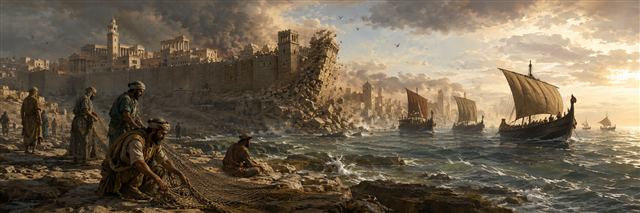
Ezekiel 26: Tyre's pride over Jerusalem brings waves of attackers, fallen walls, silenced trade, and a bare rocky shore.

Ezekiel 27: Tyre's worldwide commerce is portrayed as a splendid merchant ship that sinks with its cargo and crew.
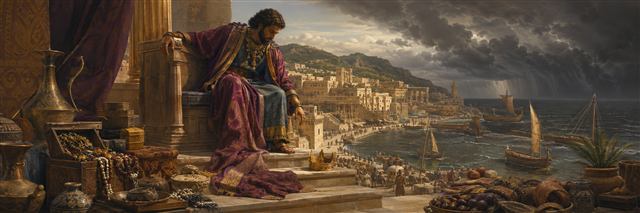
Ezekiel 28: Tyre's ruler falls through commercial pride, Sidon is judged, and gathered Israel receives hope.
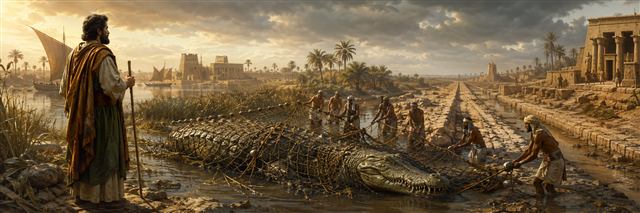
Ezekiel 29: Pharaoh is drawn from the Nile, Egypt's false support is exposed, and Babylon receives its reward.
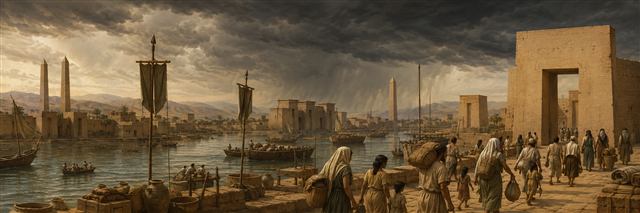
Ezekiel 30: Babylon breaks Egypt's strength, its cities and allies fall, and Pharaoh's people are scattered.
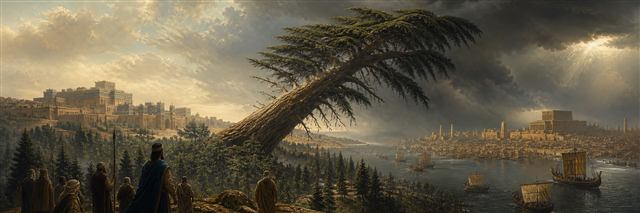
Ezekiel 31: Assyria's towering cedar becomes a warning that Egypt's greatness and pride will also be brought low.
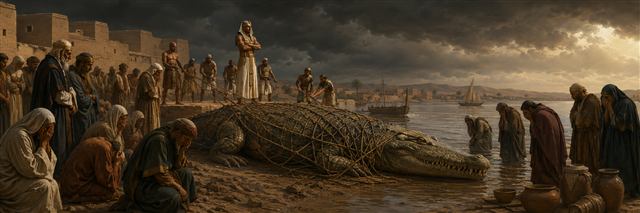
Ezekiel 32: laments portray Pharaoh as a captured river creature descending with the violent empires of the past.
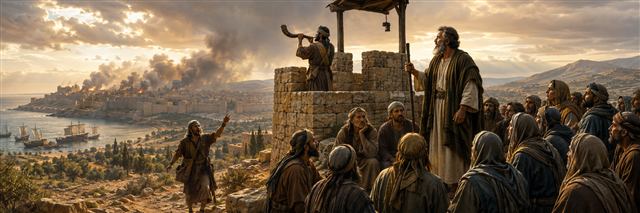
Ezekiel 33: the watchman's warning calls people to turn and obey as news arrives that Jerusalem has fallen.
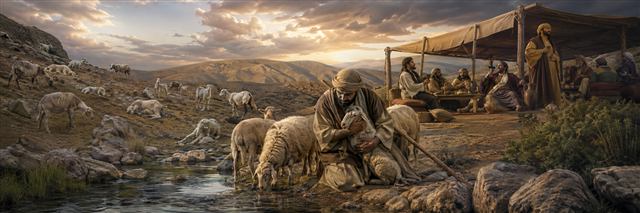
Ezekiel 34: false shepherds are removed as God seeks the scattered flock and promises a Davidic shepherd and peace.
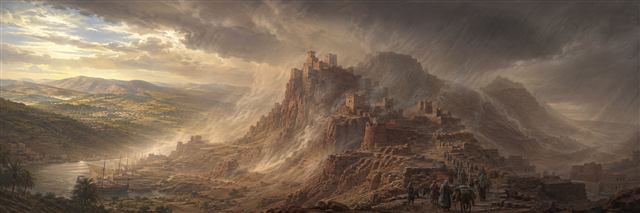
Ezekiel 35: Mount Seir faces desolation for lasting hostility, bloodshed, and boasting against Israel's land.
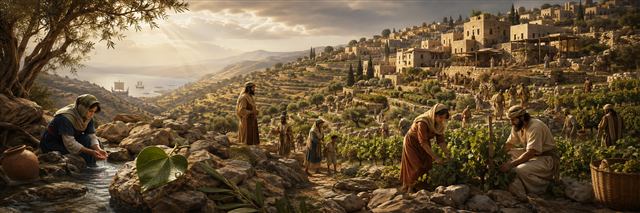
Ezekiel 36: Israel's mountains flourish as gathered people are cleansed, given new hearts, and restored for God's holy name.
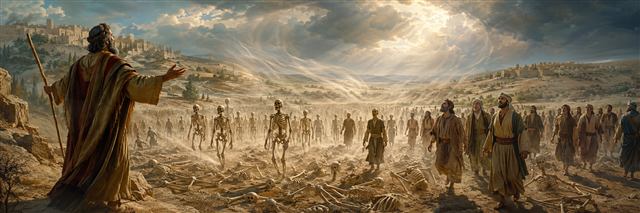
Ezekiel 37: dry bones receive breath and life, while two joined sticks promise a reunited people under one king.
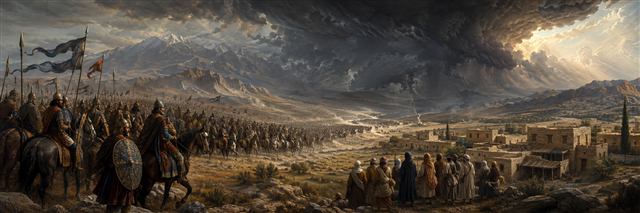
Ezekiel 38: Gog's northern coalition attacks peaceful Israel but meets a storm that reveals divine sovereignty.
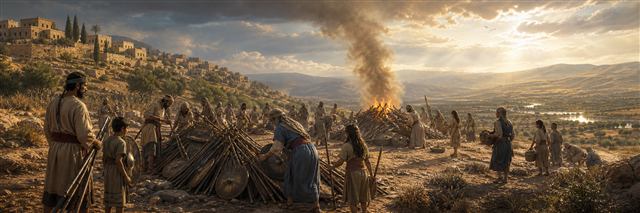
Ezekiel 39: Gog's weapons are burned, the land is cleansed, and Israel receives gathering, compassion, and the Spirit.
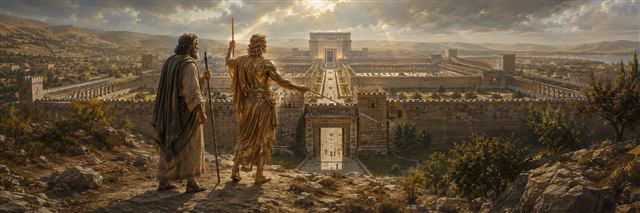
Ezekiel 40: a bronze-like guide carefully measures the gates, courts, rooms, and altar of a visionary temple.
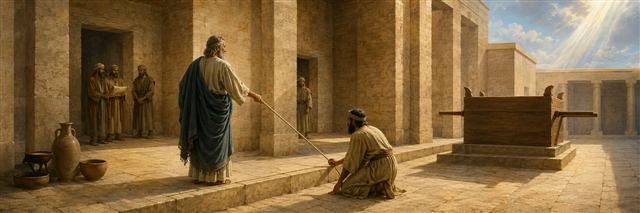
Ezekiel 41: the guide measures the sanctuary, inner room, side chambers, doors, palm decorations, and wooden altar.
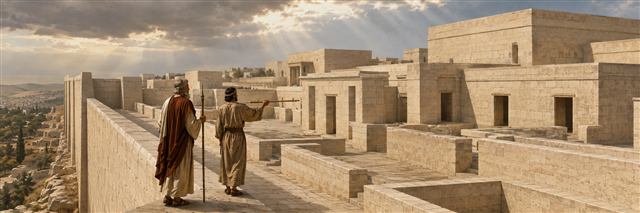
Ezekiel 42: priestly chambers and the measured outer wall establish a clear boundary between holy and common space.
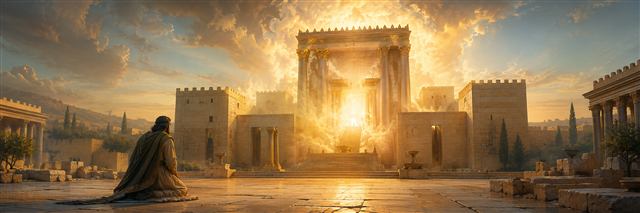
Ezekiel 43: divine glory returns through the eastern gate, fills the temple, and establishes a call to holiness.
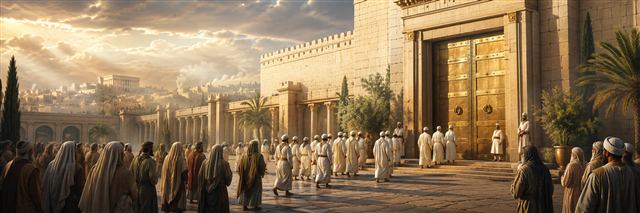
Ezekiel 44: the closed eastern gate and faithful Zadokite priests protect the holiness and order of restored worship.
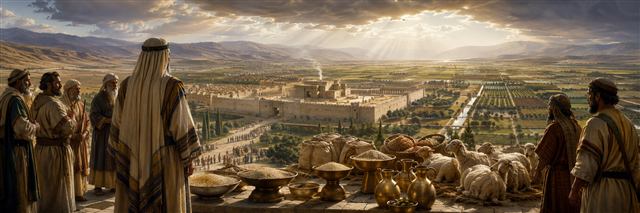
Ezekiel 45: sacred land, honest measures, accountable leadership, offerings, and festivals order the restored community.
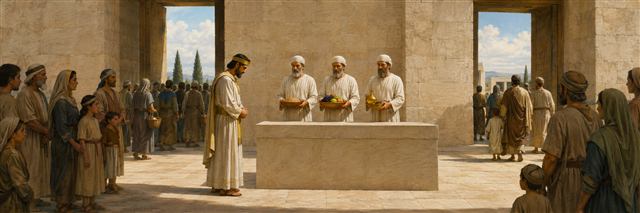
Ezekiel 46: the prince and people worship in an ordered rhythm with fair property rules and designated temple kitchens.
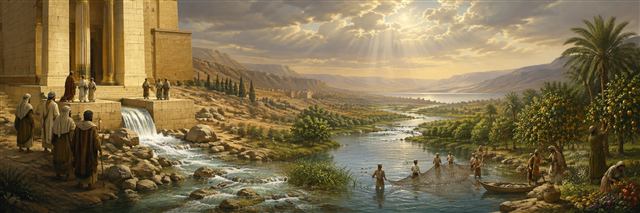
Ezekiel 47: a deepening river from the temple heals barren waters, nourishes trees, and brings abundant life.
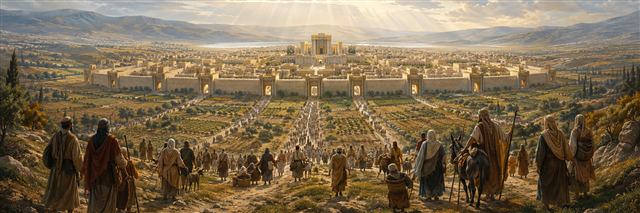
Ezekiel 48: the restored land is allotted among twelve tribes around a twelve-gated city defined by God's presence.