

Job
Job has 42 chapters. Read Job in the King James (Authorized) Version, chapter by chapter, free and without an account.
Job explores the suffering of a man introduced as upright who loses his children, possessions, and health. He laments and disputes his friends’ explanations, which connect suffering with wrongdoing. After Elihu’s speeches, God answers from the whirlwind with questions about creation. The ending rebukes Job’s three friends, records Job’s prayer for them, and describes renewed prosperity and family life.
In Christian Bibles, Job is one of the books of Poetry and Wisdom of the Old Testament. In the Jewish Tanakh it belongs to the Ketuvim, the Writings. See it on the shelf.
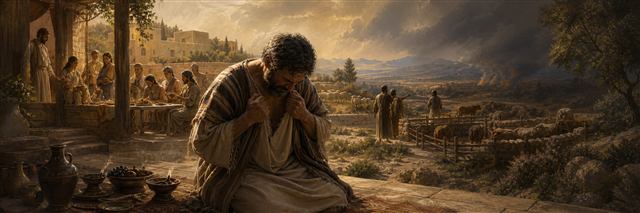
Job 1 introduces a blameless man, the challenge raised about his motives, catastrophic loss in a single day, and his worship in grief.
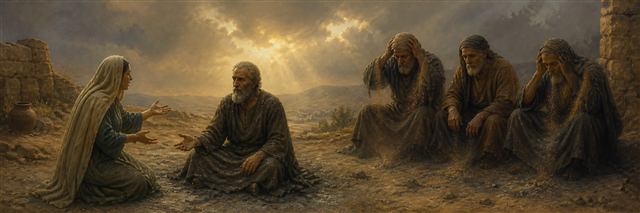
Job 2 recounts Job's bodily affliction, his wife's despairing counsel, and three friends who sit with him in silence for seven days.
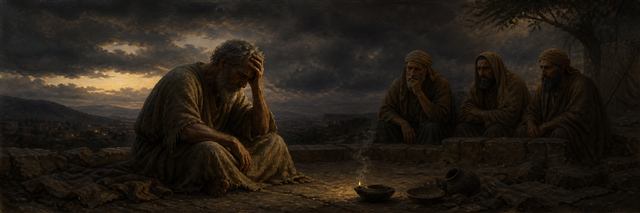
Job 3 records Job breaking his silence to curse the day of his birth and long for the rest the grave seems to offer.
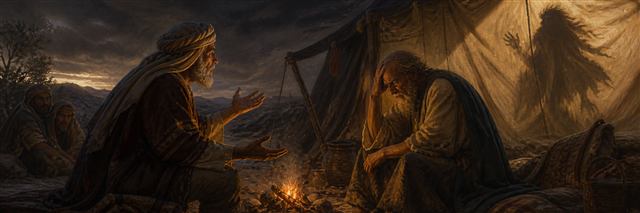
Job 4 gives Eliphaz's first reply, appealing to experience and to a night vision that asks whether any mortal is righteous before God.
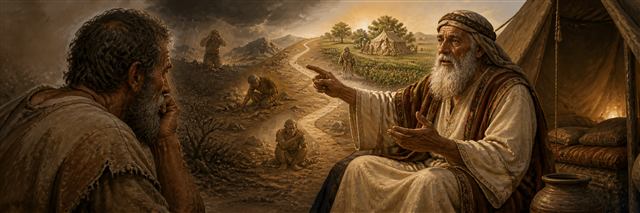
Job 5 has Eliphaz urging Job to commit his cause to God, describing divine reversals and promising restoration to the corrected.
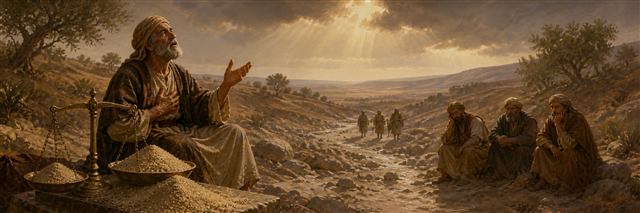
Job 6 records Job weighing his anguish against the sand and comparing his friends to streams that fail when travelers need them.
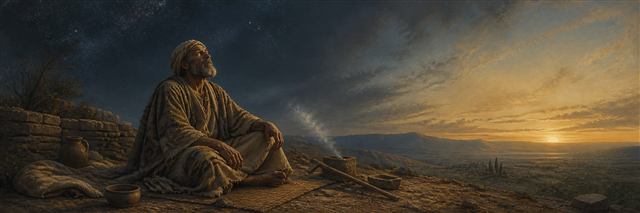
Job 7 compares human life to hard labor and a passing breath as sleepless Job asks why God watches so brief a creature so closely.
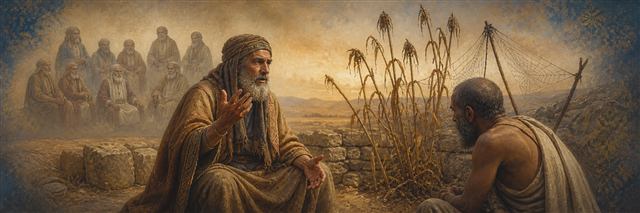
Job 8 gives Bildad's appeal to tradition and strict justice, comparing the godless to papyrus without water and urging Job to seek God.
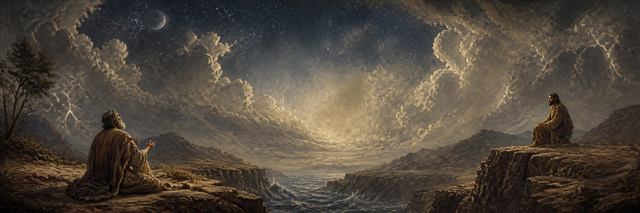
Job 9 records Job conceding that no one can win a case against God and longing for an arbiter who could stand between them.
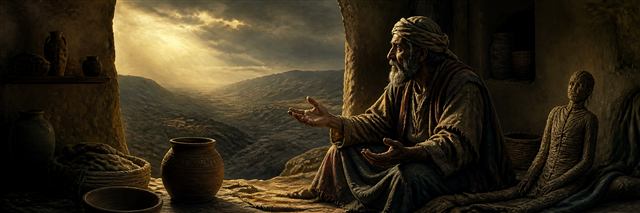
Job 10 has Job asking God to state the charge against him, recalling how carefully he was formed and pleading for relief.
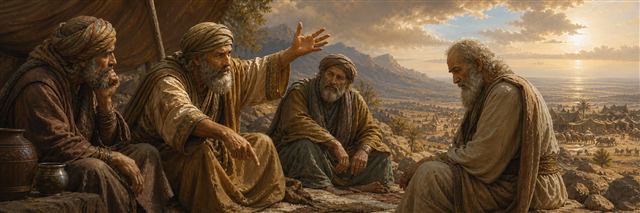
Job 11 gives Zophar's rebuke, his question about the deep things of God, and his promise of security if Job puts away sin.
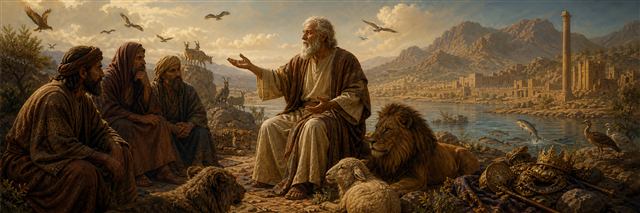
Job 12 records Job's sharp reply that creation itself teaches, and his portrait of God overturning counselors, judges, and nations.
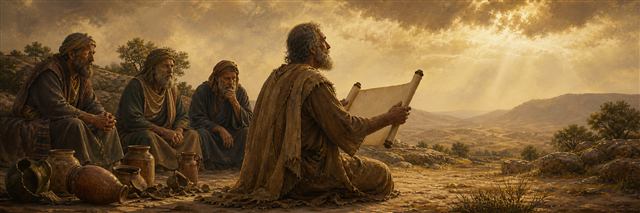
Job 13 has Job dismissing false comfort, resolving to hold his integrity, and asking God to withdraw terror so he may speak.
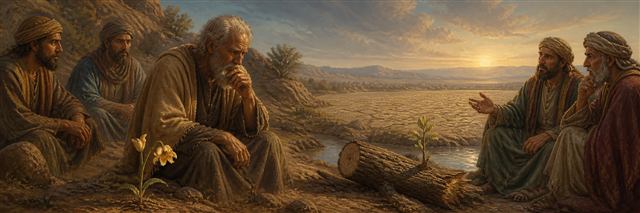
Job 14 contrasts a tree that sprouts again with a human life that ends, and asks whether the dead can live again.
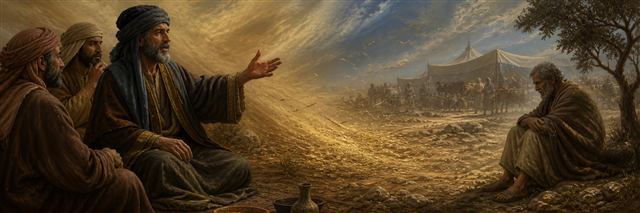
Job 15 gives Eliphaz's second speech, accusing Job of undermining reverence and portraying the dread that pursues the wicked.
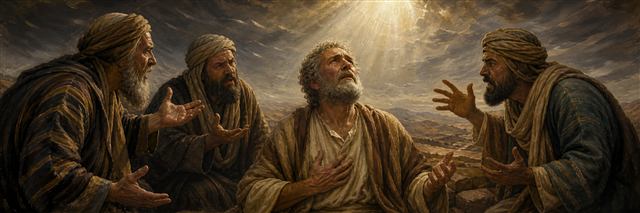
Job 16 records Job calling his friends miserable comforters while appealing to a witness in heaven who will plead for him.
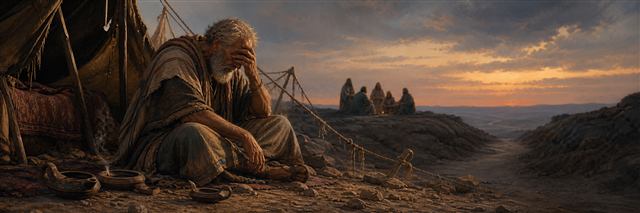
Job 17 has Job describing a broken spirit and a ready grave, surrounded by mockers and searching for hope in the dark.
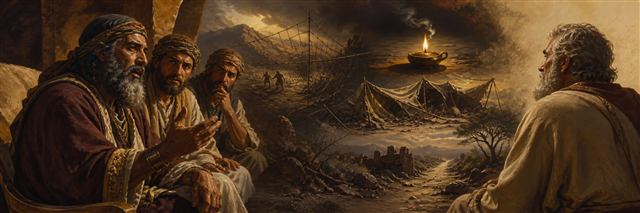
Job 18 gives Bildad's vivid portrait of the wicked man's end: lost light, hidden snares, pursuing terrors, and no one left to remember.
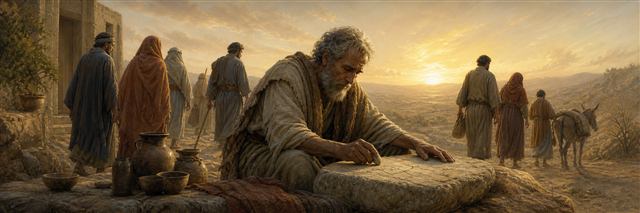
Job 19 records Job's protest at being abandoned by family and friends, and his declaration that his redeemer lives.
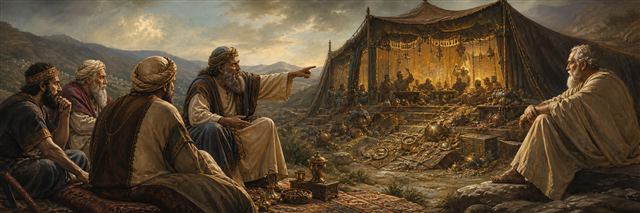
Job 20 gives Zophar's answer that the wicked man's wealth is swallowed and vomited up, leaving him exposed by heaven and earth.
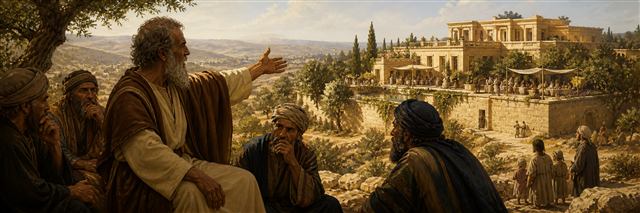
Job 21 records Job's observation that the wicked often prosper, grow old, and die in peace, contradicting his friends' theory.
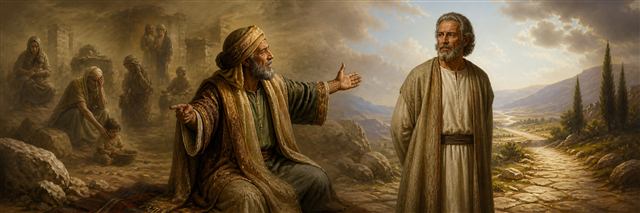
Job 22 has Eliphaz inventing specific charges against Job and then urging him to submit to God and be restored.
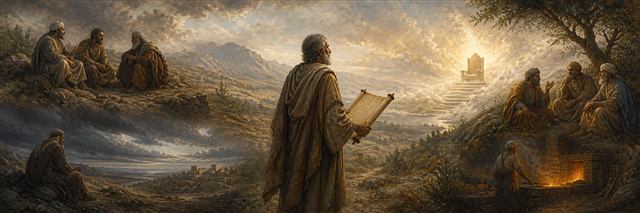
Job 23 records Job longing to find God's dwelling and argue his case, while God remains hidden in every direction.
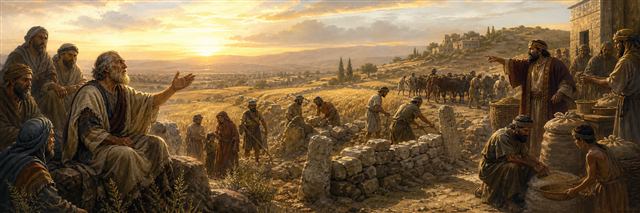
Job 24 catalogs moved boundary stones, stolen livestock, and laborers left naked, and asks why judgment is delayed.
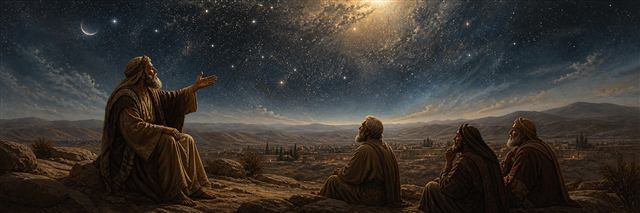
Job 25 gives Bildad's short final speech on God's dominion and the question of how any mortal can be righteous.

Job 26 records Job describing God's reach over the dead, the earth hung on nothing, and clouds that hold water without bursting.
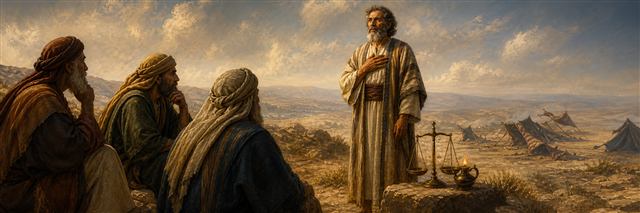
Job 27 has Job swearing to keep his integrity while describing the fate that overtakes the oppressor's house and wealth.
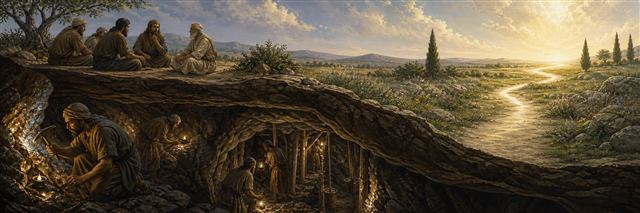
Job 28 follows miners into the dark for treasure and asks where wisdom is found, concluding that the fear of the Lord is wisdom.
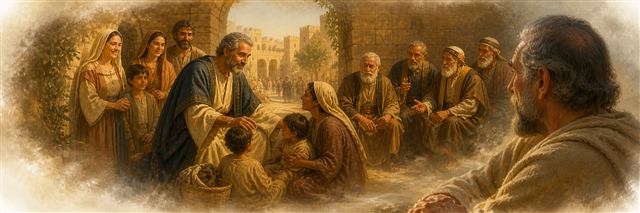
Job 29 records Job remembering honor at the gate, care for the poor, and the settled life he had expected to keep.
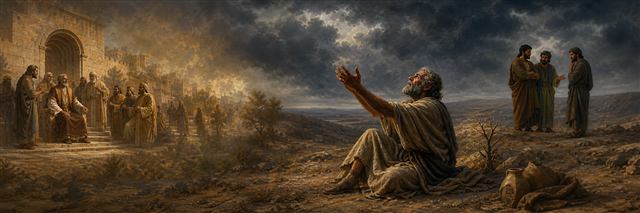
Job 30 records Job mocked by those he once would not have set with his dogs, crying out and receiving no answer.
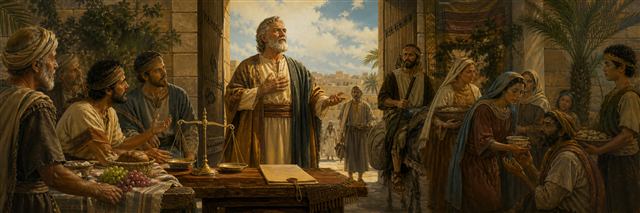
Job 31 records Job's detailed oath of innocence covering desire, honesty, servants, the poor, wealth, and hospitality.
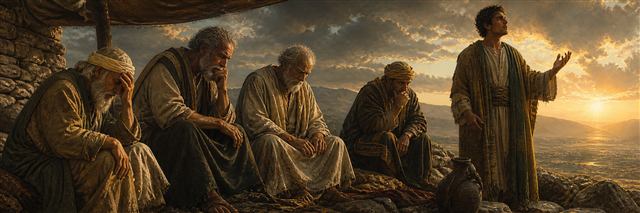
Job 32 introduces Elihu, who waited out of respect and now speaks because age alone has not produced an answer.
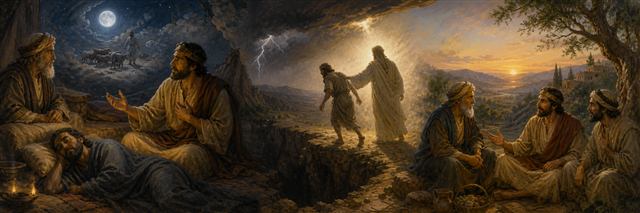
Job 33 gives Elihu's claim that God speaks through dreams and pain, and that a mediator can find a ransom and restore life.
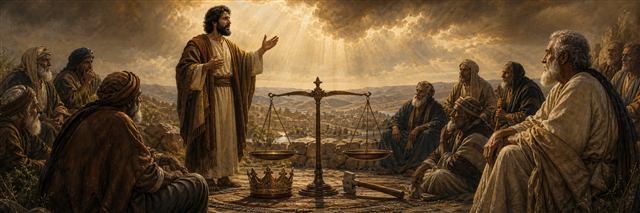
Job 34 gives Elihu's defense of God's impartial justice and his rebuke of Job's complaint about profit in serving God.
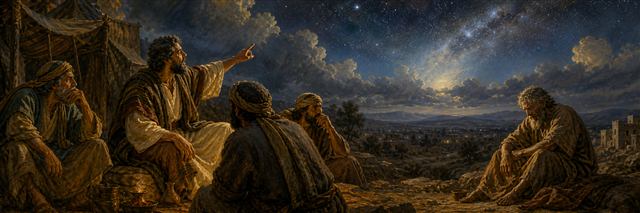
Job 35 gives Elihu's argument that human conduct does not enlarge or diminish God, though it deeply affects other people.
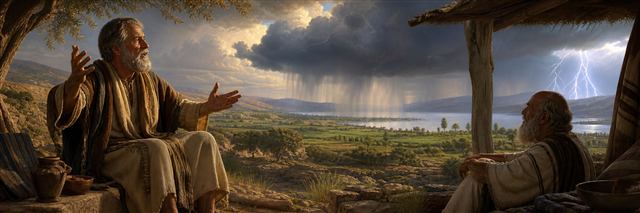
Job 36 gives Elihu's account of suffering as instruction and turns to God's greatness in rain, cloud, and thunder.
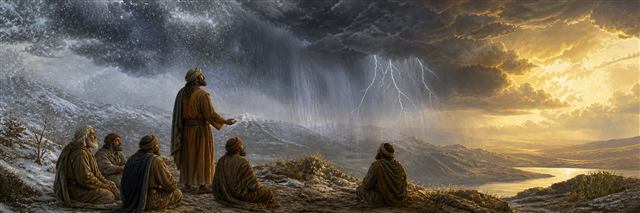
Job 37 closes Elihu's speech in awe at storm, snow, and ice, concluding that God is beyond reach and does not oppress.

Job 38 records God answering from the whirlwind with questions about the earth's foundation, the sea, light, snow, and stars.
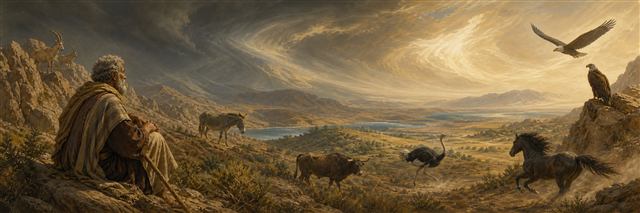
Job 39 continues God's questions through mountain goats, the wild donkey, the ostrich, the war horse, the hawk, and the eagle.
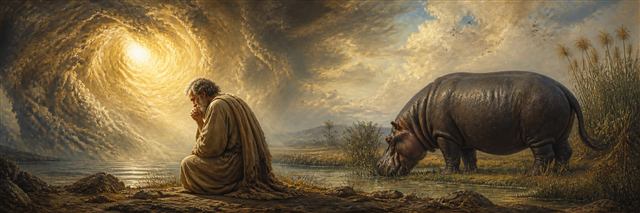
Job 40 records Job's hand over his mouth, God's question about justifying oneself, and the introduction of Behemoth.
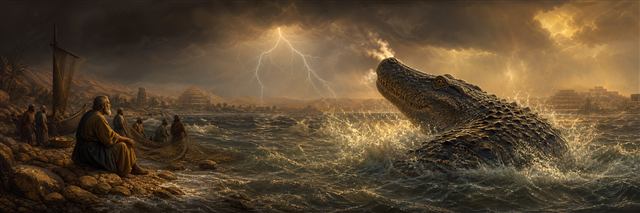
Job 41 describes Leviathan, whom no one dares rouse, and asks who then could stand before his Maker.
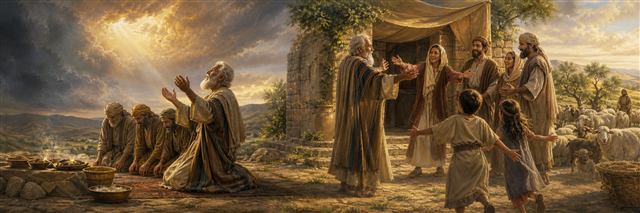
Job 42 records Job's repentance, God's rebuke of the friends, Job's prayer for them, and the restoration of his life.