
Exodus
Exodus has 40 chapters. Read Exodus in the King James Version + Apocrypha, chapter by chapter, free and without an account.
Exodus tells how God delivers the Israelites from slavery in Egypt through Moses and brings them to Sinai. There, the people receive commandments and enter a covenant. The story continues through the golden calf, covenant renewal, and the building of the tabernacle, ending with God’s glory filling the sanctuary.
In Christian Bibles, Exodus is one of the five books of the Pentateuch of the Old Testament. In the Jewish Tanakh it belongs to the Torah. See it on the shelf.
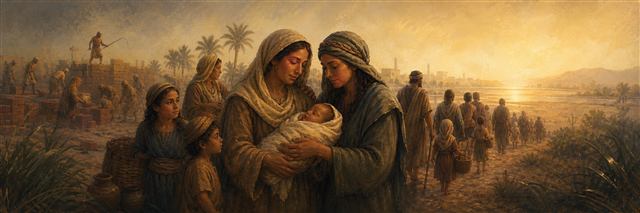
Exodus 1 recounts Israel's growth, Pharaoh's oppression and deadly orders, and the courage of the Hebrew midwives Shiphrah and Puah.
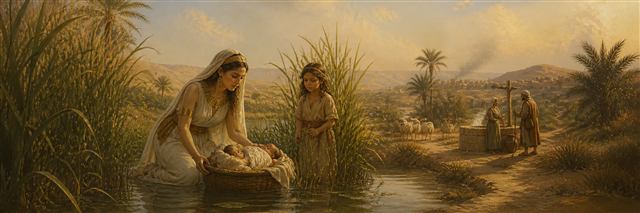
Exodus 2 follows Moses' rescue from the Nile, flight to Midian, marriage to Zipporah, and Israel's continuing cries under bondage.
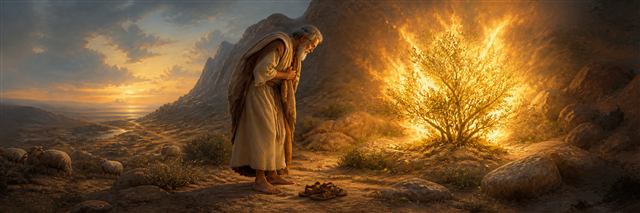
Exodus 3 recounts the burning bush, God's response to Israel's suffering, the divine name, and Moses' commission to confront Pharaoh.
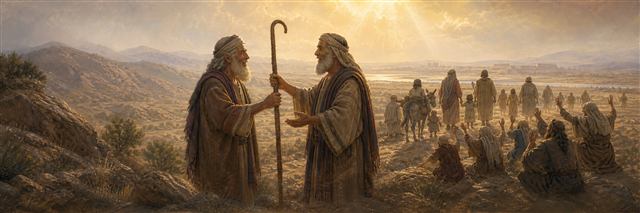
Exodus 4 recounts the signs given to Moses, Aaron's partnership, Moses' return toward Egypt, and Israel's elders believing their message.
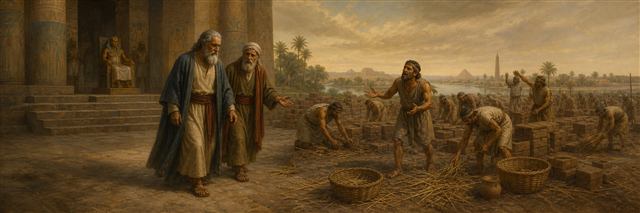
Exodus 5 records Pharaoh's refusal, the harsher brick quota without supplied straw, Israel's distress, and Moses' anguished questions.
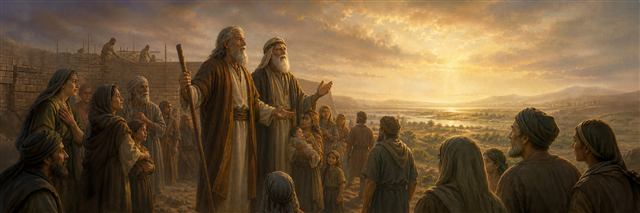
Exodus 6 renews God's covenant promises amid Israel's anguish and traces the family line of Moses and Aaron before their mission resumes.
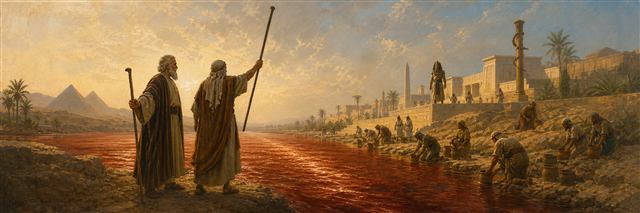
Exodus 7 recounts Aaron's staff before Pharaoh, the Egyptian magicians' response, and the Nile and Egypt's waters turning to blood.
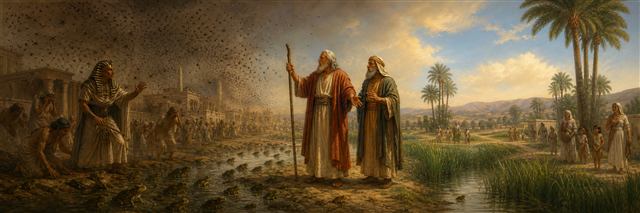
Exodus 8 recounts the frogs, gnats, and swarms, Pharaoh's repeated bargaining, the magicians' admission, and Goshen being set apart.
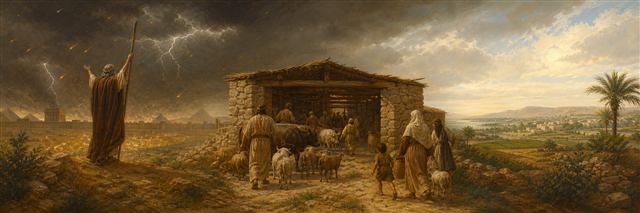
Exodus 9 recounts livestock disease, boils, destructive hail, protection in Goshen, and Pharaoh's confession followed by renewed refusal.
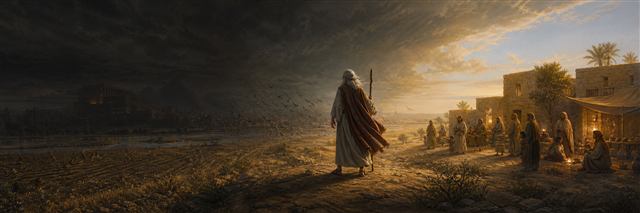
Exodus 10 recounts the locusts, three days of darkness, light in Israel's dwellings, and Pharaoh's failed attempts at partial compromise.
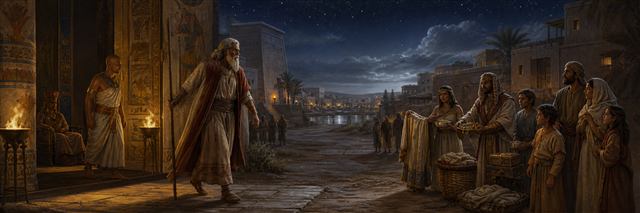
Exodus 11 announces the final plague, Israel's distinction and favor among the Egyptians, and Moses' last warning before Pharaoh.
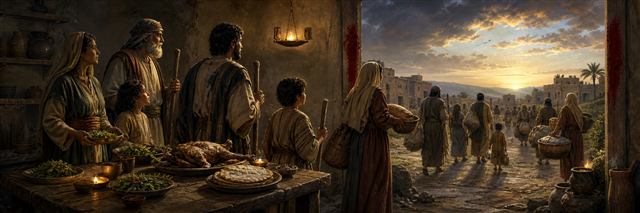
Exodus 12 establishes Passover, recounts the final plague and Pharaoh's surrender, and follows Israel's hurried departure from Egypt.
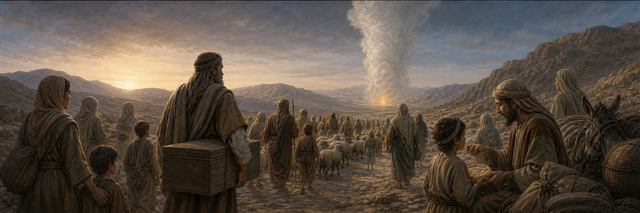
Exodus 13 joins firstborn consecration and remembered deliverance with Israel's wilderness route, Joseph's remains, and guidance by cloud and fire.
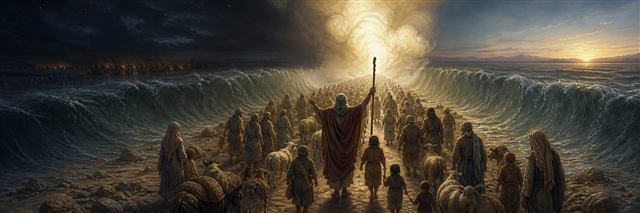
Exodus 14 recounts Pharaoh's pursuit, Israel's passage through the divided sea on dry ground, and deliverance from the Egyptian force.
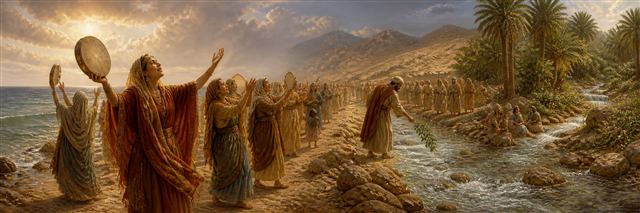
Exodus 15 celebrates deliverance in song, then follows Israel through bitter water at Marah to the springs and palms of Elim.
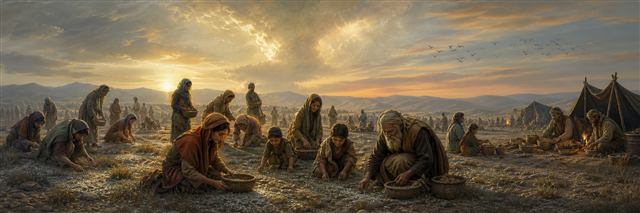
Exodus 16 recounts Israel's hunger, the provision of quail and manna, equal daily portions, Sabbath rest, and a preserved memorial.
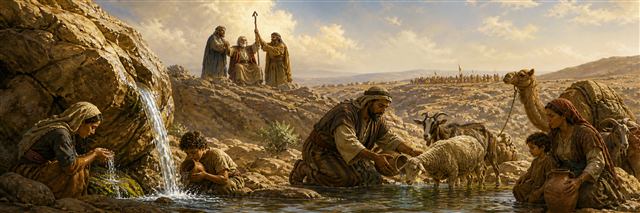
Exodus 17 recounts water from the rock at Rephidim and Israel's defense against Amalek while Aaron and Hur support Moses.
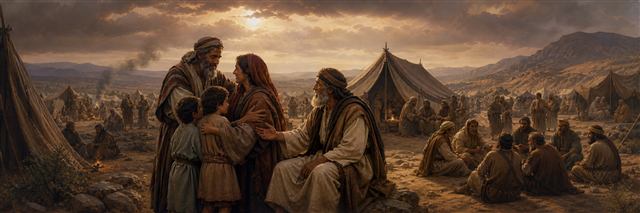
Exodus 18 recounts Moses' family reunion, Jethro's joy over Israel's deliverance, and his counsel to appoint trustworthy judges.
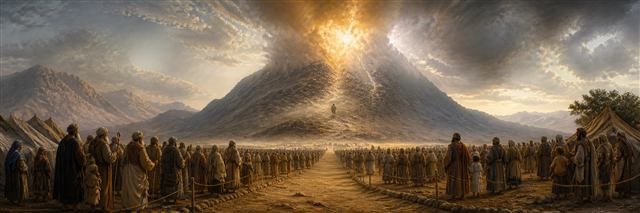
Exodus 19 brings Israel to Sinai for covenant preparation as the people accept their calling and gather behind holy boundaries.
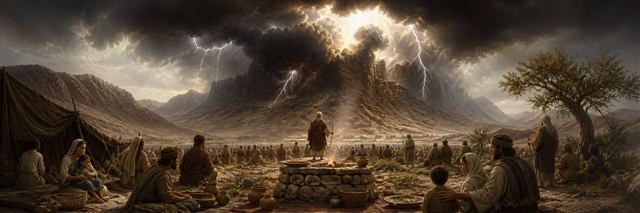
Exodus 20 presents the covenant commands at Sinai, the people's reverent response, Moses approaching the cloud, and instructions for altars.
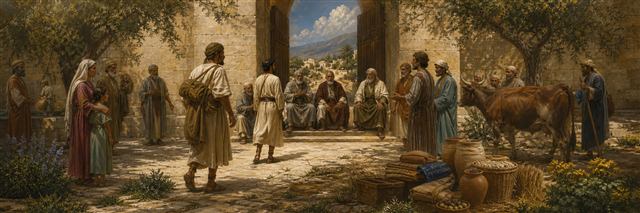
Exodus 21 outlines covenant laws for servants, injuries, negligence, livestock, and property, emphasizing accountability and restoration.
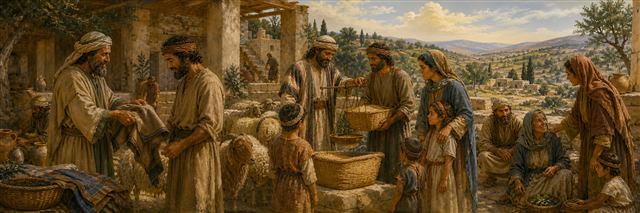
Exodus 22 covers restitution, property, lending, worship, and protection for foreigners, widows, orphans, and the poor.
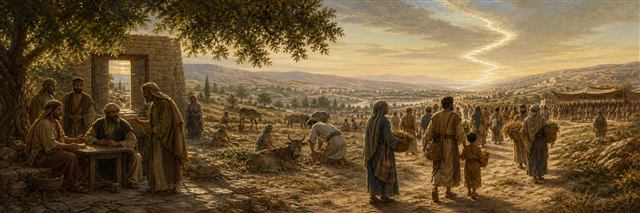
Exodus 23 joins truthful justice and Sabbath rest with Israel’s annual festivals and God’s promised guidance toward the land.
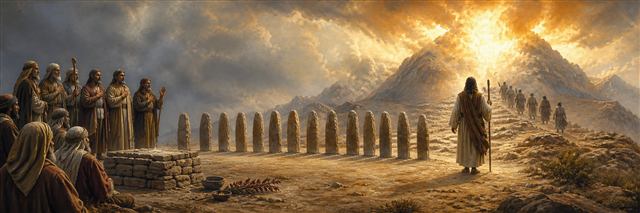
Exodus 24 recounts Israel’s covenant confirmation at Sinai, the altar and twelve pillars, and Moses entering the cloud for forty days.
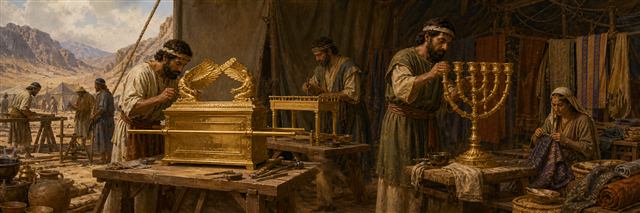
Exodus 25 calls for willing offerings and gives instructions for the ark, bread table, and lampstand in Israel’s sanctuary.
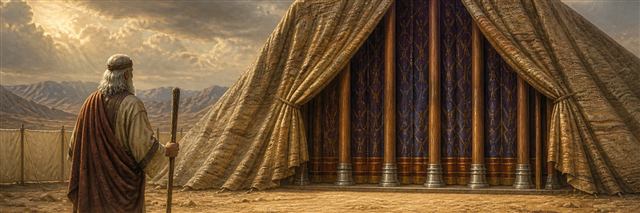
Exodus 26 describes the tabernacle’s curtains, coverings, frames, veil, and entrance screen as a portable sacred dwelling.
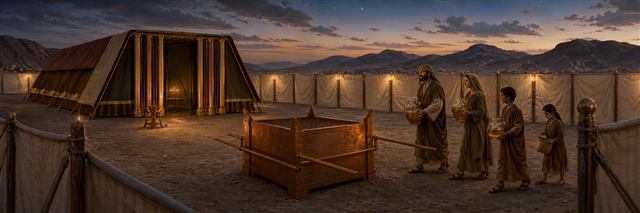
Exodus 27 gives instructions for the bronze altar, tabernacle courtyard, and pure olive oil for the continually tended lamp.
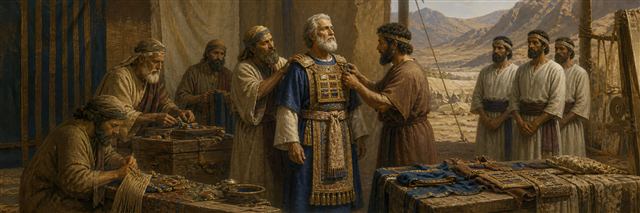
Exodus 28 describes Aaron’s priesthood and sacred garments, including the ephod and breastpiece bearing Israel’s tribal names.
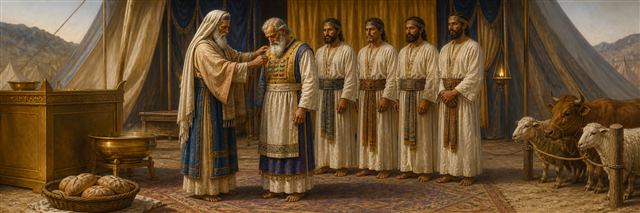
Exodus 29 prescribes the consecration of Aaron and his sons, daily offerings, and God’s promise to dwell among Israel.
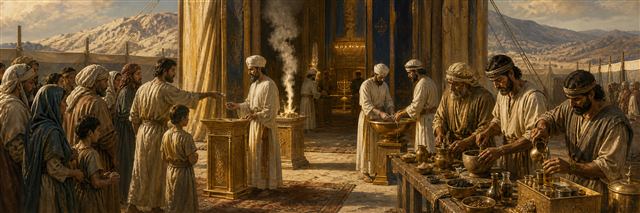
Exodus 30 describes the incense altar, census offering, bronze basin, sacred anointing oil, and incense for holy use.
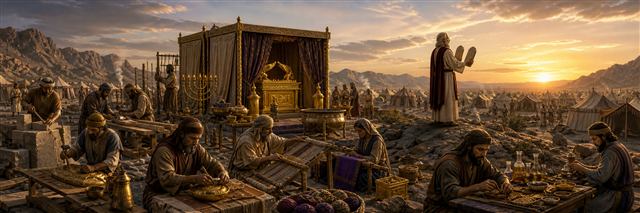
Exodus 31 commissions Bezalel and Oholiab for Spirit-given craftsmanship, renews the Sabbath command, and gives Moses the tablets.
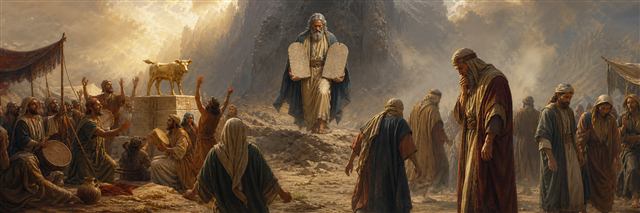
Exodus 32 recounts the golden calf, Moses’ intercession, the broken tablets, destruction of the idol, and judgment in Israel’s camp.
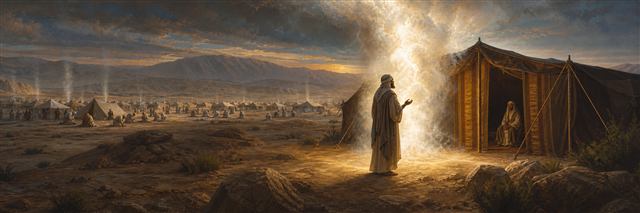
Exodus 33 centers on the tent of meeting, Moses’ intercession, and his plea for God’s presence and a deeper vision of divine glory.
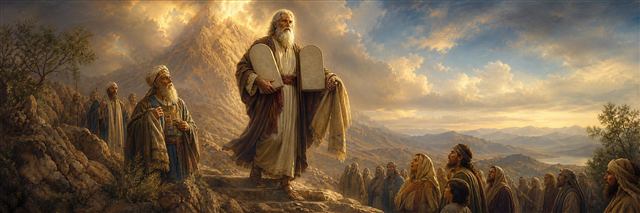
Exodus 34 recounts new tablets, God’s merciful character, covenant renewal, and Moses returning from Sinai with a radiant face.
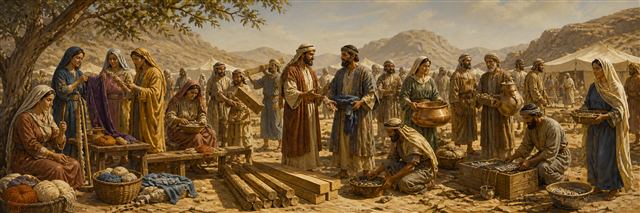
Exodus 35 joins Sabbath rest with freewill offerings and the community’s skilled, willing participation in building the tabernacle.
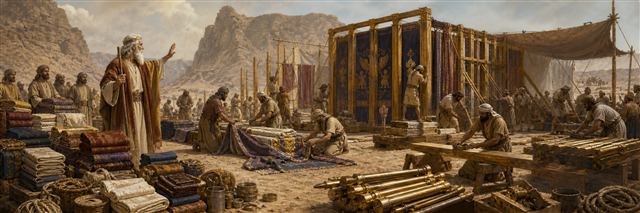
Exodus 36 describes gifts so abundant they are stopped and the skilled construction of the tabernacle’s curtains, frames, and veils.
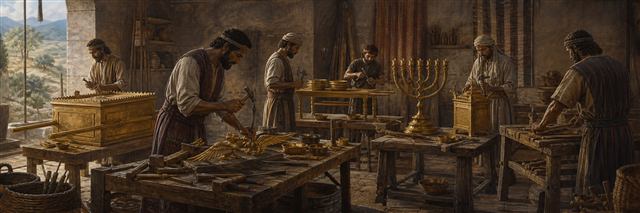
Exodus 37 recounts Bezalel’s careful construction of the ark, table, lampstand, incense altar, sacred oil, and incense.
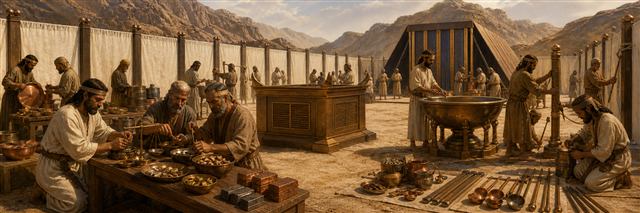
Exodus 38 describes the bronze altar, basin, linen courtyard, and careful inventory of materials used for the tabernacle.
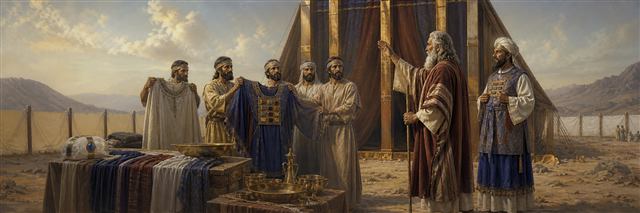
Exodus 39 completes the priestly garments and tabernacle work, which Moses inspects and blesses after finding it faithfully made.
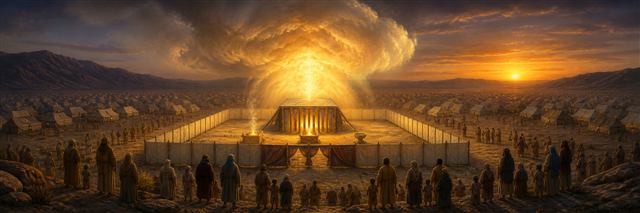
Exodus 40 completes the tabernacle as divine glory fills it and the cloud and fire guide Israel through every stage of the journey.