
Numbers
Numbers has 36 chapters. Read Numbers in the Bible in Basic English, chapter by chapter, free and without an account.
Numbers follows Israel from the camp at Sinai to the plains of Moab, across the Jordan from Jericho. Census lists and laws frame a story of travel, provision, rebellion, and judgment. After the people refuse to enter Canaan, the wilderness years give way to a new census and preparations for life in the land, with Joshua commissioned to succeed Moses.
In Christian Bibles, Numbers is one of the five books of the Pentateuch of the Old Testament. In the Jewish Tanakh it belongs to the Torah. See it on the shelf.
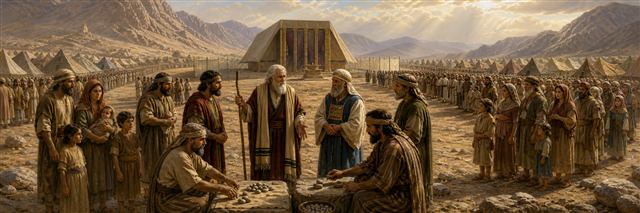
Numbers 1 records Israel’s tribal census and assigns the Levites responsibility for guarding and serving the tabernacle.
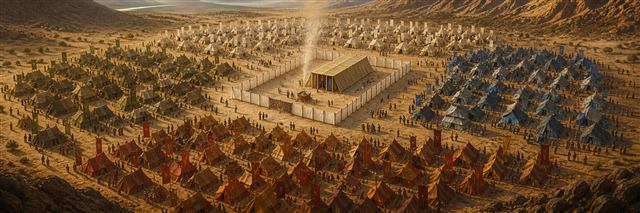
Numbers 2 arranges Israel’s tribes around the tabernacle and establishes their ordered formation for travel.
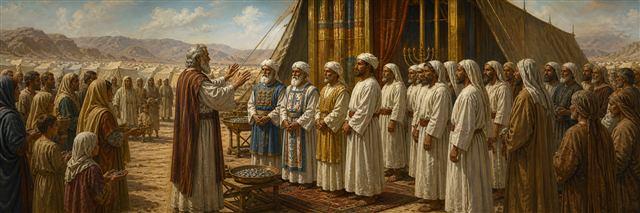
Numbers 3 appoints the Levite clans to tabernacle service in place of Israel’s firstborn and records their redemption.
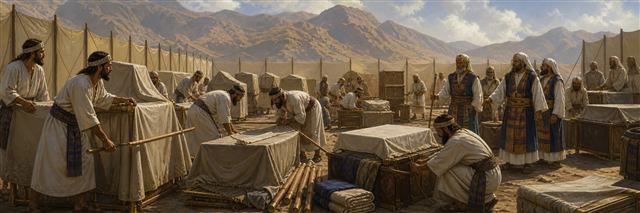
Numbers 4 assigns the Kohathites, Gershonites, and Merarites distinct responsibilities for transporting the tabernacle.
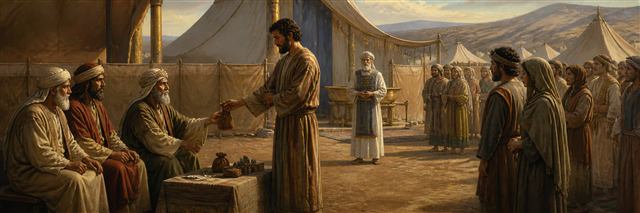
Numbers 5 addresses camp purity, confession and restitution, and a priestly process for an unresolved accusation of adultery.
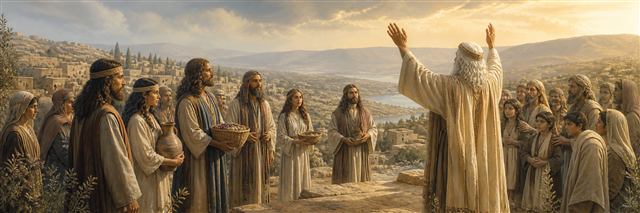
Numbers 6 explains the Nazirite vow and concludes with Aaron’s priestly blessing of protection, grace, and peace.
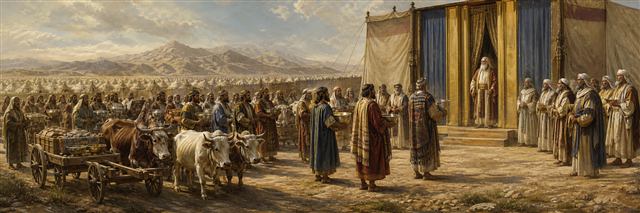
Numbers 7 recounts the tribal leaders’ equal offerings for the dedication and transport of the wilderness tabernacle.
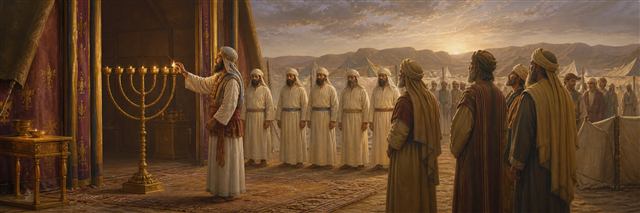
Numbers 8 joins the lighting of the lampstand with the cleansing, presentation, and service of the Levites.
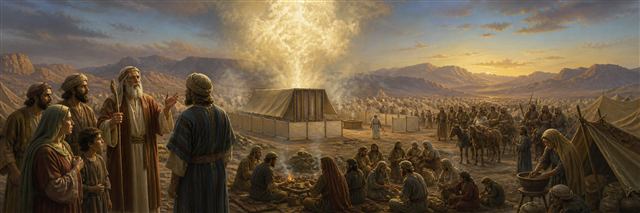
Numbers 9 records Passover provisions and the cloud that directs when Israel camps or journeys through the wilderness.
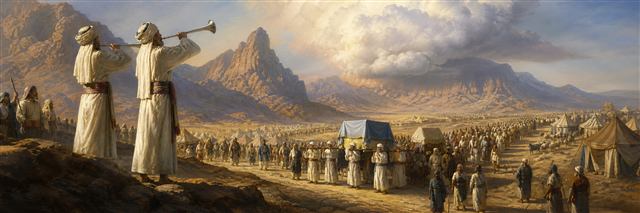
Numbers 10 establishes the silver trumpets and recounts Israel’s ordered departure from Mount Sinai.
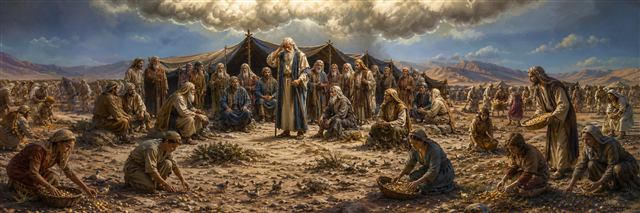
Numbers 11 recounts Israel’s complaints, the appointment of seventy elders, the provision of quail, and judgment on greed.
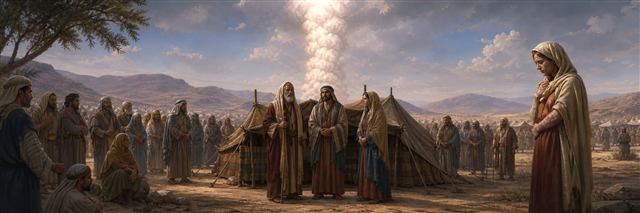
Numbers 12 recounts Miriam and Aaron’s challenge to Moses, Miriam’s discipline, Moses’ intercession, and her restoration.
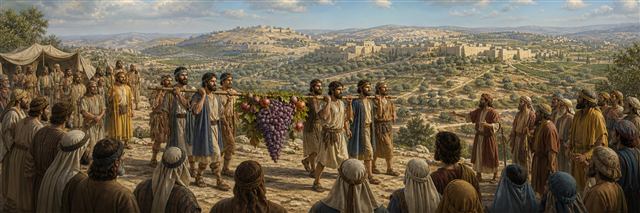
Numbers 13 sends twelve scouts into Canaan, where they find abundant fruit, fortified cities, and sharply divided expectations.
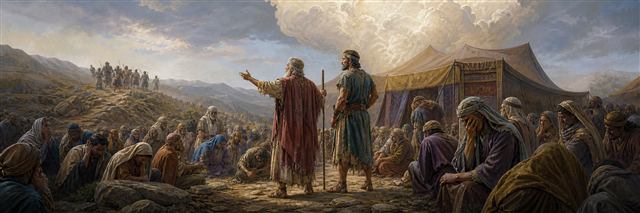
Numbers 14 recounts Israel’s refusal to enter Canaan, Moses’ intercession, forty years of wandering, and a failed invasion.
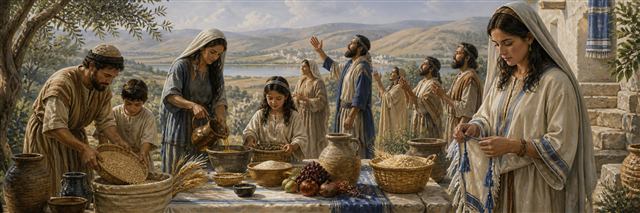
Numbers 15 gives offering laws, one standard for residents, distinctions in sin, and tassels that remind Israel to obey.
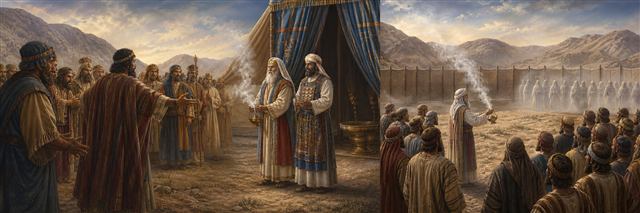
Numbers 16 recounts Korah’s rebellion, judgment on its leaders, and Aaron’s incense intercession during a plague.
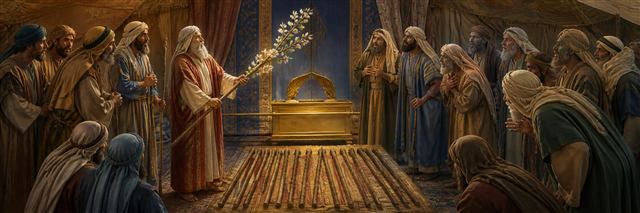
Numbers 17 tells how Aaron’s staff buds, blossoms, and bears almonds to confirm the appointed priesthood.
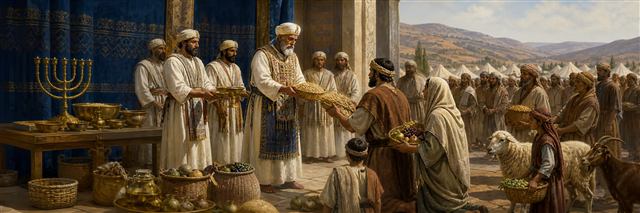
Numbers 18 defines priestly and Levitical duties and provides portions, firstfruits, and tithes for their service.
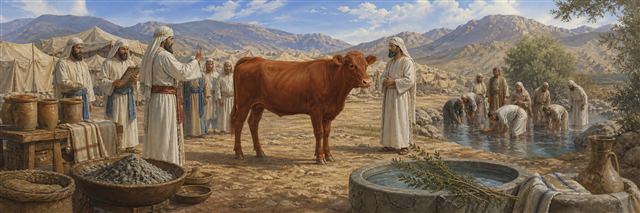
Numbers 19 prescribes the red heifer and purification water for cleansing after contact with death.
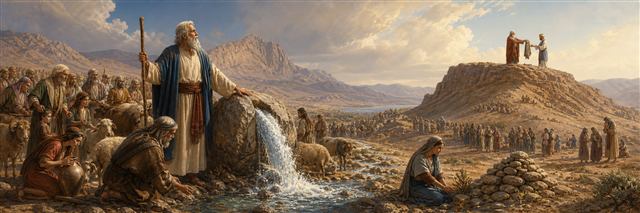
Numbers 20 recounts Miriam’s death, water from the rock, Edom’s refusal, and Aaron’s death after Eleazar succeeds him.
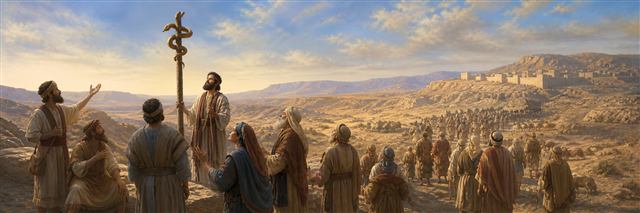
Numbers 21 recounts the bronze serpent, wilderness journeys, a well song, and Israel’s victories over Sihon and Og.
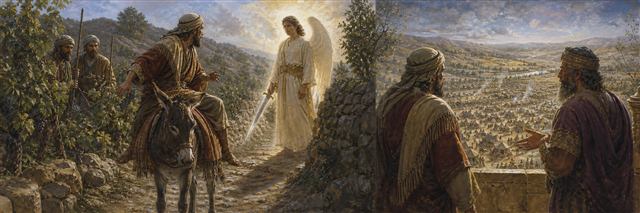
Numbers 22 introduces Balak and Balaam and recounts the donkey that sees the angel blocking Balaam’s road.
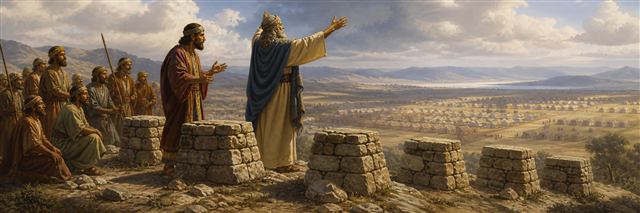
Numbers 23 recounts Balaam’s repeated oracles, which bless Israel despite Balak’s determined efforts to obtain a curse.
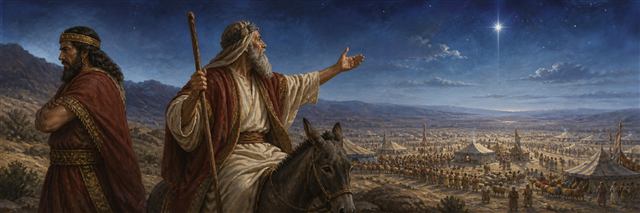
Numbers 24 records Balaam’s final blessings over Israel and his oracle of a star and scepter arising from Jacob.
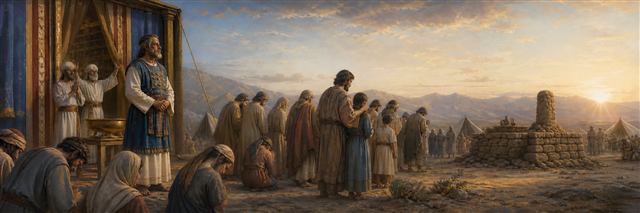
Numbers 25 recounts Israel’s sin at Baal-peor, the resulting plague, and Phinehas’s action that brings it to an end.
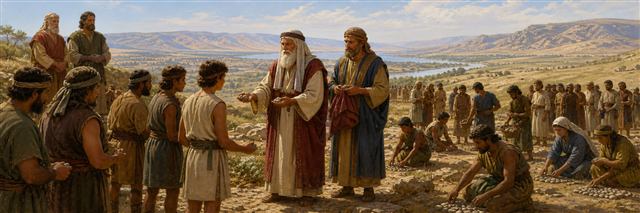
Numbers 26 records the second census, preparing Israel’s new generation for tribal inheritance in the promised land.
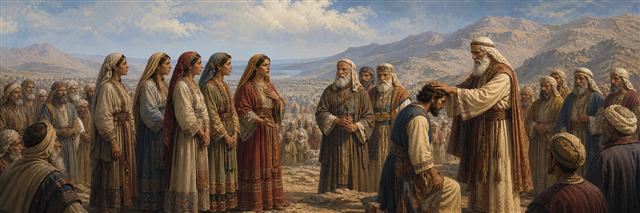
Numbers 27 affirms Zelophehad’s daughters’ inheritance and records Joshua’s public commissioning to succeed Moses.
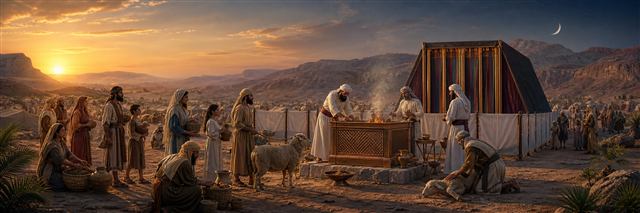
Numbers 28 details Israel’s daily, Sabbath, monthly, Passover, and Feast of Weeks offerings.
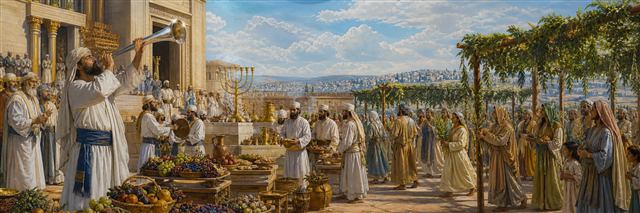
Numbers 29 details offerings for Trumpets, the Day of Atonement, and the Feast of Booths in the seventh month.
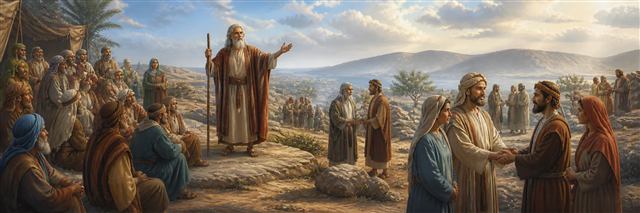
Numbers 30 explains the binding force of vows and how household authority could confirm or annul particular pledges.
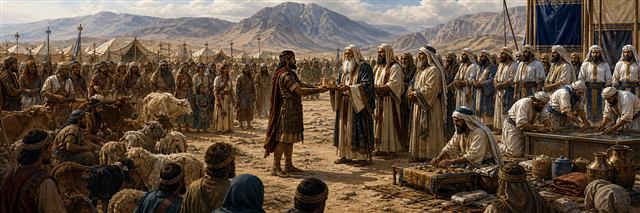
Numbers 31 recounts the Midian campaign, purification of the returning force, distribution of goods, and commanders’ tribute.
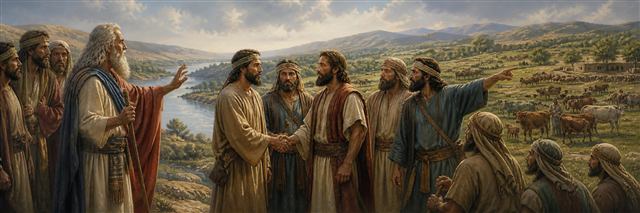
Numbers 32 grants eastern land to Reuben, Gad, and half-Manasseh after they promise to help Israel secure Canaan.
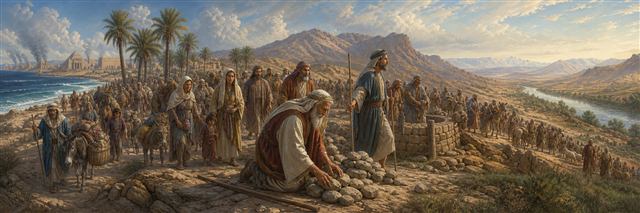
Numbers 33 reviews Israel’s journey from Egypt to Moab and commands the removal of Canaanite worship sites before settlement.
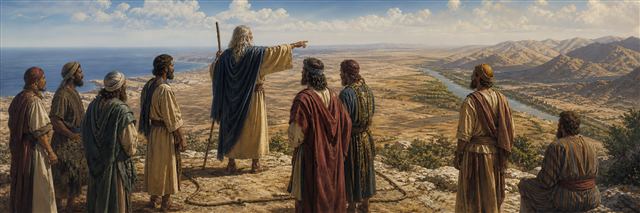
Numbers 34 defines Canaan’s boundaries and names the leaders responsible for distributing the tribal inheritances.
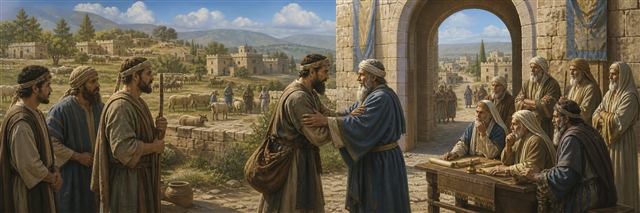
Numbers 35 establishes Levite towns and cities of refuge while defining due process for accidental killing and murder.
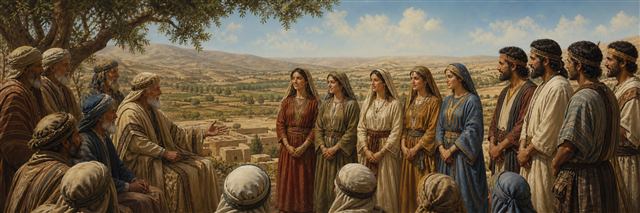
Numbers 36 preserves tribal allotments by directing Zelophehad’s daughters to marry within their father’s clan.