Holidays in the Bible
See which Jewish, Christian and Islamic holidays the Bible commands, tells or names, and where the rest come from.

Holidays in the Bible · Christian
Great Lent (Orthodox) · the Great Fast
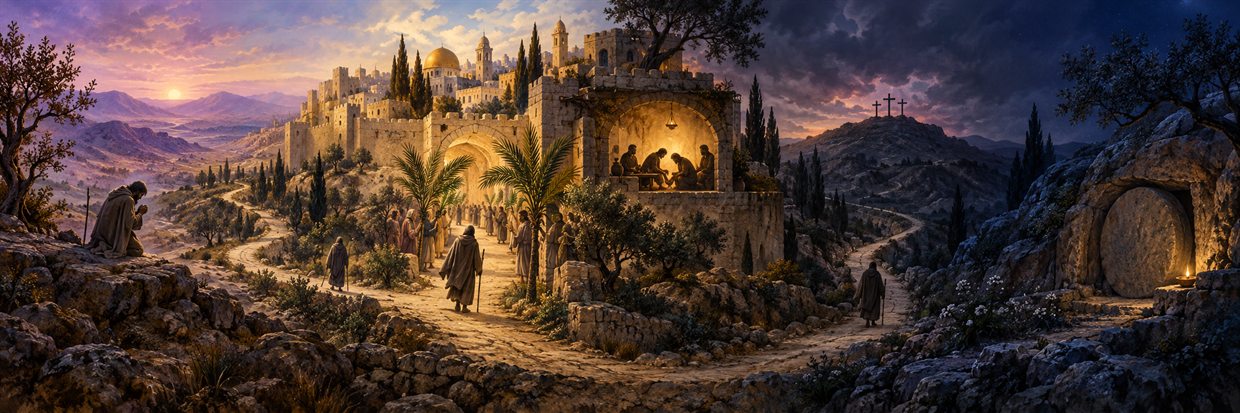
Lent is a Christian season of preparation for Easter through prayer, fasting and generosity. Holy Week recalls the final events of Jesus' life, leading to Easter Sunday.
When Roman Rite: Ash Wednesday until the evening of Holy Thursday; Byzantine Great Lent: Clean Monday through the Friday before Lazarus Saturday. 2026 18 February to 2 April (Great Lent 23 February to 3 April).
Lent is a Christian season of preparation for Easter through prayer, fasting and generosity. Holy Week recalls the final events of Jesus' life, leading to Easter Sunday.
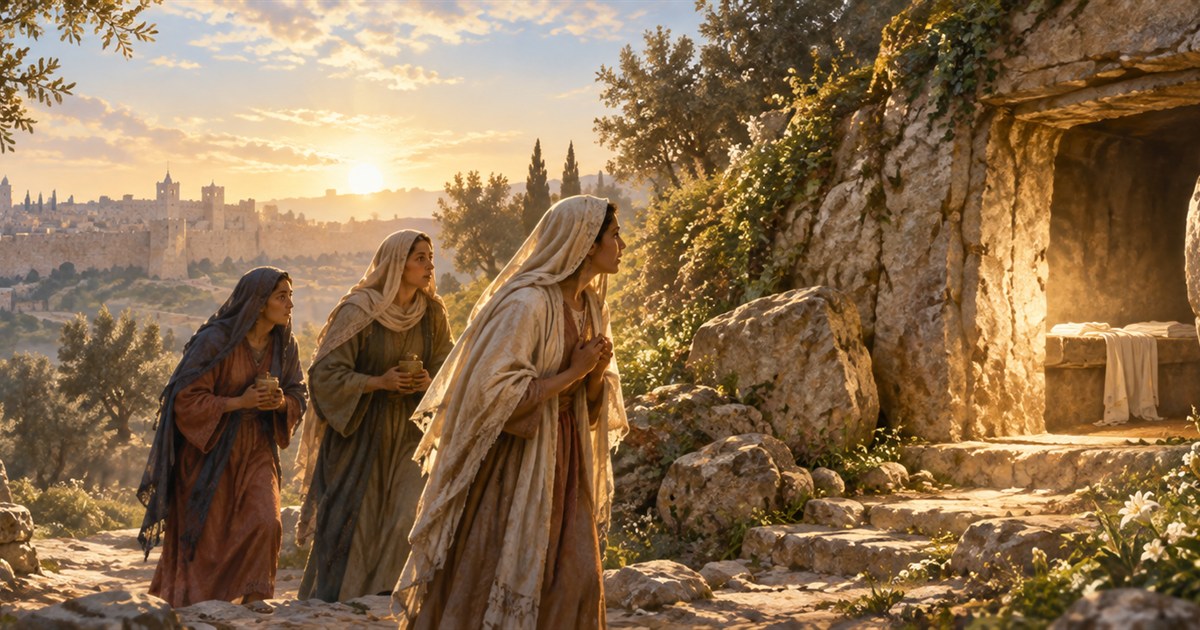
The forty days come from the Gospels. Jesus was led into the wilderness and fasted forty days and forty nights before he was tempted (Matthew 4:1-11, Mark 1:12-13, Luke 4:1-13), as Moses had gone forty days without bread or water on the mountain (Exodus 34:28) and Elijah had walked forty days to Horeb (1 Kings 19:8). The events remembered in Holy Week draw on the four Gospels, which differ in their details: the entry into Jerusalem (Matthew 21:1-11, John 12:12-19), the supper and the washing of feet (Luke 22:7-20, John 13:1-17), the crucifixion (John 18 and 19, Mark 15) and the burial and the guarded tomb (Matthew 27:57-66).
The season itself is the church's. No verse commands a forty-day fast before Easter; the fifth canon of the Council of Nicaea in 325 speaks of "the Forty" as something already kept, and Athanasius' festal letters of 331 and 339 describe a fast of forty days before the stricter fast of Holy Week 1,2,14. Catholic, Orthodox, Anglican, Lutheran, Methodist, Moravian and many Reformed churches keep the season; most Baptist, Pentecostal and non-denominational churches keep no fixed season, though many now mark Good Friday and some Lent 14.
Lent developed as a season of preparation for Easter. Its forty-day pattern draws on biblical accounts of fasting, and its length and observances took shape over several centuries.
Forty days is the Bible's measure of a fast that prepares for something. Moses was on Sinai forty days and forty nights without bread or water and came down with the covenant (Exodus 34:28, Deuteronomy 9:9); Elijah walked forty days on the strength of one meal to Horeb (1 Kings 19:8); Jonah gave Nineveh forty days and the city fasted in sackcloth (Jonah 3:4-10); and Jesus fasted forty days in the wilderness (Matthew 4:2). The fast the prophets ask for is not hunger for its own sake: Joel says "rend your hearts and not your garments" (Joel 2:13) and Isaiah says the fast God chooses is to loose the chains of injustice and share bread with the hungry (Isaiah 58:6-7); the churches read all of these at the start of Lent.
The season before Easter grew from a shorter fast. Around 190 Irenaeus wrote to Bishop Victor of Rome that some fasted one day before Easter, some two, and some forty hours, and that the variety was old 1. The first mention of a forty-day season is the fifth canon of the Council of Nicaea in 325, which orders provincial synods to meet twice a year, "the one before Lent," in Greek before the tessarakoste, the Forty 2; Athanasius of Alexandria's festal letters of 331 and 339 then describe forty days of fasting before the stricter fast of Holy Week, and in 339 he wrote that the whole world kept it 1,14. By the 380s the pilgrim Egeria found Jerusalem keeping eight weeks, because no one fasted on Saturdays or Sundays 8.
The shape of the season is a series of church decisions. In Rome under Gregory the Great, around 600, Lent was six weeks of six fast days, thirty-six in all, and the four days from Ash Wednesday were added to make forty 1. The ashes were at first for public penitents; the Gregorian Sacramentary of the eighth century already calls the day dies cinerum, the day of ashes, the English homilist Aelfric around 1000 urged everyone to strew ashes on their heads, and the Synod of Benevento in 1091 under Urban II extended the ashes to all the faithful 3. The Orthodox churches count forty days from Clean Monday to the Friday before Lazarus Saturday, with Sundays included, and then keep Lazarus Saturday, Palm Sunday and Holy Week as a further fast, so the two Lent start dates depend on the different Easter calculations and are not always two days apart, as the Easter page explains 9,15. In the Roman Rite since 1970 Lent ends at the evening Mass of the Lord's Supper on Holy Thursday, and the three days from that evening to Easter are the Paschal Triduum; Lutheran, Anglican, Methodist and Moravian churches count Lent to Holy Saturday, forty days without the Sundays 14.
| Passage | What it is | Edition |
|---|---|---|
| Mark 1:12-15 | Read on the day | Berean Standard Bible |
| Luke 4:1-13 | Read on the day | Berean Standard Bible |
| Isaiah 58:6-7 | Read on the day | Berean Standard Bible |
| Matthew 4:1-11 | A text the day draws on | Berean Standard Bible |
| Exodus 34:28 | A text the day draws on | Berean Standard Bible |
| Deuteronomy 9:9 | A text the day draws on | Berean Standard Bible |
| 1 Kings 19:8 | A text the day draws on | Berean Standard Bible |
| Jonah 3:4 | A text the day draws on | Berean Standard Bible |
Who keeps it Catholic, Orthodox, Anglican, Lutheran, Methodist and many other churches, as forty days of fasting, prayer and giving before Easter; most Baptist, Pentecostal and non-denominational churches do not keep a fixed season, though many now mark it.
Christians keep Lent with prayer, fasting and giving, and Holy Week with a service for each day of the Gospels' story: palms on Sunday, the washing of feet on Thursday, the cross on Friday, and the Easter Vigil on Saturday night.
Lent begins in the West on Ash Wednesday, when ashes made from the previous year's palms are put on the forehead with the words of Genesis 3:19, remember that you are dust and to dust you shall return, and the readings are Joel's call to return with fasting and Jesus' teaching to fast in secret (Matthew 6:16-18) 3,4. Catholics fast on Ash Wednesday and Good Friday and abstain from meat on the Fridays of Lent; Lutherans, Anglicans, Methodists and Reformed Christians who keep the season fast on the same two days and choose their own discipline for the rest, and a Lutheran handbook recommends one simple meal on each 14. Many Christians of every tradition give something up for Lent or take something on, and the older practice was a single meal a day with no meat or wine 1. On the Fridays of Lent Catholic, Lutheran and Anglican churches pray the Stations of the Cross, and crosses and images are veiled in violet 14.
The Orthodox churches begin Great Lent at Forgiveness Vespers on the Sunday evening before Clean Monday, when everyone in the church asks forgiveness of everyone else, and keep the fast without meat, fish, eggs, dairy, wine or oil on weekdays, with wine and oil allowed on Saturdays and Sundays and fish on Palm Sunday and the Annunciation 15. The Divine Liturgy is not served on Lenten weekdays; the Presanctified Liturgy is served instead on Wednesdays and Fridays, and the Prayer of Saint Ephrem, with full prostrations, is said at every weekday service 15. The Orthodox Church says the season is "a time of joyfulness and purification," not of gloom, and its opening hymn calls the faithful to "fast from passions as we fast from food" 9.
Holy Week walks through the Gospels day by day. On Palm Sunday branches are blessed and carried in procession, a custom the pilgrim Egeria saw in Jerusalem in the 380s, the people going down from the Mount of Olives before the bishop with palm and olive branches, the children among them, singing "Blessed is he who comes in the name of the Lord" 8,4; the Passion is read at the same service, so that the day is also called Passion Sunday 4,16. The Orthodox keep Lazarus Saturday the day before, the raising of Lazarus (John 11:1-45) as a foretaste of the resurrection, the only day of the year the Sunday resurrection service is sung on another day, and carry palms or pussy willows on Palm Sunday 10. Holy Monday to Wednesday in the Orthodox Church are the Bridegroom services, with the Gospels read through to the Passion 16.
Maundy Thursday, from the Latin mandatum, the new commandment of John 13:34, is the night of the Last Supper: the evening Mass of the Lord's Supper remembers the institution of the Eucharist and the washing of the disciples' feet, which the priest or bishop repeats, and it is the oldest of the observances peculiar to Holy Week, with the foot-washing found in the most ancient rites and the chrism consecrated on the day from the fifth century; after it the altar is stripped and the bells fall silent until Easter 5,16. The Orthodox serve the vesperal Liturgy of Saint Basil for the Mystical Supper and, on Thursday night, the matins of Holy Friday with the Twelve Passion Gospels, twelve readings from John 13 to Matthew 27 that tell the whole Passion 11,12.
Good Friday is the church's most solemn day and a fast: the Passion according to John is read, the cross is unveiled and venerated, and no Mass is celebrated, communion coming from the hosts consecrated the night before 6. The veneration of the cross began in Jerusalem, where Egeria watched the people come one by one to kiss the wood of the cross, and from noon to three o'clock heard the prophets read beside the Gospels to show that all they foretold had been fulfilled 8,6; it entered the Latin liturgy in the seventh or eighth century 6. Many Western churches keep the Three Hours from noon, with a sermon on each of the seven last words, or the Stations of the Cross, and Catholic vestments are red, Lutheran and Presbyterian black 14,16. The Orthodox read the Royal Hours in the morning and there is no Divine Liturgy on the day 12.
Holy Saturday is the day Jesus lay in the tomb: no Mass is said, the altar is bare, and the church waits 7. After dark the Easter Vigil begins with the new fire and the paschal candle, the Exsultet is sung, and the readings walk through salvation history, seven from the Old Testament in the Roman Rite, of which the crossing of the sea (Exodus 14) may never be omitted, before the first Alleluia since Lent began and the baptisms for which the vigil was always the chief night 7,17. The vigil was kept through the night for the first six or seven centuries, drifted to Saturday afternoon and then morning, and was restored to the night by Pius XII in 1951 7,17. The Orthodox Holy Saturday liturgy reads fifteen Old Testament passages and sings, in place of the Thrice-Holy hymn, "as many as have been baptized into Christ have put on Christ," the clergy changing from dark vestments to white while Psalm 82 is read, and the church waits for the midnight hour when Pascha begins 13.
These passages offer a starting point for study. Service readings and verse numbering can differ by tradition, Bible edition and year; use the relevant community's calendar for a particular service.
Lent opens with the temptation in the wilderness and Holy Week reads the Passion twice, from the Gospel of the year on Palm Sunday and from John on Good Friday.
The first Sunday of Lent always reads the temptation: Matthew 4:1-11 in year A, Mark 1:12-15 in year B, Luke 4:1-13 in year C. Ash Wednesday reads Joel 2:12-18, 2 Corinthians 5:20-21 and Matthew 6:1-6 and 16-18. Palm Sunday reads the entry from the Gospel of the year at the procession and then Isaiah 50:4-7, Philippians 2:6-11 and the Passion. Holy Thursday reads the Passover night (Exodus 12:1-14), Paul's account of the supper (1 Corinthians 11:23-26) and the washing of feet (John 13:1-15). Good Friday reads the servant song (Isaiah 52:13 to 53:12), Hebrews 4:14-16 and the Passion according to John (John 18 to 19). The Easter Vigil reads creation (Genesis 1), the binding of Isaac (Genesis 22:1-18), the crossing of the sea (Exodus 14), Isaiah 54 and 55, Baruch 3, Ezekiel 36:16-28, then Romans 6:3-11 and the resurrection Gospel of the year. The Baruch reading is from the deuterocanon, which Catholic and Orthodox Bibles include and this site's Protestant editions do not.
Psalm 22, "my God, my God, why have you forsaken me" (Psalm 22), which Jesus prayed from the cross (Matthew 27:46), and Zechariah's king riding on a donkey (Zechariah 9:9), which Matthew and John quote at the entry, are the Old Testament passages the week returns to most; the churches read them as fulfilled in Jesus, and the page marks that as the Christian reading.
For the Roman Rite, consult the full readings for the year: the USCCB calendar lists 2 Corinthians 5:20–6:2 on Ash Wednesday and Hebrews 4:14–16; 5:7–9 on Good Friday. Shorter links above identify passages for exploration, not a complete substitute for the lectionary 21.
In brief The first Sunday of Lent always reads the temptation in the wilderness: Matthew 4:1-11 (year A), Mark 1:12-15 (B), Luke 4:1-13 (C).
The Gospels place the events remembered in Christian Holy Week around the Jewish festival of Passover. The two observances remain distinct, and their dates do not always coincide.
The Last Supper is a Passover meal in Matthew, Mark and Luke (Luke 22:7-15), and in John Jesus dies on the day the Passover lambs are killed (John 19:14, 19:31); the churches' Holy Thursday reading is the Passover night of Exodus 12, and the Easter Vigil's central reading is the crossing of the sea. The Passover page explains that festival, and the Easter page sets out how the two calendars came apart. A Jewish reader will also recognise the forty days: Moses on Sinai, Elijah at Horeb, and Nineveh's fast, which the synagogue reads on Yom Kippur afternoon, are the Tanakh's own, and the fast Isaiah asks for in chapter 58 is read on Yom Kippur morning.
Christian retellings of the Passion have sometimes fueled anti-Jewish hostility and violence. In Nostra Aetate §4 (1965), the Catholic Church rejects collective blame against Jews for Jesus' death and rejects presenting Jews as rejected or accursed by God 20. This teaching is important context for interpreting and presenting the Holy Week readings.
Christian Lent and Muslim Ramadan both include fasting, prayer and generosity, but their schedules and religious meanings differ.
Qur'an 2:183 connects fasting with earlier religious communities. Ramadan's fast runs from dawn to sunset during the month, while Lenten fasting and abstinence follow rules that differ among churches. Lent prepares for the Christian celebration of Easter; Ramadan has its own Islamic setting and purpose 18,19.
Lent begins on Ash Wednesday, forty-six days before Easter, and Holy Week is the seven days before Easter; the Orthodox begin Great Lent on Clean Monday, forty-eight days before Pascha, which usually falls on a different Sunday.
Everything in the season is counted back from Easter, and Easter moves with the moon, so Ash Wednesday falls anywhere from early February to early March and Holy Week from mid-March to late April. In the West, Lent is Ash Wednesday to the evening of Holy Thursday in the Roman Rite, or to Holy Saturday in the Lutheran, Anglican and Methodist reckoning, forty days without the Sundays 14. In the East, Great Lent is the forty days from Clean Monday, Sundays included, ending on the Friday before Lazarus Saturday, and Holy Week follows as its own fast; because the Orthodox churches set Pascha by the Julian calendar, their Lent usually begins on a different Monday and their Holy Week falls one to five weeks after the Western one, though in some years, such as 2025, the two coincide 15. The dates table below is for Lent; the days of Holy Week in these two years are given here.
In 2026, Ash Wednesday is 18 February and Clean Monday 23 February; Palm Sunday is 29 March (Orthodox 5 April), Maundy Thursday 2 April, Good Friday 3 April (Orthodox 10 April), Holy Saturday 4 April and Easter 5 April (Pascha 12 April). In 2027, Ash Wednesday is 10 February and Clean Monday 15 March; Palm Sunday is 21 March (Orthodox 25 April), Maundy Thursday 25 March, Good Friday 26 March (Orthodox 30 April), Holy Saturday 27 March and Easter 28 March (Pascha 2 May). Every year from 1990 to 2050 for each of these days is on the holidays overview.
| Rule | 2026 | 2027 |
|---|---|---|
| Roman Rite: Ash Wednesday until the evening of Holy Thursday; Byzantine Great Lent: Clean Monday through the Friday before Lazarus Saturday | 18 February to 2 April (Great Lent 23 February to 3 April) | 10 February to 25 March (Great Lent 15 March to 23 April) |
Lent draws on biblical accounts of fasting, including Jesus' forty days in the wilderness in Matthew 4:1–11. The annual season before Easter developed through church tradition; the New Testament does not prescribe a Lenten calendar. 1,2,14
Because the six Sundays are not fast days and are not counted. Rome once kept thirty-six fast days in six weeks, and the four days from Ash Wednesday were added to reach forty; the Orthodox count forty days from Clean Monday with Sundays included and then keep Holy Week as a further fast 1,15.
Ashes made from the previous year's palms, put on the forehead with the words of Genesis 3:19, remember that you are dust and to dust you shall return. They began as a rite for public penitents and were extended to everyone by the Synod of Benevento in 1091 3,4.
Maundy is from the Latin mandatum, the new commandment Jesus gave at the supper after washing the disciples' feet (John 13:34). The origin of Good is uncertain, perhaps God's Friday; the Greek churches call it Great and Holy Friday and the Anglo-Saxons called it Long Friday 5,6.
Because the Orthodox churches set Easter by the Julian calendar and count Lent from Clean Monday, forty-eight days before Pascha. Their Holy Week usually falls one to five weeks after the Western one, and in some years the two coincide. The Easter page explains the two reckonings 15.
Quoted from the Berean Standard Bible; each links to its chapter and carries a Memorize button that starts the five-step path. Switch the edition to read them in another Bible here.
Then Jesus was led by the Spirit into the wilderness to be tempted by the devil. After fasting forty days and forty nights, He was hungry.
Jesus led into the wilderness and fasting forty days and forty nights. The forty days of Lent are counted from this.
“Yet even now,” declares the LORD, “return to Me with all your heart, with fasting, weeping, and mourning.” So rend your hearts and not your garments, and return to the LORD your God. For He is gracious and compassionate, slow to anger, abounding in loving devotion. And He relents from sending disaster.
Return to me with all your heart; rend your hearts and not your garments. The reading with which Ash Wednesday opens Lent.
A new commandment I give you: Love one another. As I have loved you, so you also must love one another. By this everyone will know that you are My disciples, if you love one another.”
The new commandment of the Last Supper, the mandatum that gives Maundy Thursday its name.
When Jesus had received the sour wine, He said, “It is finished.” And bowing His head, He yielded up His spirit.
It is finished. The last word of the Passion according to John, read every Good Friday.
Make it part of your day
Optional further reading: you can explore the text without sharing its beliefs or taking part in the observance.
The prophet's line with which the churches open the forty days.
The numbers match the references in the article. Links include religious texts, community explanations and historical studies. Read more about how this guide was researched.
BibleVerse Editorial, "Lent and Holy Week: What They Mark, Where They Come From, and How They Are Kept", BibleVerse, published 2026-09-12, updated 2026-09-12, https://bibleverse.site/holidays/lent-holy-week/
Version 1.1. Awaiting review by a member of the community it describes. Dates in the table are for 2026 and 2027 and are refreshed yearly. Corrections are welcome through the contact page.
See which Jewish, Christian and Islamic holidays the Bible commands, tells or names, and where the rest come from.
Easter celebrates the resurrection of Jesus. It falls on a Sunday, though Eastern and Western churches often celebrate on different dates.
Follow the branching histories of Christian and Jewish traditions.