Holidays in the Bible
See which Jewish, Christian and Islamic holidays the Bible commands, tells or names, and where the rest come from.
Holidays in the Bible · Christian
Three Kings' Day · the Baptism of the Lord
Epiphany celebrates Jesus being revealed to the world. Western traditions often focus on the visit of the magi; Eastern Orthodox Theophany celebrates his baptism.
When 6 January (19 January on the Julian calendar); in the United States the Sunday between 2 and 8 January. 2026 6 January (Julian-calendar observance: 19 January Gregorian); nominal date, local liturgical transfers may apply; the nearest Sunday in the United States.
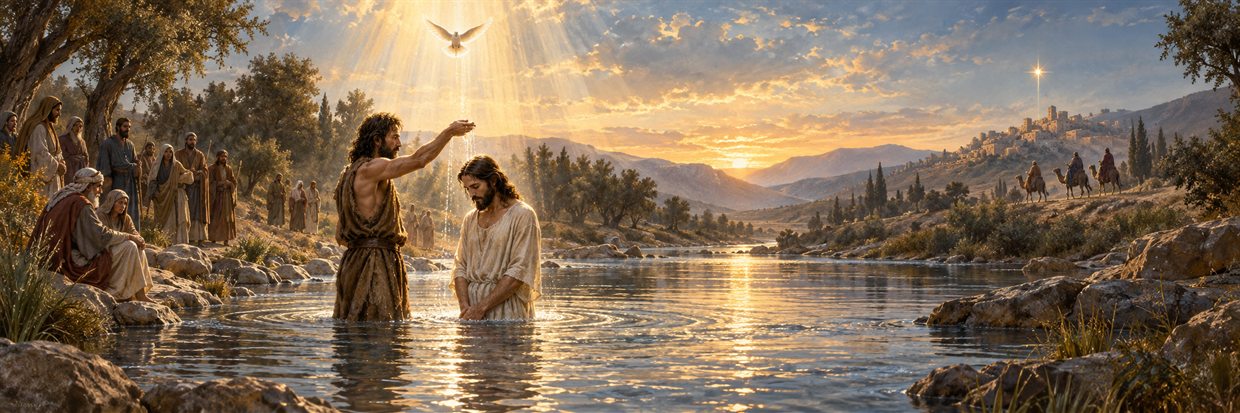
Epiphany celebrates Jesus being revealed to the world. Western traditions often focus on the visit of the magi; Eastern Orthodox Theophany celebrates his baptism.
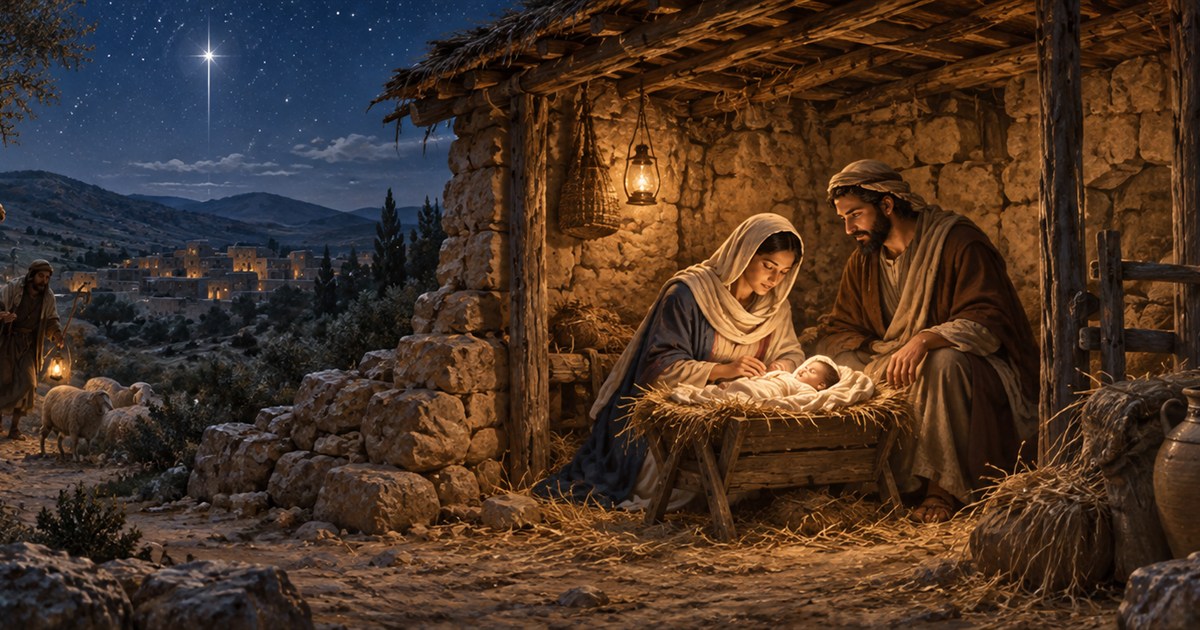
Both stories are the Gospels'. The magi from the east, who saw his star and came to worship the one born king of the Jews, are in Matthew 2:1-12, and only there; the Gospel does not count them, name them or call them kings. The baptism is told by Matthew, Mark and Luke (Matthew 3:13-17, Mark 1:9-11, Luke 3:21-22) and remembered by John the Baptist in John 1:32-34. The third event the feast has carried since ancient times is the wedding at Cana, where Jesus turned water into wine and "revealed his glory" (John 2:1-11). The word epiphany is Greek for a showing or appearance, and the Greek Bible uses it for God's own appearing 1,4.
The feast is kept by Catholic, Orthodox, Anglican, Lutheran, Methodist and Moravian churches and by the Oriental Orthodox; in the United States and some other countries the Catholic Church moves it to the Sunday between 2 and 8 January, and the Church of England allows the same 4. Churches on the Julian calendar, such as the Russian Orthodox, keep 6 January on their calendar, which is 19 January on the civil one, and the Ethiopian Orthodox commemorate the baptism at Timkat according to their own calendar 4,5. The Armenian Apostolic Church keeps 6 January as the only feast of Christ's birth, the old Eastern practice that the rest of the East gave up when it took 25 December 1,4.
Epiphany developed in early Eastern Christianity. Its celebrations have included Jesus' birth, baptism and other manifestations, with different emphases developing in different churches.
The visit of the magi is Matthew's story alone (Matthew 2:1-12). Matthew calls the visitors magi and says they came from the east, without identifying their country; the three gifts led readers to count three of them, and the psalm that says kings of Tarshish and Sheba will bring gifts (Psalm 72:10-11) and Isaiah's promise that nations and kings will come to Zion's light bringing gold and frankincense (Isaiah 60:1-6) led the churches to call them kings 2,6. The names Caspar, Melchior and Balthasar belong to later Christian tradition, not Matthew; names differ among Christian traditions 2. Matthew's scribes answer Herod from Micah 5:2, and Christian readers since Origen have heard in the star Balaam's oracle, "a star will come forth from Jacob" (Numbers 24:17); these are Christian interpretations of the Hebrew Bible 6.
Early evidence does not describe one uniform feast. The Catholic Encyclopedia cites Clement of Alexandria's account, around 200, of followers of Basilides commemorating Jesus' baptism. Later fourth-century evidence describes broader church celebrations. These are different stages in the evidence, not interchangeable dates for the beginning of today's feast 1.
As Christmas on 25 December spread, many churches distinguished it from the January celebration. Western Epiphany came to emphasize the magi, while Eastern Orthodox Theophany emphasizes Jesus' baptism. Armenian tradition retains a combined Nativity and Theophany celebration. This development varied by place 1,3,4.
| Passage | What it is | Edition |
|---|---|---|
| Matthew 2:1-12 | Tells the event | Berean Standard Bible |
| Matthew 3:13-17 | Tells the event | Berean Standard Bible |
| Mark 1:9-11 | Tells the event | Berean Standard Bible |
| Luke 3:21-22 | Tells the event | Berean Standard Bible |
| John 2:1-11 | Tells the event | Berean Standard Bible |
| Isaiah 60:1-6 | Read on the day | Berean Standard Bible |
| Ephesians 3:2-6 | Read on the day | Berean Standard Bible |
| Psalm 72:10-11 | A Christian reading | Berean Standard Bible |
Who keeps it In the West (Catholic, Anglican, Lutheran) the visit of the magi, on 6 January or the nearest Sunday; in the East (Orthodox) Theophany, the baptism of Jesus in the Jordan, on 6 January (19 January on the Julian calendar), with the blessing of waters.
Western churches keep Epiphany with the story of the magi, the blessing of homes with chalk, and the end of the Christmas season; Eastern churches keep Theophany with the Great Blessing of Waters, a cross plunged three times into water and, where there is a river, into the river.
In Catholic, Anglican and Lutheran churches the Gospel of the day is the magi, the readings are Isaiah's "arise, shine" and Paul's word that the Gentiles are fellow heirs (Ephesians 3), and the crib's three kings arrive at last 1,4. In central Europe the priest blesses water, incense, gold and chalk, and the chalk is used to write the year and the letters C, M and B over the door, for the three kings' names or for the Latin "may Christ bless this house"; children dressed as the three kings go from house to house as star singers, collecting for charity 4,8. Epiphany Eve is Twelfth Night, when in many places the decorations come down, and a Three Kings' cake is eaten 4. Since 1970 the Catholic Church in the United States and some other countries keeps the feast on the Sunday between 2 and 8 January, and the Baptism of the Lord on the Sunday after it, or the Monday when the two would collide 4. Older custom used the day to announce the year's date of Easter, and in England the Monday after it was Plough Monday, the return to work 1,4.
In the Orthodox churches Theophany is one of the twelve Great Feasts, third in rank after Pascha and Pentecost 4. The services mirror Christmas: a fast on the eve, the Royal Hours and the Liturgy of Saint Basil with vespers, and a vigil of Great Compline and matins; the hymn of the day sings that when Christ was baptised in the Jordan "the worship of the Trinity was made manifest," the Father's voice, the Son in the water and the Spirit as a dove 3. The Great Blessing of Waters follows: with hymns and censing the priest plunges a cross three times into the water and sprinkles it to the four directions of the world, and the people take the water home; the Orthodox Church explains the rite as the sanctifying of all creation in Christ, "very good" again as at the beginning, and Chrysostom already describes the Christians of Antioch taking home the water blessed on the night of the feast 1,3. Where there is a river or a sea the cross is thrown in and young men dive for it, in Greece, in Russia through the ice, and among Greek Americans at Tarpon Springs in Florida 4. Ethiopian and Eritrean Christians keep Timkat according to their own calendar with the tabot, the ark of each church, carried in procession to water and a re-enactment of the baptism 5.
The day is not a public holiday in most English-speaking countries and is a quiet feast in many Protestant congregations, some of which keep it on the nearest Sunday or as the start of an Epiphany season that runs to Ash Wednesday, with Lutherans keeping its last Sunday as the Transfiguration 4. Presbyterians count Sundays after Epiphany without keeping a season 4. The blessing of the home, the cake and the kings are customs; the reading of Matthew 2 and, in the East, of the baptism is what every church that keeps the day has in common.
These passages offer a starting point for study. Service readings and verse numbering can differ by tradition, Bible edition and year; use the relevant community's calendar for a particular service.
The West reads the magi and Isaiah's "arise, shine"; the East reads the baptism and Paul's word that the grace of God has appeared.
For a specific Roman Catholic example, the U.S. calendar for 2027 lists Isaiah 60:1–6, Ephesians 3:2–3a, 5–6 and Matthew 2:1–12 for Epiphany. For the Baptism of the Lord that year, the Gospel is Mark 1:7–11. These selections should not be treated as a universal list for Anglican, Lutheran or other churches. The Bible links provide study context; the church calendar gives the prescribed selections and alternatives. 13
The Byzantine liturgy of Theophany reads Titus 2:11-14 and 3:4-7, "the grace of God has appeared," with Matthew 3:13-17, and the Great Blessing of Waters has its own hymns and prayers over the water 3. The magi are read in the East at Christmas, not at Theophany 4.
In brief Roman Catholic example (U.S. calendar, 2027): Isaiah 60:1-6; Ephesians 3:2-3a, 5-6; Matthew 2:1-12. Byzantine Theophany: Matthew 3:13-17; Titus 2:11-14, 3:4-7.
Epiphany's readings include passages from the Hebrew Bible, such as Isaiah 60 and Psalm 72. Jewish and Christian traditions interpret and use them in different settings.
Isaiah 60, "arise, shine, for your light has come," is in the synagogue the haftarah of the Torah portion Ki Tavo, the sixth of the seven haftarot of consolation read between Tisha B'Av and Rosh Hashanah, and its nations coming to Zion's light are, in the Jewish reading, the nations coming to Jerusalem and to Israel restored 9; Psalm 72 is a prayer for the king, and Balaam's star in Numbers 24 was read by Rabbi Akiva of Simon bar Kokhba, the "son of the star," who led the revolt against Rome in 132 10. The churches read these of Jesus and the magi. Their different liturgical settings help explain the different interpretations.
John the Baptist's call to repentance belongs to the Jewish world of the Second Temple period. Jewish immersion practices provide historical context, though John's baptism and later Christian baptism should not be treated as identical to every Jewish purification rite 11.
The Qur'an honors John, called Yahya, and Jesus as prophets. It does not narrate the magi's visit or Jesus' baptism 7,12.
Qur'an 19 includes accounts of the births of John and Jesus. These can be read alongside the Gospel narratives, with attention to the distinct details and teachings of each text 12.
Epiphany is 6 January, twelve days after Christmas; on the Julian calendar the same date falls on 19 January, and in the United States the Catholic Church keeps it on the Sunday between 2 and 8 January.
The date is fixed, so the only questions are which calendar and whether the feast is moved to a Sunday. Churches on the Gregorian or Revised Julian calendar, which agree until 2800, keep 6 January on the civil calendar: Catholic, Anglican, Lutheran and most Protestant churches, and the Orthodox of Greece, Romania and the Orthodox Church in America 4. Churches on the Julian calendar, which is now thirteen days behind, keep their 6 January on civil 19 January: the Russian, Serbian, Georgian and Jerusalem Orthodox churches 4. Ethiopian Timkat follows the Ethiopian calendar 5. Where the feast is moved to a Sunday, the Baptism of the Lord follows on the next Sunday, or on the Monday when Epiphany itself falls on 7 or 8 January 4.
In the East the eve of Theophany, the Paramony, is a strict fast day until the first star, with the Royal Hours as on Christmas Eve and Good Friday; the waters are blessed twice, in the church on the eve and outdoors on the day; the priest then goes round the parish blessing homes with the water; and the feast has an afterfeast of eight days 4. Candlemas, forty days after Christmas on 2 February, is where the older Western reckoning ended the season, and some still take the decorations down then rather than on Twelfth Night 4.
| Rule | 2026 | 2027 |
|---|---|---|
| 6 January (19 January on the Julian calendar); in the United States the Sunday between 2 and 8 January | 6 January (Julian-calendar observance: 19 January Gregorian); nominal date, local liturgical transfers may apply; the nearest Sunday in the United States | 6 January (Julian-calendar observance: 19 January Gregorian); nominal date, local liturgical transfers may apply; the nearest Sunday in the United States |
Matthew 2 describes the visit of the magi, and the Gospels also recount Jesus' baptism and the wedding at Cana. Epiphany developed as a church feast associated with these events, with different emphases in Eastern and Western traditions. 1,3,4
Matthew does not say. The three gifts led readers to count three, and Psalm 72 and Isaiah 60, which speak of kings bringing gold and frankincense, led the churches to call them kings; the names Caspar, Melchior and Balthasar come from later Christian tradition, not Matthew. Matthew calls them magi from the east 2,6.
Because the feast began in the East as the day of the baptism, and for a time of the birth too, before the East took 25 December for the birth in the late fourth century and kept 6 January for the baptism. The West had already fixed Christmas on 25 December and used 6 January for the magi. The Orthodox read the magi at Christmas 1,4.
The days from Christmas to Epiphany, 25 December to 5 January, with Epiphany Eve as Twelfth Night. They are the space between the two ancient feasts of Christ's showing, and in many places the decorations come down on Twelfth Night; older custom kept them until Candlemas on 2 February 4.
It is 6 January on the Julian calendar, which the Russian, Serbian, Georgian and Jerusalem churches still use for their feasts, and which is now thirteen days behind the civil calendar. Greek, Romanian and American Orthodox churches use the Revised Julian calendar and keep 6 January on the civil date 4.
Quoted from the Berean Standard Bible; each links to its chapter and carries a Memorize button that starts the five-step path. Switch the edition to read them in another Bible here.
On coming to the house, they saw the Child with His mother Mary, and they fell down and worshiped Him. Then they opened their treasures and presented Him with gifts of gold and frankincense and myrrh.
The magi in the house, falling down before the child and opening their treasures. The Western feast is this verse.
As soon as Jesus was baptized, He went up out of the water. Suddenly the heavens were opened, and He saw the Spirit of God descending like a dove and resting on Him. And a voice from heaven said, “This is My beloved Son, in whom I am well pleased!”
The heavens opened, the Spirit descending like a dove, the voice calling Jesus beloved Son. The Eastern feast is these two verses.
Arise, shine, for your light has come, and the glory of the LORD rises upon you. For behold, darkness covers the earth, and thick darkness is over the peoples; but the LORD will rise upon you, and His glory will appear over you. Nations will come to your light, and kings to the brightness of your dawn.
Arise, shine, for your light has come; nations will come to your light and kings to the brightness of your dawn. The first reading of the day in the West, and the reason the magi became kings.
Make it part of your day
Optional further reading: you can explore the text without sharing its beliefs or taking part in the observance.
The line the churches sing at the start of the day, and the synagogue in the weeks of consolation.
Arise, shine, for your light has come, and the glory of the LORD rises upon you.
The numbers match the references in the article. Links include religious texts, community explanations and historical studies. Read more about how this guide was researched.
BibleVerse Editorial, "Epiphany and Theophany: What They Mark, Where They Come From, and How They Are Kept", BibleVerse, published 2026-09-12, updated 2026-09-12, https://bibleverse.site/holidays/epiphany/
Version 1.1. Awaiting review by a member of the community it describes. Dates in the table are for 2026 and 2027 and are refreshed yearly. Corrections are welcome through the contact page.
See which Jewish, Christian and Islamic holidays the Bible commands, tells or names, and where the rest come from.
Christmas celebrates the birth of Jesus. Many churches observe it on 25 December, while others use calendars or traditions that place the celebration in January.
Explore shared roots, distinct scriptures and differences in belief.